




Flatbush is one of the most dynamic real estate markets in Brooklyn. Between the stunning Victorian homes in Ditmas Park and the dense, pre-war apartment blocks near Brooklyn College, there is incredible opportunity for property owners. However, with that opportunity comes a heavy burden of compliance. In 2026, managing a building in Flatbush isn’t just about collecting rent: it’s about navigating a minefield of HPD (Housing Preservation and Development) and DOB (Department of Buildings) regulations.
Look, I see it all the time. DIY landlords start with the best intentions, but they get tripped up by the sheer volume of paperwork and the "surprise" inspections that the City is famous for. If you aren’t staying ahead of the game, you aren’t just risking a small fine; you’re risking your building's reputation and your bottom line.
The reality is that many buildings in Flatbush are older, which naturally brings more maintenance challenges. But the real issue isn't just the age of the pipes: it's the way the City of New York has increased its oversight. Recent data shows that some buildings in the neighborhood have accumulated hundreds of open violations. For instance, a property on East 21st St. recently made headlines for racking up over 550 complaints in just two years.
When violations reach this level, it’s usually a sign of a "cat-and-mouse" game between management and HPD. Owners might claim a repair is done, but without proper documentation or professional follow-through, HPD inspectors find the same issue a week later. This cycle creates a "Class C" hazardous environment that can lead to emergency repair liens or even court-ordered management.

If your building was built before 1960 (which most of Flatbush was), lead paint is your biggest liability. Local Law 1 is not a suggestion; it is a strictly enforced mandate that requires landlords to be proactive rather than reactive.
Common mistakes we see include:
At Landlord Management (LLM), we ensure our owners have a digital paper trail for every single LL1 requirement. In the 2026 regulatory environment, if it isn’t documented, it didn't happen.
Local Law 55 (the Asthma Free Housing Act) shifted the responsibility of pest and mold control from "responding to a tenant complaint" to "proactively preventing allergens." In Flatbush, where older building envelopes are prone to moisture, this is a frequent source of "Class B" and "Class C" violations.
Landlords often make the mistake of simply spraying for roaches or painting over mold. Under LL55, you are required to use Integrated Pest Management (IPM) techniques. This means sealing entry points and fixing the underlying leaks that cause mold. If an inspector finds mold and you haven't performed your annual inspection for indoor allergen hazards, the fines can escalate quickly.
You can learn more about these specific requirements on our local laws page.
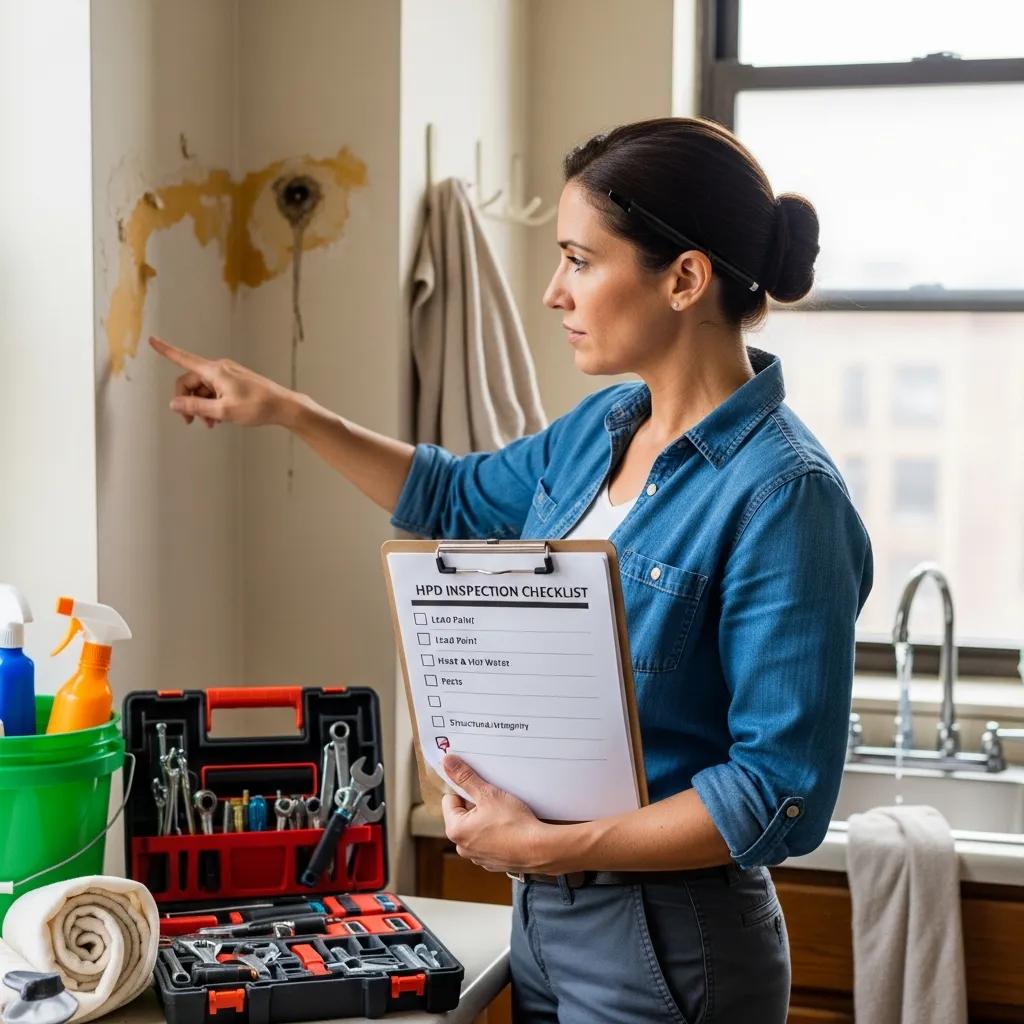
Heat and hot water complaints are the most common reason for HPD to visit a Flatbush property between October and May. The City has become incredibly efficient at tracking these. If multiple tenants in a building file "311" complaints about heat, it triggers an automatic inspection.
The mistake many DIY owners make is relying on old boiler systems without modern monitoring. If your boiler fails at 2 AM on a Sunday, and you don't have a 24/7 property management team to catch it, you’ll likely wake up to three HPD violations and a potential "Heat Emergency" repair by the City: which they will bill you for at a massive markup.

One of the biggest pitfalls for independent owners is the lack of "proof of service." When a tenant claims a ceiling has collapsed or a radiator isn't working, the owner might fix it, but they fail to take "before and after" photos, fail to get a signed tenant sign-off, and fail to file the "Certification of Correction" with HPD.
In Flatbush, we see a recurring pattern where tenants file lawsuits for "harassment" or "failure to maintain" because the landlord’s records are a mess. Professional management keeps a clear, auditable trail of every repair. For rent-stabilized units, this is even more critical. If you are doing Major Capital Improvements (MCIs) or Individual Apartment Improvements (IAIs), your documentation must be flawless to justify rent adjustments. Check out our guide on rent-stabilized compliance for a deeper dive into this.
We’ve seen cases in the neighborhood where elevators have been out of service for six months. This isn't just a minor inconvenience; it’s a major liability. When a building’s critical systems: elevators, fire alarms, or standpipes: fail, the Department of Buildings (DOB) steps in.
A "Vacate Order" is the nightmare scenario for any Flatbush landlord. This happens when a building is deemed unfit for habitation due to neglected repairs. Not only do you lose your rent roll, but you are also responsible for the relocation costs of your tenants. Avoiding this requires a strict inspection schedule and a capital improvement budget that prioritizes safety over aesthetics.
If you own a small 6-unit building in Flatbush, you might think you’re under the radar. You’re not. While a 300-unit building has more "eyes" on it, a 6-unit building is often more vulnerable to a single disgruntled tenant or one missed Local Law filing that wipes out your annual profit.
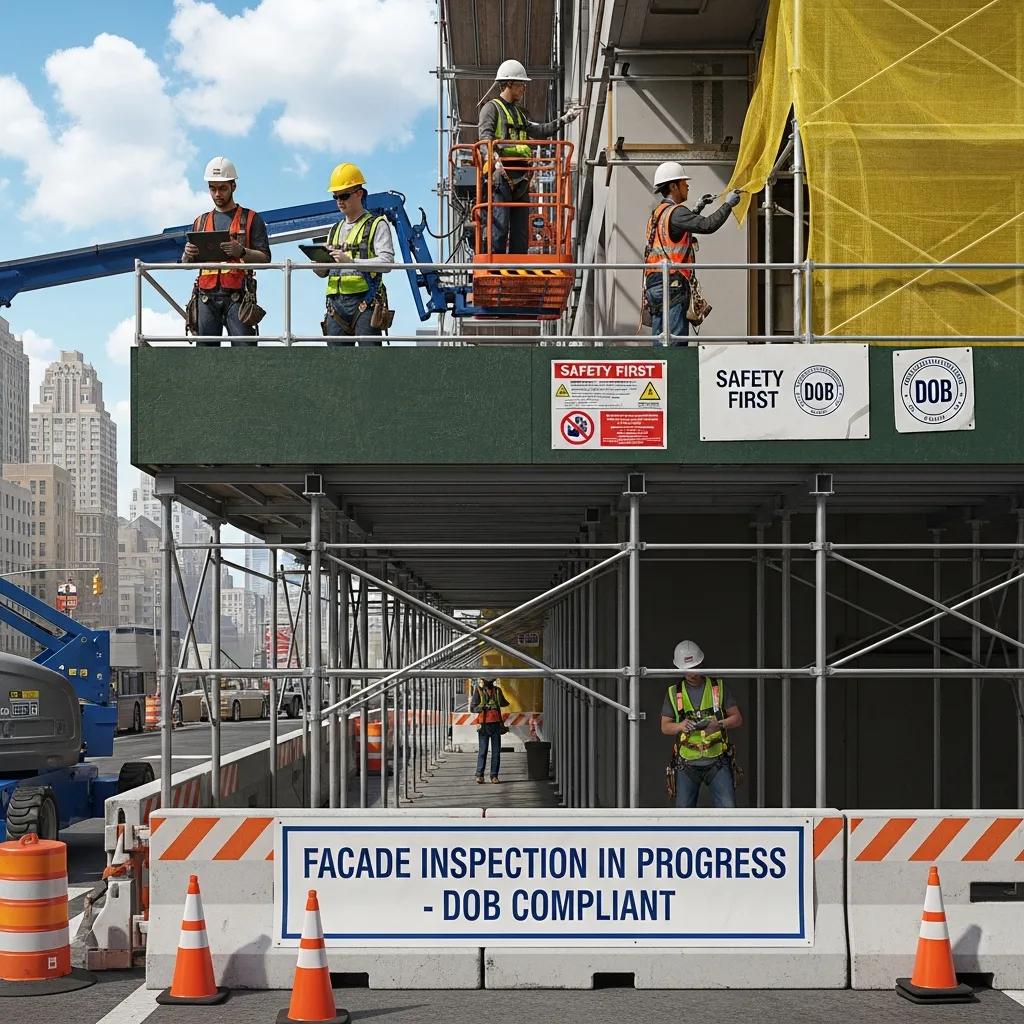
The complexity of NYC law doesn't scale down just because your building is smaller. Whether you have 3 units or 300, the fines for missing a Local Law 97 filing or failing a facade inspection (FISP) are equally punishing. Professional managers use software to track these deadlines across their entire portfolio, ensuring nothing falls through the cracks.

If you’re feeling overwhelmed by the "Violation Edition" of property management, don't panic. Compliance is a process, not a one-time event. Here is how you should start:
Flatbush is a neighborhood with a bright future, but that future belongs to the landlords who treat their buildings like a professional business rather than a side hobby. By staying on top of Local Laws and responding quickly to tenant needs, you protect your investment and the community.
If you’re worried about your current standing with HPD or just want a professional eyes-on-glass approach to your Brooklyn portfolio, feel free to reach out to our team. We know the streets of Flatbush as well as we know the halls of the Housing Court: and we’d much rather keep you out of the latter.
If you own a multi-family building in Crown Heights, you have likely heard the acronym "J-51" tossed around at local community board meetings or in real estate newsletters. For decades, the J-51 program was the gold standard for NYC tax incentives, allowing owners to offset the costs of major capital improvements through significant tax exemptions and abatements.
However, the landscape changed significantly in late 2024 and early 2025. The program has undergone a massive transformation, moving away from its traditional structure toward a new framework often referred to as the Affordable Housing Property Tax Incentive (the "new J-51"). With a looming deadline of June 2026, many owners in Brooklyn are facing a high-stakes decision: finish renovations now under current rules or wait for the proposed legislative shifts.
As a leading Property Management Company in Brooklyn, Landlord Management (LLM) is helping owners navigate this transition. Understanding these reforms isn't just about saving money: it’s about the long-term viability of your investment.
Historically, the J-51 program was designed to encourage landlords to maintain and upgrade their properties without passing the entire financial burden onto tenants. It provided two main benefits: a tax exemption (which froze the assessed value of the building during construction) and a tax abatement (which directly reduced the amount of taxes owed).
The "old" J-51 was criticized for being overly broad, sometimes benefiting luxury developments that didn't necessarily need the help. In response, the New York State Legislature and the NYC Department of Housing Preservation and Development (HPD) revamped the program to focus more heavily on affordability and essential system upgrades.
The current reform focuses on "Modest Rehabilitation." This means the program is now specifically targeted at buildings where at least 50% of the units are rent-regulated or where the building receives some form of government assistance. For owners in Crown Heights, where many buildings are older and subject to rent stabilization, these changes are particularly relevant.

The most urgent piece of information for any Brooklyn landlord right now is the June 29-30, 2026, deadline. This is the date when the current iteration of the J-51 reform program is set to expire.
Under the rules active as of February 2026, eligible renovation projects must be fully completed by this date to lock in the current benefit structure. This creates a "strategic dilemma" for property owners:
While 100% coverage sounds better on paper, it is currently a proposal. Waiting for the 100% benefit means gambling on a legislative timeline that is not yet guaranteed. Furthermore, waiting means delaying the start of your tax relief. At Landlord Management, we often advise that a bird in the hand (the 70% benefit) is often better than a potential 100% that may face further delays or administrative hurdles.
The new J-51 rules are stricter regarding which buildings qualify. Eligibility is no longer a blanket "yes" for any major renovation. To qualify for the tax abatement today, a building typically must meet one of the following criteria:
If your building is a 30-unit walk-up on Eastern Parkway with 100% rent-stabilized occupancy, you are a prime candidate for these incentives. Conversely, a 300-unit luxury glass tower with market-rate rents will likely find itself excluded from the program. Navigating these requirements for rent-stabilized apartments is a core part of the Property Management Services in Crown Heights we provide.

Not every repair counts as a "Major Capital Improvement" (MCI) or an "eligible renovation" under J-51. The program is designed to incentivize the replacement of major building systems that have reached the end of their useful life.
Qualifying work often includes:
It is important to note that cosmetic upgrades: like painting a lobby or replacing kitchen cabinets in a single unit: generally do not qualify for J-51 benefits. The work must be building-wide or benefit a significant portion of the structure.
The financial impact of a successful J-51 application can be the difference between a building being "in the red" or "in the black."
Imagine a Crown Heights owner who spends $200,000 on a new roof and boiler. Under the current 70% abatement rule, the owner could potentially receive $140,000 in tax credits spread over several years. This abatement acts as a dollar-for-dollar reduction in the real estate taxes owed to the NYC Department of Finance (DOF).
However, if the owner misses the June 2026 deadline and the proposed legislation fails to pass or is delayed, they might find themselves with zero tax relief for the exact same work. This is why we emphasize a proactive approach to financial planning and budgeting.

The paperwork required to secure a J-51 benefit is notorious for its complexity. It involves a multi-agency "dance" between the NYC Department of Housing Preservation and Development (HPD) and the Department of Finance (DOF).
Common hurdles include:
Many owners find that the administrative cost of filing the application: hiring architects to certify the work and expeditors to push the paperwork: can be daunting. This is where Landlord Management (LLM) steps in. We act as the central hub, coordinating with vendors, ensuring the Brooklyn property management checklist is followed, and managing the HPD portal submissions.
Deciding whether to rush your project before June 2026 depends on your specific financial situation.
Act now if:
Consider waiting if:

Navigating NYC tax incentives is not a DIY project. The margin for error is too small, and the potential losses are too high. At Landlord Management, we provide more than just rent collection; we provide strategic asset management.
Our team understands the specific nuances of the Crown Heights market: from the pre-war buildings near Brower Park to the newer developments along Franklin Avenue. We help you evaluate your building’s eligibility, source reputable contractors who understand HPD requirements, and handle the mountain of paperwork required by the DOF.
If you are unsure whether your upcoming renovation qualifies for the J-51 reform benefits, don't wait until May 2026 to find out. The lead time for permits and construction in NYC is significant.
For a consultation on how we can help you maximize your building’s value and stay compliant with evolving NYC regulations, contact us today. Whether it’s managing evictions, handling condo and co-op operations, or securing tax abatements, LLM is your partner in Brooklyn property ownership.
Landlord Management provides full-service property management in Pomonok designed to protect property value, reduce landlord workload, and maintain operational consistency.With proximity to Queens College and major corridors like Kissena Boulevard and Jewel Avenue, tenant activity remains consistent throughout the year. Many properties include cooperative sublets, condominium investment units, and rent-stabilized apartments — all of which require compliance awareness and organized communication.
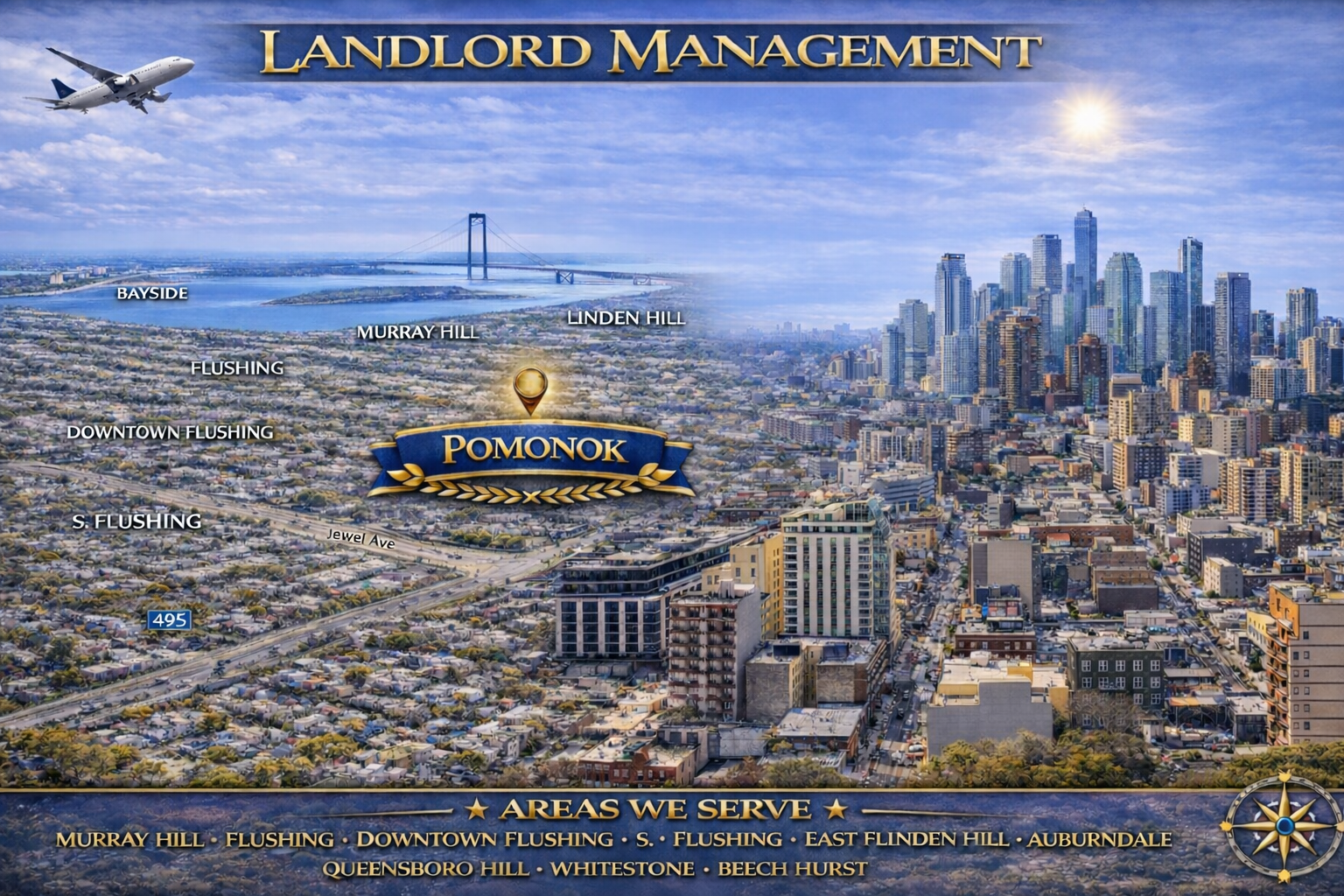
Pomonok is a centrally located residential neighborhood in Queens positioned between Flushing and Fresh Meadows. Known for mid-rise apartment buildings, cooperative developments, and stable long-term tenancy, Pomonok requires structured, documentation-driven property management.
Brooklyn’s real estate landscape is rarely static, but as we move deeper into 2026, the divergence between neighborhoods has become more pronounced than ever. For a property owner, the geographic difference between Bay Ridge and Greenwood Heights is only about four miles, but from a management perspective, they represent two entirely different worlds.
One neighborhood is defined by its deep-rooted residential stability and classic pre-war infrastructure, while the other is characterized by rapid industrial-to-residential conversions and high-density modern developments. Navigating these differences requires more than just a standard "template" for management. It requires a localized understanding of tenant expectations, building aging cycles, and the specific NYC compliance hurdles that vary based on building age and type.
Before diving into the technical specifications of boilers or building codes, it is essential to understand who lives in these areas. Property management is, at its core, a service industry.
In Bay Ridge, the tenant base often skews toward long-term residency. You will find families who have lived in the same rent-stabilized building for decades alongside young professionals seeking the quiet, suburban-suburban feel of the waterfront. Management here focuses on stability and the preservation of a "legacy" feel.
Conversely, Greenwood Heights (often considered the edgy sibling of South Slope) attracts a demographic looking for the "New Brooklyn" aesthetic. These tenants expect smart-home features, high-end communal spaces, and rapid digital communication. Property Management Services in Greenwood Heights must be tech-forward to meet the expectations of a population that views their apartment as a curated lifestyle choice rather than just a long-term home.
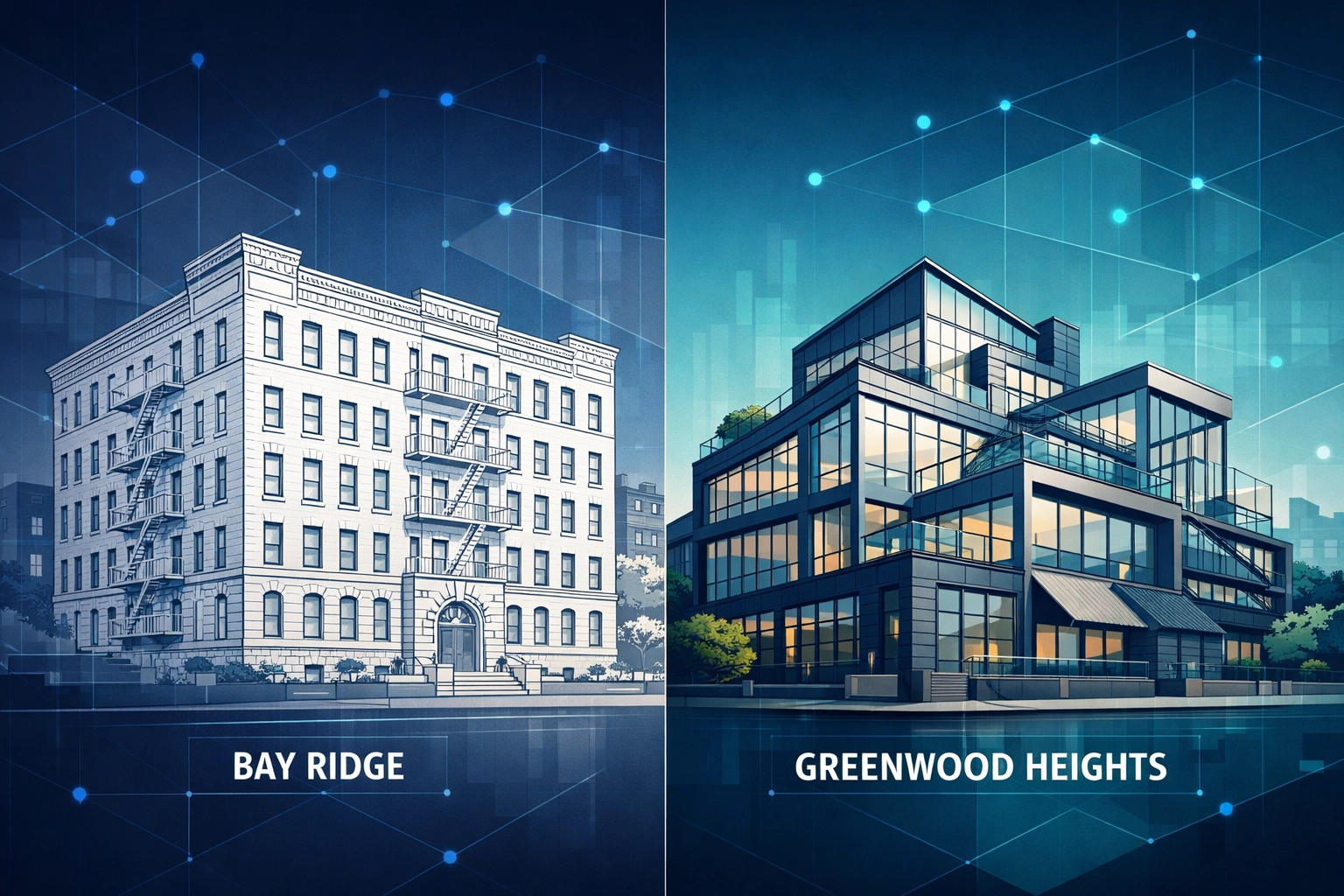
Bay Ridge is famous for its "Gold Coast" mansions, but for the average investor, the inventory consists largely of mid-sized pre-war brick buildings and sprawling garden apartment complexes. These structures carry a specific set of operational risks that newer developments simply do not have.
Property Management in Bay Ridge isn't about reinventing the wheel; it’s about making sure the wheel, which may be 80 years old, continues to turn efficiently and safely.
Greenwood Heights presents the opposite challenge. Here, the landscape is a mix of wood-frame row houses and modern, "glass and steel" industrial conversions. The management needs here are often centered on the complexities of new construction.

As of 2026, the financial impact of Local Law 97 is no longer a theoretical concern, it is a line item in every savvy landlord’s budget. However, the way this law affects these two neighborhoods is quite different.
In Bay Ridge, the challenge is retrofitting. Older buildings often struggle with insulation and outdated heating systems, making them prime targets for high carbon-emission fines. A property manager in this area must focus on identifying "low-hanging fruit" upgrades, such as LED lighting and pipe insulation, to mitigate these costs. You can read more about how Local Law 97 fines are impacting Brooklyn owners here.
In Greenwood Heights, many buildings were constructed with modern energy codes in mind. However, "modern" does not automatically mean "compliant." Higher-density buildings with floor-to-ceiling glass can have significant heat loss issues. Here, management focuses on data monitoring and ensuring that the high-tech systems installed during construction are actually performing at their peak efficiency.
Beyond energy, both neighborhoods face the rigors of Local Law 55 (Asthma allergen hazards) and Local Law 1 (Lead paint). While lead is a primary concern in the older stock of Bay Ridge, mold and moisture management, often caused by the tighter building envelopes of new Greenwood Heights construction, require constant vigilance from the management team.
Many national property management firms use a "template" approach. They apply the same software, the same vendor list, and the same communication style to a 300-unit luxury tower in Downtown Brooklyn as they do to a 20-unit walk-up in Bay Ridge. This is a recipe for operational failure.
A 20-unit building in Bay Ridge requires a "hands-on" super who knows the tenants by name and understands the quirks of an old basement. A 300-unit building in a developing area like Greenwood Heights requires a robust digital portal for maintenance requests and a high-volume leasing strategy to maintain occupancy in a competitive market.
At Landlord Management (LLM), we recognize that the "Modern Landlord" is often juggling multiple asset types. You might own a legacy multi-family building in Bay Ridge that provides steady cash flow, while simultaneously developing a boutique condo in Greenwood Heights for long-term appreciation. Managing these requires two different mentalities: one focused on preservation and the other on performance.
A critical part of property management is the "Capital Improvement Plan." The financial needs of these two neighborhoods are worlds apart.
Landlord Management (LLM) provides the "Best of Both Worlds" because we are built on the ground in Brooklyn. We don't manage from a call center in another state; we manage from the streets of the boroughs.
Whether you are looking for Property Management in Bay Ridge to stabilize a multi-generational asset or need Property Management Services in Greenwood Heights to oversee a complex new conversion, our approach is always the same:

If you are currently managing a property in either of these neighborhoods and feeling the weight of the 2026 regulatory environment, it may be time to audit your current management structure. Ask yourself:
If the answer to any of these is "no," or if you're simply tired of the 2:00 AM phone calls, let's talk. Brooklyn is changing, and your management strategy should change with it.
For a deeper dive into what you should be paying for these services, check out our breakdown of Brooklyn vs. Queens property management costs. If you're ready to see how LLM can protect your investment, contact us today.
If you're serving on a Ridgewood condo board right now, you know the feeling. It's 11 PM on a Tuesday, your phone buzzes with another emergency maintenance text, and you're simultaneously trying to decipher a 47-page compliance memo from the city. You volunteered to serve your community, not become a full-time property manager and legal expert.
You're not alone. Across Ridgewood, Queens, condo boards are making a significant shift in 2026, moving away from self-management and bringing in professional property management companies. The reason isn't just burnout (though that's definitely part of it). The compliance landscape in New York City has become so complex that volunteer boards simply can't keep up without serious risk.
The regulatory environment for New York City properties has evolved dramatically over the past few years. What worked for condo boards in 2020 or even 2023 simply doesn't cut it anymore. Here's what Ridgewood condo boards are dealing with in 2026:
Local Law 97 Carbon Emissions Fines: Starting this year, buildings over 25,000 square feet face substantial fines for exceeding carbon emission limits. We're talking penalties that can easily reach six figures annually. Most mid-sized condo buildings in Ridgewood fall into this category, and calculating compliance requires technical expertise that goes well beyond typical board member knowledge.
Local Law 152 Gas Inspection Requirements: The December 31, 2025 deadline has passed, but enforcement is now active. Buildings must have licensed plumbers inspect all gas piping systems and file detailed reports. Miss this requirement? You're looking at fines starting at $10,000. Self-managed boards who weren't tracking this deadline are now scrambling to get compliant.
Enhanced Transparency Requirements: New regulations require more detailed financial reporting and disclosures to unit owners. This means proper bookkeeping systems, regular audits, and documentation that meets specific city standards. One spreadsheet maintained by a well-meaning treasurer doesn't cut it anymore.
Ongoing Building Safety Inspections: Local Law 11 (facade inspections), elevator inspections, fire safety compliance, the list of mandatory inspections keeps growing. Each has specific filing deadlines and technical requirements.
For volunteer board members who have full-time jobs and families, staying on top of all these requirements while managing day-to-day building operations has become genuinely unsustainable.
The reality of modern condo board service in Ridgewood has shifted from occasional meetings and basic oversight to what amounts to a part-time (or sometimes full-time) unpaid job. Here's what board members are actually dealing with:
After-Hours Emergencies: Water leaks, heating failures, security issues, these don't happen during business hours. Board members find themselves fielding emergency calls at all hours, coordinating with contractors they may or may not trust, and making quick decisions under pressure.
Legal Liability Concerns: When compliance issues arise, board members can face personal liability. That's not a theoretical risk, it's a real concern that keeps volunteer board members up at night. Professional property management in Ridgewood Queens provides a liability buffer that self-managed boards simply don't have.
Financial Management Complexity: Between collecting monthly maintenance fees, managing reserves, planning capital improvements, and staying within budget, the financial responsibilities have become genuinely complex. One accounting error can create cascading problems.

Vendor Management Headaches: Finding reliable contractors, getting competitive bids, supervising work, and handling disputes takes significant time. Self-managed boards often end up paying more because they lack the vendor relationships and negotiating leverage that professional management companies maintain.
Neighbor Conflicts: When you're a board member living in the building you manage, every decision becomes personal. Dispute about noise complaints? Assessment for building repairs? You're running into these neighbors in the lobby the next day.
Most Ridgewood condo boards choose self-management thinking they're saving money by avoiding management fees. The math seems simple, why pay someone else when volunteers can handle it for free?
But this calculation misses several significant hidden costs:
Overpaying for Services: Professional property management companies in Queens maintain relationships with contractors and suppliers across hundreds of buildings. This buying power translates to 15-30% savings on everything from elevator maintenance to roof repairs. A self-managed board calling individual contractors lacks this negotiating leverage.
Compliance Penalties: A single missed deadline for Local Law 152 gas inspections costs $10,000 in fines. Local Law 97 violations can run into six figures annually. Professional management companies have dedicated compliance tracking systems and legal teams specifically to avoid these penalties.
Deferred Maintenance: Volunteer boards, overwhelmed with immediate issues, often defer needed maintenance. This creates more expensive problems down the line. A small roof leak ignored for six months becomes a $50,000 repair project.
Increased Insurance Premiums: Buildings with poor maintenance histories and compliance issues face higher insurance costs. Professional management documentation and maintenance records help keep premiums lower.
Board Member Turnover Costs: When burned-out board members resign, institutional knowledge walks out the door. The learning curve for new volunteers creates gaps in oversight and decision-making continuity.
Let's address the elephant in the room: yes, professional property management in Ridgewood Queens costs money. Management fees typically run between 8-12% of collected revenue for buildings under 50 units, with rates decreasing for larger buildings.
But here's what you're actually getting for that investment:
Purchasing Power: Professional management companies negotiate volume discounts on everything from cleaning supplies to major capital improvements. A management company overseeing 50 buildings gets significantly better pricing than a single condo board calling around for quotes.
Compliance Expertise: Dedicated staff who track every local law, filing deadline, and inspection requirement. They know when Local Law 11 facade inspections are due, when elevator certificates expire, and how to navigate DHCR filings. This prevents costly penalties and keeps your building legally protected.
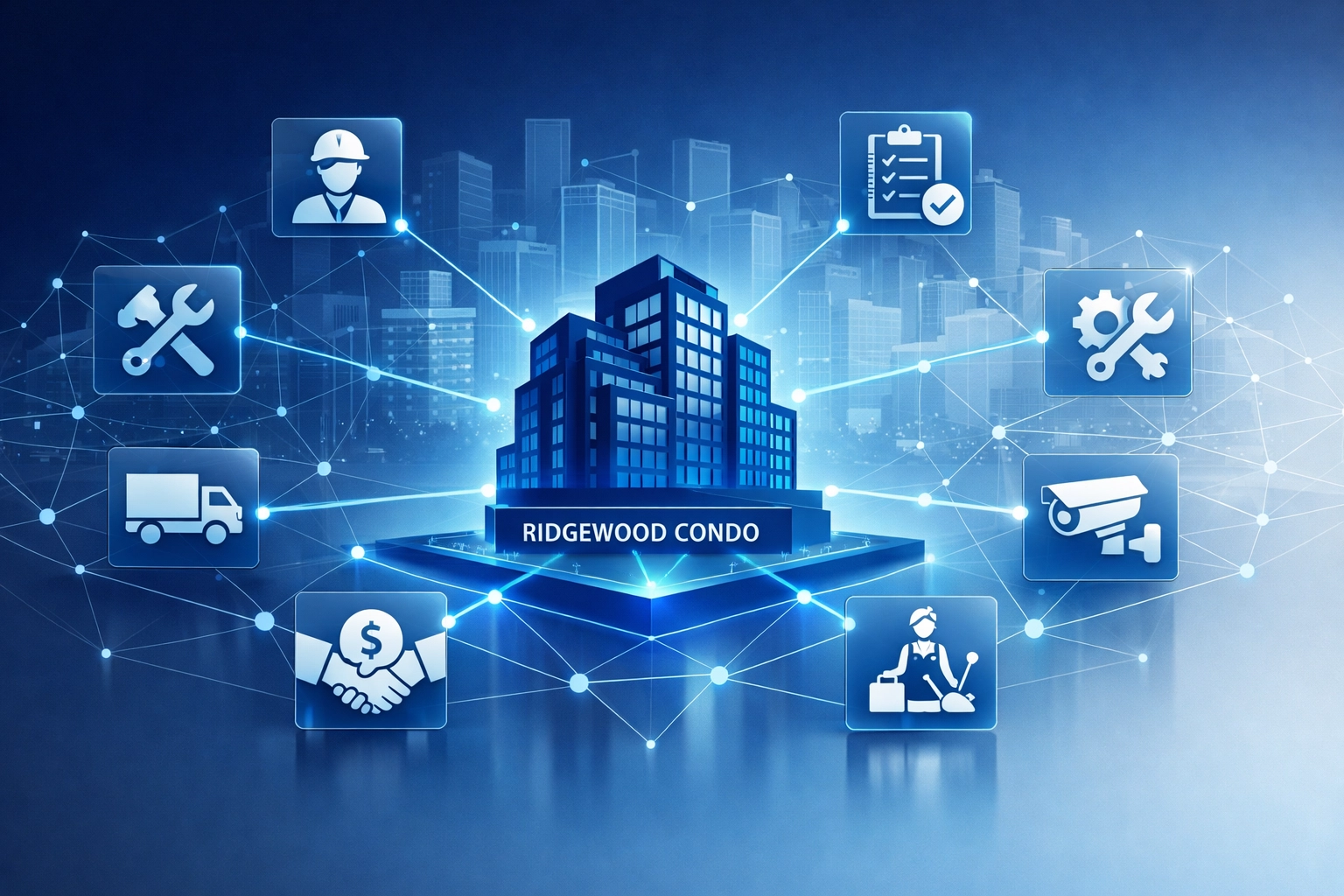
Vendor Network: Established relationships with licensed, insured contractors who respond promptly and charge competitive rates. No more weekend hours spent researching plumbers or getting emergency repair quotes during a crisis.
24/7 Professional Response: When a pipe bursts at 3 AM, building residents call a professional management company's emergency line: not a volunteer board member's personal cell phone. The management company dispatches a contractor from their network and handles the situation according to established protocols.
Financial Systems: Professional bookkeeping, monthly financial statements, budget planning, and reserve fund management. Everything documented and audit-ready.
Legal Protection: When disputes arise: whether with unit owners, contractors, or regulatory agencies: professional management provides documentation, follows established procedures, and has legal resources readily available.
Not all property management companies are created equal. If your Ridgewood condo board is considering making the switch from self-management, here's what to prioritize:
Local Queens Expertise: Property Management Queens NY requires specific knowledge of local regulations, contractor networks, and neighborhood characteristics. A company managing buildings across all five boroughs may not have the focused Ridgewood expertise you need.
Transparent Pricing: Management fees should be clearly explained, with no hidden charges or surprise bills. Ask for a detailed breakdown of what's included in the management fee versus what incurs additional costs.
Technology Platforms: Modern property management uses digital tools for maintenance requests, financial reporting, document storage, and communication. Board members should have online access to real-time building information.
Compliance Track Record: Ask specifically about their system for tracking local law requirements. How do they ensure nothing falls through the cracks? What's their record on avoiding compliance penalties?
References from Similar Buildings: Talk to other Ridgewood condo boards working with the management company. What's their experience been? How responsive is the company to issues?
Clear Communication Protocols: Understand exactly how emergency situations are handled, how board members are kept informed, and what level of involvement the board maintains in decisions.
If your board has decided to make the switch, here's what the transition typically looks like:
Document Everything: Compile all building documents: financial records, vendor contracts, maintenance histories, unit owner information, governing documents, and compliance certificates. Professional management companies need this foundation to take over effectively.
Interview Multiple Companies: Don't go with the first management company you meet. Interview at least three firms, ask detailed questions, and compare proposals carefully.
Review Contracts Thoroughly: Management agreements should clearly specify services provided, fees, termination clauses, and responsibilities. Have an attorney review before signing.
Communicate with Unit Owners: Explain to residents why you're making this change and what they can expect. Address concerns about costs and reassure them about service quality.
Plan for Overlap: Allow for a transition period where outgoing board members work alongside new management to transfer knowledge and relationships.
Set Clear Expectations: Establish performance metrics and regular review processes. Professional management should make your board's life easier, not create new frustrations.
The shift away from self-management isn't a failure of volunteer boards: it's a recognition that professional building management has become too complex and risky for volunteers to handle alone. Landlord Management (LLM) understands the specific challenges facing Ridgewood condo boards and provides the expertise, systems, and buying power that transform building management from a constant source of stress into a well-run operation.
Your condo board volunteered to serve your community, not to become unpaid property managers navigating an increasingly complex regulatory maze. Professional Ridgewood condo management lets you focus on strategic decisions and community building while experts handle the daily operations, compliance requirements, and vendor relationships that actually keep your building running smoothly.
Ridgewood sits right on that Queens-Brooklyn border, and if you've walked down Forest Avenue lately, you know it's got something special going on. Historic buildings, tree-lined streets, and a real neighborhood vibe that's increasingly rare in NYC. But here's the thing about managing condos in Ridgewood: keeping that community feel alive while handling the day-to-day chaos of property management? That takes more than just collecting maintenance fees and hoping for the best.
Happy residents aren't just a nice-to-have. They're the financial backbone of a stable condo community. When people are satisfied with how their building runs, they stick around longer, take better care of their units, and actually show up to board meetings. Lower turnover means fewer vacancy headaches, less wear-and-tear from move-ins and move-outs, and a stronger sense of collective ownership. Professional property management in Ridgewood Queens makes that happen: not by accident, but through consistent, proactive work.
Let's get practical for a second. Every time a unit turns over, your condo loses money. There's the cost of processing the sale paperwork, potential delays in maintenance fee payments during transitions, and the risk that a new owner won't mesh well with the community culture you've built. In a tight-knit neighborhood like Ridgewood, that culture matters more than you'd think.
When residents are happy, they:
Queens condo management services that prioritize resident satisfaction aren't just being nice: they're protecting your property values and your board's sanity.

Forget the fancy lobby renovations for a minute. Sure, aesthetics matter, but residents care way more about the stuff that affects their daily lives. Can they reach someone when their radiator stops working at 11 PM on a Tuesday? Does the board actually communicate what's happening with that roof project, or do they just send cryptic emails every six months?
Professional property management in Ridgewood Queens focuses on three core things that move the needle on satisfaction:
Clear, Consistent Communication
Residents hate being left in the dark. They want to know what's happening in their building, why special assessments are coming, and when that annoying scaffolding is finally coming down. The best managers don't wait for residents to ask: they proactively share updates through newsletters, email alerts, and resident portals. When a water main breaks or the elevator needs emergency repairs, residents get immediate notification with realistic timelines. No vague promises, no radio silence.
Fast Maintenance Response (Actually 24/7, Not "Business Hours Only")
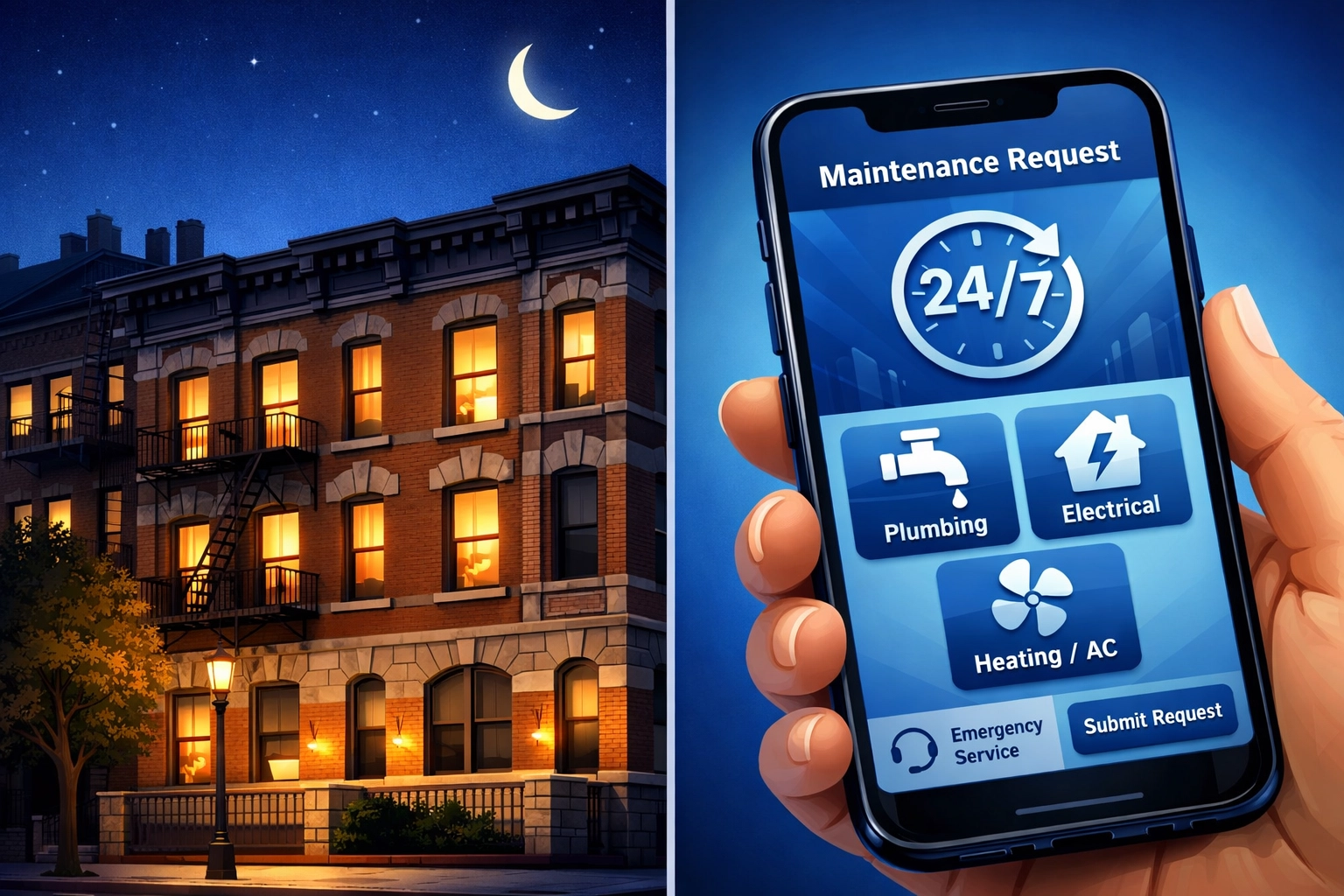
This is where most self-managed boards fall apart. A leaking pipe at 2 AM doesn't wait until Monday morning. Neither should your response. Professional Queens condo management services maintain relationships with vetted vendors who can respond immediately: not next week when it's convenient. Residents notice when maintenance requests disappear into a void versus when someone actually shows up to fix the problem. That difference in response time is everything.
Preserving What Makes Ridgewood Special
Ridgewood isn't Manhattan. It's not trying to be. Residents chose this neighborhood because of its character: the mix of longtime families and young professionals, the local businesses on Myrtle Avenue, the architectural details on those pre-war buildings. Good property management respects that. It means balancing necessary modernization with preserving historic elements, keeping common spaces welcoming rather than sterile, and fostering actual community connections instead of treating residents like anonymous account numbers.
At Landlord Management (LLM), we don't believe in the "set it and forget it" approach to condo management. Ridgewood buildings need managers who actually know the neighborhood, understand the specific challenges of older construction mixed with newer development, and can respond when things go sideways.
We Actually Answer the Phone
Seriously. When a resident calls with an urgent issue: a burst pipe, a security concern, a heating failure in January: they reach a real person who can dispatch help immediately. Our 24/7 emergency response isn't an answering service that takes messages. It's direct access to solutions.
We Communicate Before Problems Escalate
Monthly newsletters, budget updates, maintenance schedules: we keep residents informed so they're never blindsided. When Local Law compliance deadlines approach or major projects are coming, residents know what to expect and why it matters. Transparency builds trust, and trust makes everything else easier.
We Know Ridgewood's Quirks
Managing a condo in Ridgewood isn't the same as managing one in Long Island City. The buildings are different, the resident expectations are different, and the vendor networks are different. We work with contractors who understand pre-war construction, know how to navigate DOB inspections for older buildings, and can get permits processed efficiently through Queens offices.
We Protect Your Investment Through Preventive Maintenance
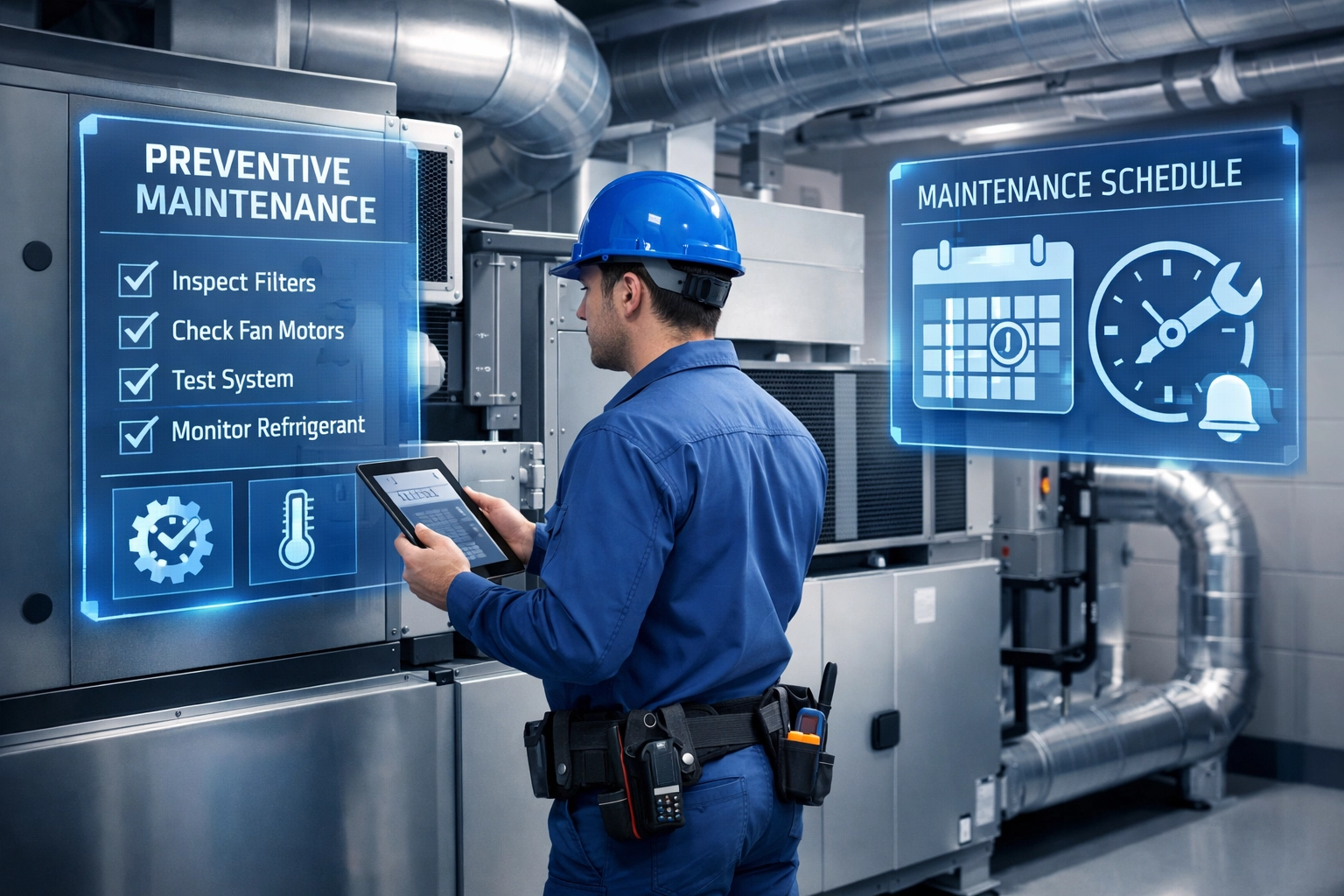
Happy residents don't want to deal with constant emergency repairs any more than your board does. Our preventive maintenance programs catch issues before they become crises. Regular HVAC inspections, roof checks after major storms, plumbing system evaluations: these aren't optional extras. They're how we keep your building running smoothly and your residents satisfied.

Let's talk about what happens when condo management falls apart. Residents get frustrated. They stop paying maintenance fees on time, forcing the board to chase payments and potentially initiate collections. They defer reporting small maintenance issues until they become expensive emergencies. They stop attending meetings, leaving boards without quorum. Worst case? They sell and move, creating turnover costs and potentially badmouthing the building to prospective buyers.
In Ridgewood's competitive market, reputation matters. Buildings with high turnover or known management problems struggle to maintain property values. A unit in a well-managed building with happy residents will consistently sell faster and for more money than a comparable unit in a poorly managed building: even on the same block.
Professional Queens condo management services prevent this downward spiral by addressing problems before they snowball. A resident complains about noise from upstairs? We mediate before it becomes a legal dispute. The boiler is making weird sounds? We schedule inspection before it fails in December. Small interventions prevent big problems.
One thing that sets Ridgewood apart from newer developments is that people actually want to know their neighbors. They care about the community feel. Professional property management supports that without getting in the way.
Simple things make a difference:
This isn't fluff. When residents feel connected to their building community, they're more likely to look out for each other, respect shared spaces, and invest in the building's long-term success. That translates directly to better property maintenance and stronger property values.
If your board is considering professional management: or switching from a manager who isn't cutting it: here's what actually matters:
24/7 Emergency Response
Not an answering service. Actual people who can dispatch help immediately when pipes burst or security issues arise.
Transparent Financial Reporting
Monthly statements that are actually readable, budget forecasting that makes sense, and reserve planning that prepares for major capital expenses before they become crises.
Proactive Communication
Regular updates to residents, clear explanations of board decisions, and accessible channels for resident concerns.
Local Knowledge
Managers who understand Queens regulations, have relationships with reliable local vendors, and know how to navigate DOB requirements efficiently.
Proven Vendor Network
Pre-vetted contractors who respond quickly, do quality work, and charge fair prices. The difference between a manager with established vendor relationships and one who Googles "emergency plumber near me" at 3 AM is significant.
If your board has been handling management internally and it's not working, you're not alone. Self-management works fine until it doesn't: and by the time boards realize they're in over their heads, resident satisfaction has usually already tanked.
The transition to professional management is smoother than most boards expect. A good management company like LLM will handle:
Most importantly, professional managers take the daily operational stress off volunteer board members so they can focus on strategic decisions rather than fielding 2 AM emergency calls.
Happy residents aren't about keeping everyone pleased all the time: that's impossible. They're about creating systems that work consistently, communicating clearly, responding fast when problems arise, and maintaining the community culture that makes Ridgewood special.
Professional Queens condo management services deliver this through experienced staff, established vendor networks, and proactive systems that catch problems early. For Ridgewood condos trying to maintain that neighborhood feel while handling the complexity of modern property management, it's not just worth it: it's essential.
If your building is struggling with resident complaints, high turnover, or board members burning out from management stress, reach out to LLM. We'll walk through what's working, what's not, and how professional management can stabilize your community while improving satisfaction across the board.