


Landlord insurance protects the building you rent out and the rent it brings in. In New York City, the stakes are high. Old buildings, busy streets, aging boilers and strict city rules mean one fire, leak or injury claim can hurt a building’s budget for years.
At Landlord Management, we manage rental buildings across Brooklyn, Queens and Manhattan. We don’t sell insurance. But we work with owners and their brokers every day, and we see how good records and steady upkeep make coverage easier to keep. This guide covers the questions NYC owners should ask before their next renewal.
Key Takeaways
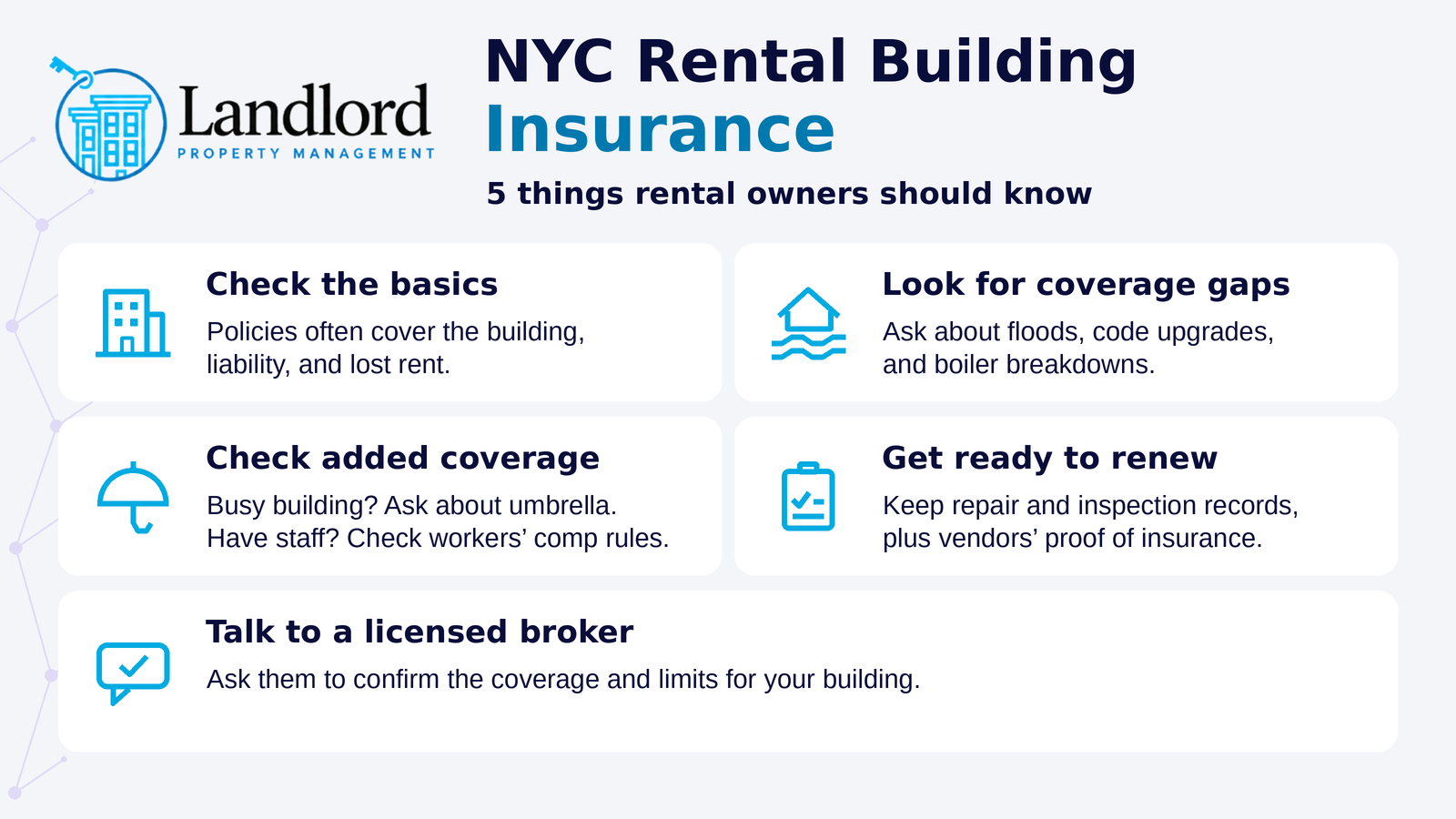
- Most policies combine property, liability and lost rent coverage.
- NYC owners should ask about flood, code upgrades and boiler breakdowns, since basic policies may limit them.
- Umbrella and workers’ comp coverage can matter for buildings with staff or lots of foot traffic.
- Clean repair records, inspections and vendor proof of insurance help at renewal time.
- A licensed insurance broker should confirm coverage details for your building.
What Does Landlord Insurance Usually Cover?
Landlord insurance is a policy for property you rent to others. It’s not the same as a homeowners policy, which is made for people who live in their own home. Most policies have three main parts.
- Property coverage. This pays to fix or rebuild the building after a covered loss, like a fire, wind or some kinds of water damage. It can also cover building systems and the appliances you supply.
- Liability coverage. This helps if someone gets hurt on the property and says the owner was at fault, such as a fall on a broken stair.
- Lost rent. If a covered loss means tenants can’t live in their units, this can replace rent while repairs are done.
The owner’s policy usually doesn’t cover what tenants own. That’s what renters insurance is for, and many owners urge tenants to get it.
What Coverage Questions Should NYC Owners Ask?
Every building is different, so a good policy starts with the right questions. Here are the ones we suggest you bring to your broker.
Is the building insured for full replacement cost?
Replacement cost pays to rebuild with similar materials. Actual cash value takes off for wear and age. In a city where labor and materials cost a lot, an old building value can leave a big gap after a major loss.
Does the policy include ordinance or law coverage?
When an older building is damaged, the city may require repairs to meet today’s codes. Ordinance or law coverage can help pay for those upgrades. A basic policy may not include it.
Are flood and sewer backup covered?
Most property policies leave out flood. Parts of Brooklyn, Queens and Manhattan sit in flood zones, and FEMA’s flood map tools can show where a building sits. Sewer and drain backup is often a separate add-on, too.
What about boilers and building equipment?
Equipment breakdown coverage can help when a boiler, electric panel or other big system fails without warning. If your building runs on central heat in winter, this question matters a lot.
Landlord Insurance Coverage Types at a Glance
| Coverage | What It Helps With | Who Should Ask About It |
|---|---|---|
| Property | Repairing or rebuilding after a covered loss | Every owner |
| General liability | Injury or damage claims from others | Every owner |
| Loss of rents | Lost rent while units are repaired | Owners who rely on rental income |
| Umbrella liability | Extra liability limits above the base policy | Larger or busier buildings |
| Flood | Rising water damage | Buildings in or near flood zones |
| Equipment breakdown | Sudden failure of boilers and systems | Buildings with central systems |
| Workers’ compensation | Injuries to building employees | Owners with supers or staff |
Do NYC Landlords Need Umbrella or Workers’ Comp Coverage?
It depends on the building. An umbrella policy adds more liability protection on top of the base policy. Many owners of larger or mixed-use buildings get one, because injury claims in New York can be costly to fight.
If you employ a super, porter or other staff, New York generally requires workers’ comp for them. Your broker and accountant can confirm what applies to your building.
How Does Building Management Affect Landlord Insurance?
Insurers look closely at how a building is run. A well-kept property with clear records is easier to insure and easier to defend if a claim comes up. Here’s what we focus on for our owners:
- Routine inspections. Regular property inspections catch leaks, trip hazards and worn equipment before they cause losses.
- Prompt repairs. We track work orders so repairs don’t sit open. Our guide to landlord maintenance responsibilities explains what owners are expected to handle.
- Vendor proof of insurance. Contractors in your building should carry their own insurance, and we collect proof before work starts.
- Incident records. When something happens, clear notes, photos and dates help your broker and insurer act fast.
- Clean books. Organized rental property accounting makes it easier to show lost rent or repair costs after a claim.
Which Building Risks Do Insurers Watch in NYC?
Some risks come up often in city buildings. E-bike and scooter batteries have become a major fire worry, and our post on e-bike battery safety covers steps owners can share with tenants. Leaks from old pipes, heat complaints in winter and slips on stairs and sidewalks are other common issues.
Fixing these risks shows insurers the building is cared for. It also protects tenants, which is the most important part of the job.
What Affects the Cost of Landlord Insurance?
We don’t quote premiums, but these factors usually shape the price:
- Building age, size and construction type
- Number of units and any commercial space
- Location, including flood zone status
- Claims history
- Condition of roofs, boilers, wiring and plumbing
- Coverage limits, deductibles and add-ons
A building with newer systems, fewer claims and good records usually has more choices at renewal. A licensed broker can compare companies and explain the trade-offs.
Get Help Keeping Your Building Insurable
Your policy works best when the building behind it is well run. Good upkeep, steady inspections and clear records help at every renewal and with every claim.
Landlord Management helps owners in Brooklyn, Queens and Manhattan run their buildings day to day. Learn more about our property management company in NYC, or call Landlord Management at (718) 536-2642.
Frequently Asked Questions
Q: What is landlord insurance?
A: It’s a policy for property you rent to others. It usually combines property, liability and lost rent coverage.
Q: Is landlord insurance required in New York?
A: State law doesn’t require it for every building, but most lenders do. Even without a loan, going without it puts the building and its rent at serious risk.
Q: Does landlord insurance cover tenants’ belongings?
A: Generally, no. Tenants need their own renters insurance to protect their belongings.
Q: Does landlord insurance cover flood damage?
A: Most policies leave out flood. Owners in or near flood zones should ask a broker about a separate flood policy.
Q: Can a property manager help with landlord insurance?
A: A property manager doesn’t sell insurance, but good management helps. Inspections, fast repairs, vendor proof of insurance and clear records make a building easier to insure.