

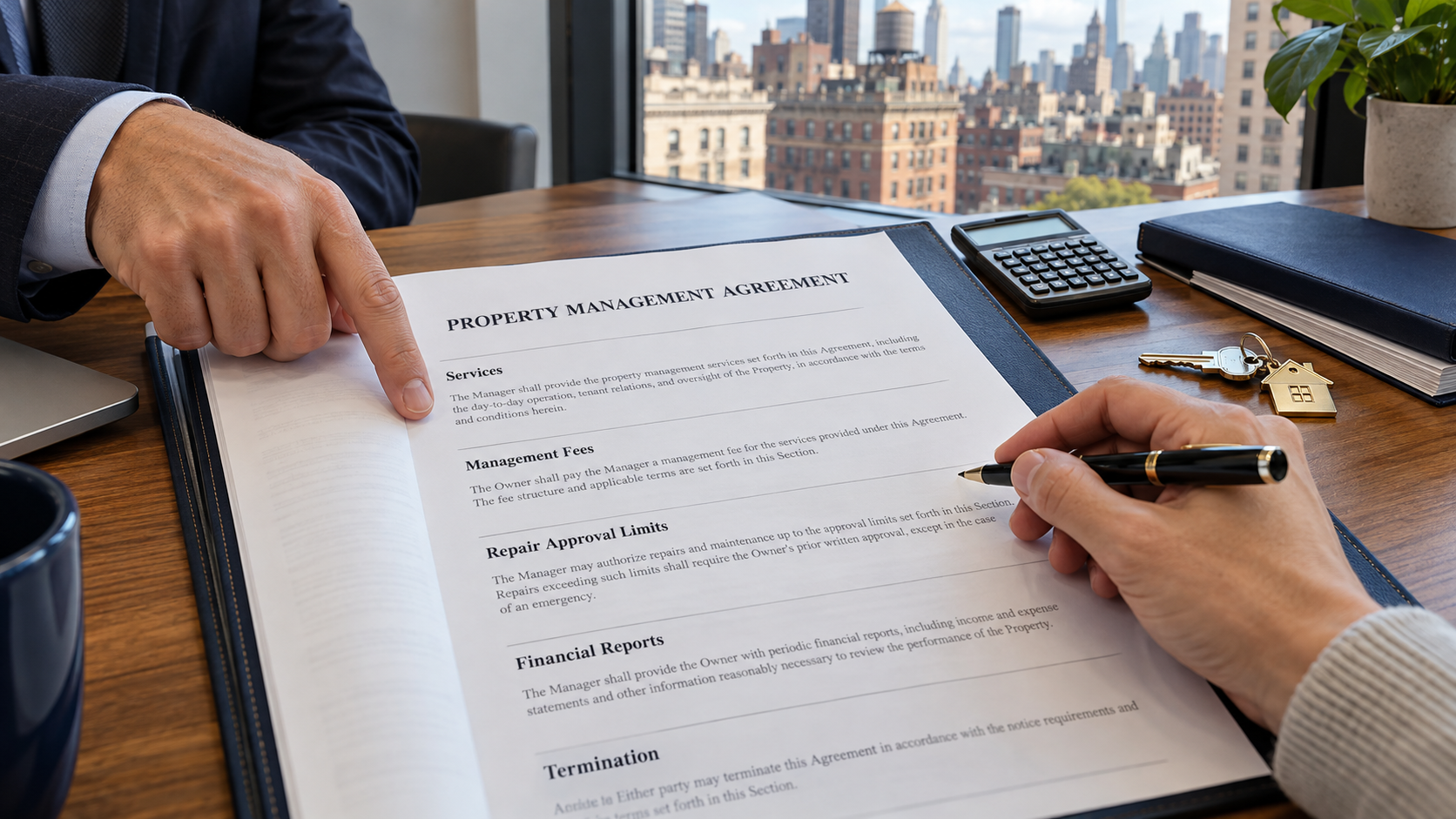
Hiring a property manager is a big step for any New York City owner. The management agreement is the document that sets the rules for that relationship. It explains what the manager will do, how they will be paid, how you will be kept informed and how either side can end the deal. Many disputes between owners and managers start with a vague contract. Knowing the key property management contract terms before you sign protects your building, your tenants and your income.
Key Takeaways
- Property management contract terms decide what your manager does, what it costs and how you get out of the deal.
- A good agreement spells out the scope of services, the reports you’ll get and all the management fees in a contract you can actually follow.
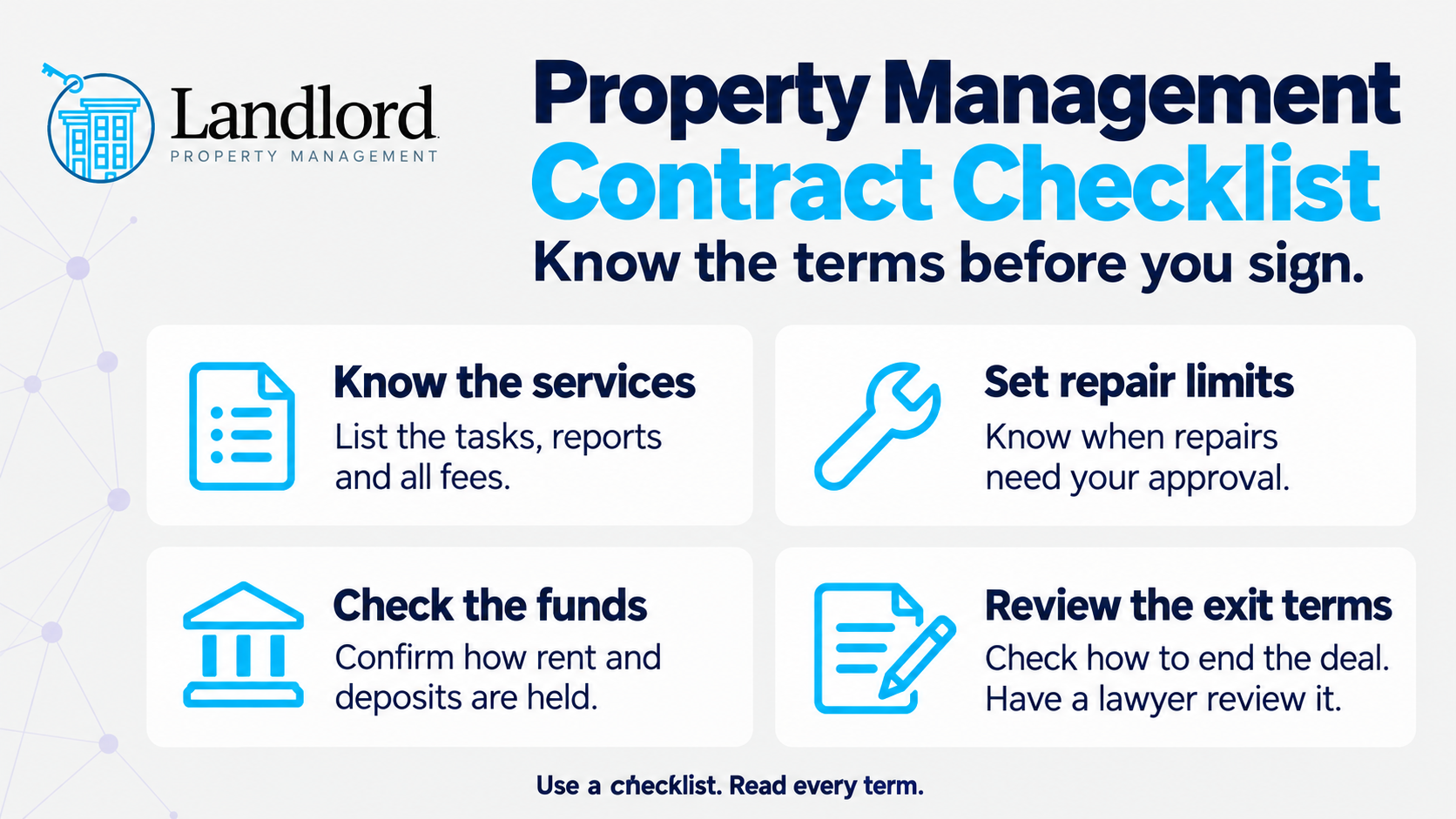
- Check repair approval limits, how rent and deposits are held and the termination clause before you sign.
- Work through a property management agreement checklist, and have a lawyer read the contract.
Why Does the Agreement Matter So Much?
A management agreement is a binding contract. Once signed, it controls who has authority over leasing, repairs, rent collection and money held for your building. If a duty is not written down, it can be hard to prove it was promised. A clear agreement sets expectations on day one and gives both sides something to point to when questions come up.
What Should the Scope of Services Cover?
The scope section lists the work the manager will handle. In an NYC building, that usually starts with collecting rent and keeping tenant accounts straight. Leasing comes next, including marketing vacant units and screening applicants. Then there’s the physical side, meaning repairs, routine maintenance and keeping an eye on vendors. Compliance with HPD and DOB belongs in this section too. If the building has rent-stabilized units, registrations and lease renewals should be named outright, since they have hard deadlines. Bookkeeping and owner reporting round it out.
Look for services that are not included, too. Some agreements treat legal work, major construction or insurance claims as extra services. That is normal, but it should be clear.
How Should Fees Be Described?
Every fee should be written out, along with when it applies. Common items include a monthly management fee, leasing fees and charges for special projects. Ask whether markups apply to vendor invoices. Make sure nothing is left to “as needed” without a clear rule. Clear fee terms prevent surprises when your first statement arrives.
What Reporting Should the Contract Promise?
Owners should know exactly what reports they will receive and when. A strong agreement names the reports, such as a monthly owner statement, a rent roll, an aged receivables report and a list of open work orders. It should say when reports will arrive and how you can access them, such as through an owner portal. Learn more about financial planning and budgeting support.
Who Can Approve Repairs and Spending?
Most agreements give the manager authority to approve repairs up to a set amount without asking you. Above that limit, the manager must get your approval, except in emergencies. Read this section carefully. Make sure the emergency definition is reasonable, such as no heat, a leak or a safety hazard. Confirm how you will be told about emergency spending after the fact.
How Is Your Money Held?
The agreement should explain where rent and security deposits are kept. In New York, tenant security deposits must be held according to state law, and the manager should follow those rules. Ask how often funds are sent to you and whether a reserve will be held for bills.
What About Term and Termination?
The term is how long the agreement lasts. Many agreements renew on their own unless someone gives notice. The termination section deserves a slow read. Find out how much notice either side has to give, and whether you can end it right away for cause if the manager does something serious. Some agreements charge a fee when the owner leaves, and owners often don’t notice that clause until they want out. The section should also say how records, keys, security deposits and building funds get handed to you or the next manager, and how fast.
We’d argue a clean exit process matters as much as a clean start. Owners who switch managers sometimes wait months to get their tenant ledgers back. That’s the kind of thing a well-written clause prevents.
Should the Manager Be Licensed and Insured?
In New York, a company that leases units and collects rent for other owners generally must hold a real estate broker license under Article 12-A of the Real Property Law. Ask for license details. The agreement should also require the manager to carry insurance, such as general liability and employee dishonesty coverage. You should also keep your own building insurance current.
How Are Compliance Duties Split?
NYC buildings face many rules, from HPD registration to local laws on gas piping, energy grades and heat. The agreement should say who tracks deadlines, who files paperwork and who pays fines if a deadline is missed. Read our guide to NYC building compliance.
Questions to Ask Before You Sign
Ask the manager to tell you, in plain words, what the base fee covers and what costs extra. Ask which reports you’ll get and on what day of the month. Find out the repair approval limit and whether it’s per job or per month. Ask how you’d end the agreement and what happens to your records if you do. And ask who files compliance paperwork and tracks the deadlines, because if the answer is vague now, it’ll be vague when a fine shows up.
Don’t sign on the spot, even if the manager is friendly and the proposal looks fine. Take the agreement home for a day, mark anything unclear and ask for changes in writing. Having your own lawyer read it is worth it. Once signed, keep a copy where you can find it, and put the renewal date in your calendar a couple of months ahead.
The mistakes we see most are a vague scope, an automatic renewal clause nobody noticed, a license and insurance that were never checked, and compliance duties that the contract simply doesn’t mention.

Work With a Transparent Partner
Strong property management contract terms make for a strong partnership. Landlord Management manages condos, co-ops and rental buildings across Brooklyn, Queens, Manhattan and the Bronx, with 24/7 support and financial transparency. Want a management partner who puts the details in writing? Call Landlord Management at (718) 536-2642 or request a proposal.
This article is general information, not legal advice. Laws and agency rules change, so confirm current requirements with a qualified attorney or the agency involved.
Frequently Asked Questions
Q: What should be in a property management contract?
A: The scope of services, fees, reporting, spending limits, how funds are held, the term and how to end it.
Q: Does a property manager need a license in New York?
A: A company that leases units and collects rent for others generally needs a real estate broker license.
Q: Can I end a management agreement early?
A: It depends on the termination clause. Read the notice and fee terms before signing.
Q: What is a repair approval limit?
A: The amount a manager can spend on repairs without asking you first.
Q: Who handles HPD and DOB compliance?
A: The agreement should say. Many full-service managers handle it.