

Simple Rental Property Accounting for Landlords: A Practical Guide
Rental property accounting helps landlords manage the many responsibilities that come with owning a rental property, which can become overwhelming despite the many advantages. Rental income is dependent on constant money inflow in the form of rent and expenses that are required to be covered for repairs and other expenses. Without the right accounting practices in place, it may become hard to keep track of all the money spent and earned. Luckily, it is not necessary to get confused about the numbers since organized financial recordkeeping services can make the process easier. With the right set of guidelines and Landlord Management’s help, the landlords of New York can stay on top of their numbers and spend significantly less time on paperwork.
Key Takeaways
- Track monthly rent payments and expenses related to your property
- Keep track of bills and other expenses such as receipts, invoices, and bank statements.
- Review the cash flow situation
- Prepare the necessary information for taxation
- Landlord Management can assist you in bookkeeping and preparing financial reports
Keep Rental Property Accounting, Income, and Expenses Organized
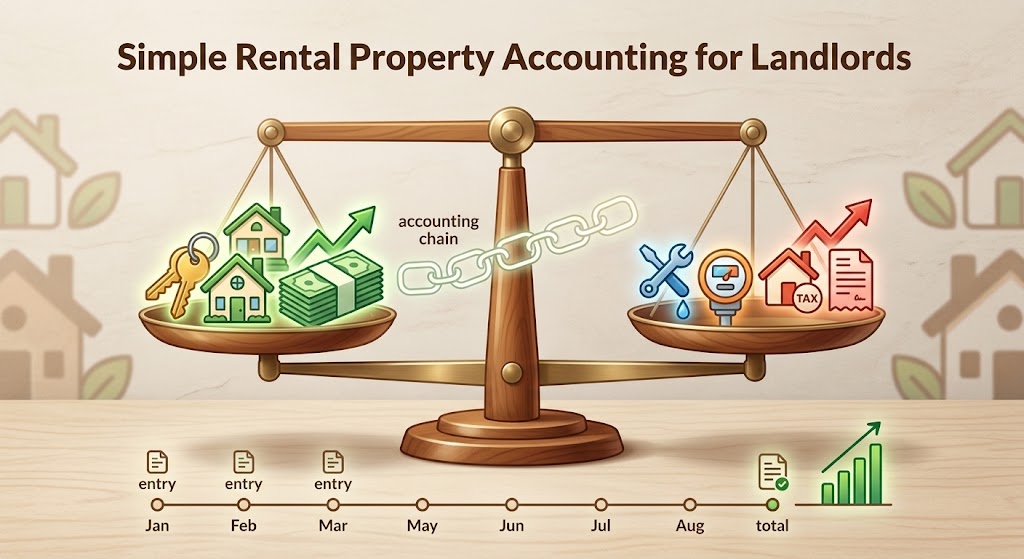
First, rental property accounting requires compiling a detailed list of all income and expenses associated with the rental property. The monthly income from rentals should be noted down, as well as any additional fees collected from tenants. On the other side, all the payments for repairs, insurance, bills, taxes, and other charges paid for the property should be tracked. It will allow you to monitor the cash flow accurately and avoid any potential miscalculations instead of guessing or using organized financial recordkeeping practices. In this case, it might also be useful to note down all the income and expenses in separate accounts, if possible, to avoid mixing personal and business expenses and to have a clearer picture of the situation at hand.
Record Rental Property Accounting Expenses as They Happen
Small rental property accounting expenses can easily slip through the cracks, especially when landlords manage multiple rental units. For instance, the owner may spend some money repairing a pipe, buy a new lock, or have some other inconspicuous expenses. In this case, it may be helpful to maintain organized expense records by saving all the tickets and documents regarding the expenditures and collecting them in a particular folder. It is essential to systematize the information and write down the date, cost, property, and purpose of the transaction. In addition, it is vital to collect all the invoices and paperwork from contractors and keep them in an accessible place. Consequently, if there is a sudden need to take a close look at the spending habits, it will be possible to do that quickly and without stress.

Monitor Rental Property Accounting Cash Flow Every Month
Cash flow is the amount of money left over from the money received from your property after money has been paid out in the form of other expenses. To find cash flow, you would take the amount of your rent and subtract it from the amount of money paid to the bank in the form of a mortgage, upkeep fees, insurance, taxes, and any other expenses. Now, when thinking about income from a property, you must not think that just because someone is paying rent every month, you are making a profit. Accurate financial record-keeping helps you monitor vacancies, unpaid rent, and expenses that can make a sudden impact on the cash flow of a property. The best way to look at this is to keep track of things every month, and if you see a sudden change in upkeep fees or unpaid rent, you should look into it. It is important to be one step ahead of a financial disaster, rather than behind it.
Use Rental Property Accounting Reports to Make Better Decisions
Financial reports help transform day-to-day expenses into valuable information. Firstly, an income and expense report helps you understand the inflow and outflow of money from the property. Secondly, the balance sheet helps summarize the financial situation of the property. Moreover, a regular report can highlight detailed property performance insights and expenses that need special attention. For example, if in the winter, the bills for utilities are growing rapidly, or one of the units requires recurrent maintenance, the recurring costs may affect the income and need to be reviewed. A landlord Management professional can assist in preparing the financial statements to review the property’s performance. Reports can be provided on a monthly, quarterly, and yearly basis, allowing the owner to obtain a profound understanding of their property’s performance.
Prepare Your Rental Property Accounting Records Before Tax Season
Tax season is always a stressful time, but it becomes much easier when you stay on top of it throughout the year. Keep your rental income and expense documents organized. In addition, make sure to separate the expenses that require a repairer from those that don’t. Lastly, if there is something you are not quite sure about, ask a qualified tax expert. They will be able to review your receipts and advise you on further action. That way, you will avoid spending hours and hours going through emails and financial statements right before the deadline.

Conclusion
Strong financial management is built on simple foundations. Recording expenses and income promptly, logging and analyzing every expense, studying the cash flow, maintaining the documents in order, and tracking all expenses are the main pillars of solid financial management. All of them are rather simple and down-to-earth tasks, yet they should be undertaken to fully grasp the financial situation and forecast future expenses. The Landlord Management company offers its assistance to ensure that the financial records are kept in perfect order. With experienced professionals by one’s side, the process becomes significantly easier and less time-consuming. One can rely on Landlord Management and have full control of all expenses and income statements.
Simplify Rental Property Accounting With Landlord Management
Managing a property’s finances plus dealing with all the tenant demands and maintenance issues is a full-time activity. Landlord Management can help New York property owners to organize their finances by providing bookkeeping, transaction recording, and financial reporting services, as well as handling property management tasks such as collecting rent payments and tending to maintenance issues. Not only will it help you keep your operations running smoothly, but it will also ensure that your financial and operational data are connected and up-to-date. Instead of spending your time each month chasing any pending transactions, you can review the reports it prepares for you and monitor your objectives for the property. To learn more about how it can help you, give it a call at (718) 536-2642. Contact us today!
Frequently Asked Questions
Q: What does Landlord Management handle?
A: Landlord Management can support tenant communication, rent collection, leasing, maintenance coordination, inspections, financial reporting, and compliance-related responsibilities.
Q: What expenses should be accounted for by a landlord?
A: A landlord should track all expenses related to the property, including repair costs, insurance, utility bills, and tax payments. The taxpayer needs to provide documentation, that is, supporting receipts and invoices, for each category of expenditures.
Q: How often should I review my rental property finances?
A: Review your income and expenses monthly. Additionally, examine quarterly and year-end reports to identify patterns and plan for upcoming costs.
Q: Can Landlord Management help with bookkeeping?
A: Yes. Landlord Management offers bookkeeping and financial reporting services that help property owners organize transactions and review financial performance.
Q: How can I get help managing my rental property finances?
A: Contact Landlord Management at (718) 536-2642 or visit its website to request a consultation about bookkeeping and property management services.