
Owning a rent-stabilized building in Brooklyn, whether it's in Williamsburg, Bed-Stuy, Crown Heights, or Bay Ridge, comes with a unique set of challenges. You can't simply raise rents to match market rates. You can't deregulate units when they hit a certain threshold. And with the Housing Stability and Tenant Protection Act (HSTPA) of 2019 still shaping the landscape, the old playbook no longer applies.
But here's the reality: Brooklyn property owners are still finding ways to maintain healthy Net Operating Income (NOI) on rent-stabilized assets. The key isn't chasing loopholes, it's mastering compliance while running a tight, efficient operation.
This guide breaks down exactly how to do that.
The NYC Rent Guidelines Board (RGB) sets the maximum rent increases you can apply to stabilized leases each year. For lease renewals in 2024, the board approved:
These percentages apply to lease renewals only. You cannot charge vacancy bonuses or longevity surcharges, those were eliminated under HSTPA. And high-rent deregulation? That ended on June 14, 2019. Units that were previously deregulated stay that way, but you cannot deregulate new apartments regardless of rent level.
What this means for your NOI: revenue growth on the rent side is modest and predictable. Planning your budget around RGB-approved increases (rather than hoping for larger gains) keeps your projections realistic.
Major Capital Improvements (MCIs) and Individual Apartment Improvements (IAIs) remain two legal pathways to increase rents beyond the annual RGB adjustment, but they come with strict caps and requirements.
Major Capital Improvements (MCI)
MCIs are building-wide upgrades that benefit all tenants, think new boilers, roof replacements, window installations, or elevator modernization. If approved by DHCR, you can increase rents across all stabilized units, but:
Individual Apartment Improvements (IAI)
IAIs apply to specific apartment renovations done during vacancy, new kitchens, bathrooms, or flooring. Under current rules:
The bottom line: both MCI and IAI programs can meaningfully impact your rent roll, but only if you maintain meticulous records and follow DHCR procedures precisely.
Every rent-stabilized unit must be registered annually with the Division of Housing and Community Renewal (DHCR). Missing or incorrect registrations can freeze your ability to collect legal rent increases, and create serious complications during building sales or refinancing.
Key registration requirements include:
For Brooklyn property owners managing buildings in neighborhoods like Park Slope, Flatbush, or Downtown Brooklyn, staying current on DHCR filings isn't optional, it's foundational to protecting your asset's value.

Since rent growth is capped, expense management becomes the primary lever for improving NOI. Here's where smart rental property management in Brooklyn makes the difference.
Vendor Bid Comparisons
Are you getting competitive pricing on contracts for cleaning, landscaping, elevator maintenance, and trash removal? Many Brooklyn landlords stick with the same vendors for years without ever testing the market. Getting three bids on every major contract can reduce costs by 10-20%.
Combined Buying Power
Working with a property management company that handles multiple buildings means better pricing on supplies, insurance, and contractor rates. At Landlord Management (LLM), our portfolio-wide relationships translate to savings individual owners can't access on their own.
Preventive Maintenance
Deferred maintenance creates expensive emergencies. Scheduled inspections, seasonal HVAC servicing, and proactive plumbing work cost less than emergency repairs, and keep tenants satisfied (which reduces turnover and vacancy loss).
Energy Efficiency Upgrades
LED lighting, smart thermostats, and efficient boilers reduce utility costs. These upgrades may also qualify as MCIs, creating a path to recover costs through rent increases while lowering your operating expenses long-term.
The NYC Department of Housing Preservation and Development (HPD) enforces the Housing Maintenance Code. Open violations, especially Class B (hazardous) and Class C (immediately hazardous), can result in fines, tenant rent reductions, and complications with financing.
Best practices for staying compliant:
For owners in older Brooklyn neighborhoods, Bushwick, Crown Heights, Sunset Park, buildings often have aging systems that require proactive attention. A single ignored complaint can snowball into multiple violations and significant expense.

Local Law 97 sets carbon emission limits for buildings over 25,000 square feet, with penalties beginning in 2024 for non-compliance. Many rent-stabilized buildings in Brooklyn fall into this category.
The challenge: you need to invest in energy upgrades (new windows, boiler replacements, building envelope improvements) to reduce emissions, but your ability to recoup those costs through rent increases is limited.
Strategies to consider:
The buildings that adapt early will avoid penalties and potentially reduce operating costs, those that wait face compounding expenses.
Rent collection in stabilized buildings requires a balance of firmness and legal precision. You cannot simply evict for non-payment without following proper procedures, and the eviction process in NYC remains lengthy.
Effective collection practices include:
A 24/7 owner and tenant portal, like what LLM provides, makes rent payments easier and creates a clear record of all transactions. Transparency reduces disputes and keeps cash flow predictable.
Can I still deregulate rent-stabilized apartments in Brooklyn?
No. High-rent deregulation was eliminated under HSTPA effective June 14, 2019. Units previously deregulated remain so, but no new deregulation is permitted.
How much can I raise rent on a stabilized unit?
Only by the amount approved by the RGB for lease renewals (currently 2.75% for one-year, 5.25% for two-year), plus any approved MCI or IAI increases.
What happens if I miss my DHCR registration?
You may be barred from collecting rent increases until registration is corrected, and it can create title issues during a sale or refinance.
Do I need a property management company for a rent-stabilized building?
Not legally, but experienced Brooklyn property management companies help you navigate compliance requirements, reduce expenses, and avoid costly mistakes.
Managing rent-stabilized buildings in Brooklyn requires specialized knowledge: DHCR filings, RGB guidelines, MCI applications, HPD compliance, and more. At Landlord Management (LLM), we handle all of it with full transparency, simple pricing, and no hidden fees.
Our 24/7 portal gives you real-time visibility into your property's performance. Our combined buying power reduces your operating costs. And our rent stabilization expertise keeps you compliant while maximizing NOI.
Request a proposal today and see what professional property management in Brooklyn NY can do for your bottom line.
If you own rental property in Brooklyn: whether it's a small walkup in Bed-Stuy, a mixed-use building in Bushwick, or a larger multifamily in Flatbush: you've probably asked yourself this question at least once: should I keep managing this myself, or is it time to bring in a professional?
There's no universal answer. The right choice depends on your building's size, your available time, your expertise with NYC regulations, and your long-term investment goals. This guide breaks down the real costs, scenarios, and decision factors so you can make an informed choice for your Brooklyn property.
Self-management sounds straightforward until you list everything it includes. As a self-managing owner, you're responsible for:
For a small 2-4 unit building in Crown Heights or Park Slope where you live on-site, this might feel manageable. But as unit count increases or rent stabilization enters the picture, the complexity grows exponentially.

The surface-level math seems simple: property management fees typically run 7% to 10% of monthly rent. Skip the fee, save money, right?
Not always. Here's a more complete cost framework to consider:
Your time has value. If you're spending 10-15 hours per month on property management tasks, calculate what that time is worth. For many Brooklyn owners with full-time jobs, that "free" self-management costs more than a professional fee when you factor in opportunity cost.
Professional management companies in Brooklyn typically fill vacancies faster through better marketing, established listing networks, and streamlined showing processes. A unit sitting empty for an extra month in Williamsburg or Downtown Brooklyn can cost you $3,000-$5,000 in lost rent: far more than a management fee.
Self-managing owners pay retail rates for plumbers, electricians, and contractors. Brooklyn property management companies negotiate preferred rates through volume relationships. On a $2,000 repair, that difference might be 15-25%.
Miss a DHCR filing deadline on a rent-stabilized unit? Forget to register with HPD? Overlook a Local Law 97 benchmark? The fines and legal exposure can dwarf years of management fees. (For more on rent-stabilized compliance, see our guide to rent-stabilized property management.)
Professional managers provide organized monthly statements, year-end reporting, and 1099 preparation. Self-managing means either doing this yourself or paying a bookkeeper separately.
When evictions become necessary, professional managers know the process, have attorney relationships, and handle it efficiently. DIY evictions often drag out longer and cost more in legal fees and lost rent.
The self-manage vs. hire decision looks different depending on what you own.
If you own a small building in Bay Ridge, Sunset Park, or Brooklyn Heights and live nearby (or on-site), self-management can work: especially if all units are market-rate. You'll know your tenants personally, handle minor issues quickly, and keep costs low.
But consider professional management if:
At this scale, self-management becomes a part-time job minimum. Buildings in Bushwick, Flatbush, or Bed-Stuy with 15-30 units generate constant maintenance requests, turnover, and compliance requirements. Most owners at this level find that professional rental property management in Brooklyn actually costs less than DIY when you add up independent manager salaries, accountants, legal consultants, and full-price vendor work.
If your building has rent-stabilized units: common throughout Crown Heights, Flatbush, and older Williamsburg properties: the compliance burden alone often justifies professional management. Rent stabilization involves:
One mistake here can result in rent rollbacks, penalties, or years of legal headaches. (Check out our rent stabilization requirements breakdown for details.)

Condo and co-op management involves board relations, common area maintenance, reserve fund management, and shareholder/owner communication: a different skill set than standard rental management. Professional apartment management companies in Brooklyn with condo/co-op experience handle these complexities while keeping boards informed and buildings well-maintained.
If you're leaning toward hiring professional management, ask these questions before signing:
Not all management companies in Brooklyn deliver equal value. Watch out for:

Use this framework to guide your decision:
Self-management might work if:
Professional management makes sense if:
At Landlord Management (LLM), we specialize in Brooklyn property management for owners who want professional oversight without hidden costs or communication headaches.
What sets us apart:
Whether you own a six-unit in Park Slope or a 40-unit in Flatbush, we tailor our approach to your building's needs.
Ready to see if professional management makes sense for your Brooklyn property? Request a proposal and we'll walk through your specific situation: no pressure, no obligation.
How much do Brooklyn property management companies typically charge?
Most charge between 7% and 10% of monthly collected rent, though fee structures vary. Some charge flat fees per unit. Always ask what's included versus billed separately.
Is self-management realistic for rent-stabilized buildings?
It's possible but risky. Rent stabilization compliance is complex, and mistakes can result in significant financial penalties. Most owners with regulated units benefit from professional management with DHCR experience.
What neighborhoods in Brooklyn does LLM serve?
We manage properties throughout Brooklyn, including Williamsburg, Bushwick, Bed-Stuy, Crown Heights, Park Slope, Flatbush, Sunset Park, Bay Ridge, Downtown Brooklyn, and Brooklyn Heights.
Owning a rent-stabilized building in Brooklyn, whether it's in Williamsburg, Bed-Stuy, Crown Heights, or Bay Ridge, comes with a unique set of challenges. You can't simply raise rents to match market rates. You can't deregulate units when they hit a certain threshold. And with the Housing Stability and Tenant Protection Act (HSTPA) of 2019 still shaping the landscape, the old playbook no longer applies.
But here's the reality: Brooklyn property owners are still finding ways to maintain healthy Net Operating Income (NOI) on rent-stabilized assets. The key isn't chasing loopholes, it's mastering compliance while running a tight, efficient operation.
This guide breaks down exactly how to do that.
The NYC Rent Guidelines Board (RGB) sets the maximum rent increases you can apply to stabilized leases each year. For lease renewals in 2024, the board approved:
These percentages apply to lease renewals only. You cannot charge vacancy bonuses or longevity surcharges, those were eliminated under HSTPA. And high-rent deregulation? That ended on June 14, 2019. Units that were previously deregulated stay that way, but you cannot deregulate new apartments regardless of rent level.
What this means for your NOI: revenue growth on the rent side is modest and predictable. Planning your budget around RGB-approved increases (rather than hoping for larger gains) keeps your projections realistic.
Major Capital Improvements (MCIs) and Individual Apartment Improvements (IAIs) remain two legal pathways to increase rents beyond the annual RGB adjustment, but they come with strict caps and requirements.
Major Capital Improvements (MCI)
MCIs are building-wide upgrades that benefit all tenants, think new boilers, roof replacements, window installations, or elevator modernization. If approved by DHCR, you can increase rents across all stabilized units, but:
Individual Apartment Improvements (IAI)
IAIs apply to specific apartment renovations done during vacancy, new kitchens, bathrooms, or flooring. Under current rules:
The bottom line: both MCI and IAI programs can meaningfully impact your rent roll, but only if you maintain meticulous records and follow DHCR procedures precisely.
Every rent-stabilized unit must be registered annually with the Division of Housing and Community Renewal (DHCR). Missing or incorrect registrations can freeze your ability to collect legal rent increases, and create serious complications during building sales or refinancing.
Key registration requirements include:
For Brooklyn property owners managing buildings in neighborhoods like Park Slope, Flatbush, or Downtown Brooklyn, staying current on DHCR filings isn't optional, it's foundational to protecting your asset's value.
Since rent growth is capped, expense management becomes the primary lever for improving NOI. Here's where smart rental property management in Brooklyn makes the difference.
Vendor Bid Comparisons
Are you getting competitive pricing on contracts for cleaning, landscaping, elevator maintenance, and trash removal? Many Brooklyn landlords stick with the same vendors for years without ever testing the market. Getting three bids on every major contract can reduce costs by 10-20%.
Combined Buying Power
Working with a property management company that handles multiple buildings means better pricing on supplies, insurance, and contractor rates. At Landlord Management (LLM), our portfolio-wide relationships translate to savings individual owners can't access on their own.
Preventive Maintenance
Deferred maintenance creates expensive emergencies. Scheduled inspections, seasonal HVAC servicing, and proactive plumbing work cost less than emergency repairs, and keep tenants satisfied (which reduces turnover and vacancy loss).
Energy Efficiency Upgrades
LED lighting, smart thermostats, and efficient boilers reduce utility costs. These upgrades may also qualify as MCIs, creating a path to recover costs through rent increases while lowering your operating expenses long-term.
The NYC Department of Housing Preservation and Development (HPD) enforces the Housing Maintenance Code. Open violations, especially Class B (hazardous) and Class C (immediately hazardous), can result in fines, tenant rent reductions, and complications with financing.
Best practices for staying compliant:
For owners in older Brooklyn neighborhoods, Bushwick, Crown Heights, Sunset Park, buildings often have aging systems that require proactive attention. A single ignored complaint can snowball into multiple violations and significant expense.
Local Law 97 sets carbon emission limits for buildings over 25,000 square feet, with penalties beginning in 2024 for non-compliance. Many rent-stabilized buildings in Brooklyn fall into this category.
The challenge: you need to invest in energy upgrades (new windows, boiler replacements, building envelope improvements) to reduce emissions, but your ability to recoup those costs through rent increases is limited.
Strategies to consider:
The buildings that adapt early will avoid penalties and potentially reduce operating costs, those that wait face compounding expenses.
Rent collection in stabilized buildings requires a balance of firmness and legal precision. You cannot simply evict for non-payment without following proper procedures, and the eviction process in NYC remains lengthy.
Effective collection practices include:
A 24/7 owner and tenant portal, like what LLM provides, makes rent payments easier and creates a clear record of all transactions. Transparency reduces disputes and keeps cash flow predictable.
Can I still deregulate rent-stabilized apartments in Brooklyn?
No. High-rent deregulation was eliminated under HSTPA effective June 14, 2019. Units previously deregulated remain so, but no new deregulation is permitted.
How much can I raise rent on a stabilized unit?
Only by the amount approved by the RGB for lease renewals (currently 2.75% for one-year, 5.25% for two-year), plus any approved MCI or IAI increases.
What happens if I miss my DHCR registration?
You may be barred from collecting rent increases until registration is corrected, and it can create title issues during a sale or refinance.
Do I need a property management company for a rent-stabilized building?
Not legally, but experienced Brooklyn property management companies help you navigate compliance requirements, reduce expenses, and avoid costly mistakes.
Managing rent-stabilized buildings in Brooklyn requires specialized knowledge: DHCR filings, RGB guidelines, MCI applications, HPD compliance, and more. At Landlord Management (LLM), we handle all of it with full transparency, simple pricing, and no hidden fees.
Our 24/7 portal gives you real-time visibility into your property's performance. Our combined buying power reduces your operating costs. And our rent stabilization expertise keeps you compliant while maximizing NOI.
Request a proposal today and see what professional property management in Brooklyn NY can do for your bottom line.
Brooklyn vs queens property management costs vary because each borough has different rent levels, building types, compliance demands, and service expectations in 2026.
Brooklyn Management Cost Structure:
Queens Management Cost Comparison:
The cost difference stems from Brooklyn’s higher rent levels: with median rents often $300-500 higher per unit than comparable Queens properties: creating a larger fee base even at similar percentage rates. Queens neighborhoods like Astoria show median rents around $1,339 compared to Brooklyn averages, making management more accessible for smaller property owners.
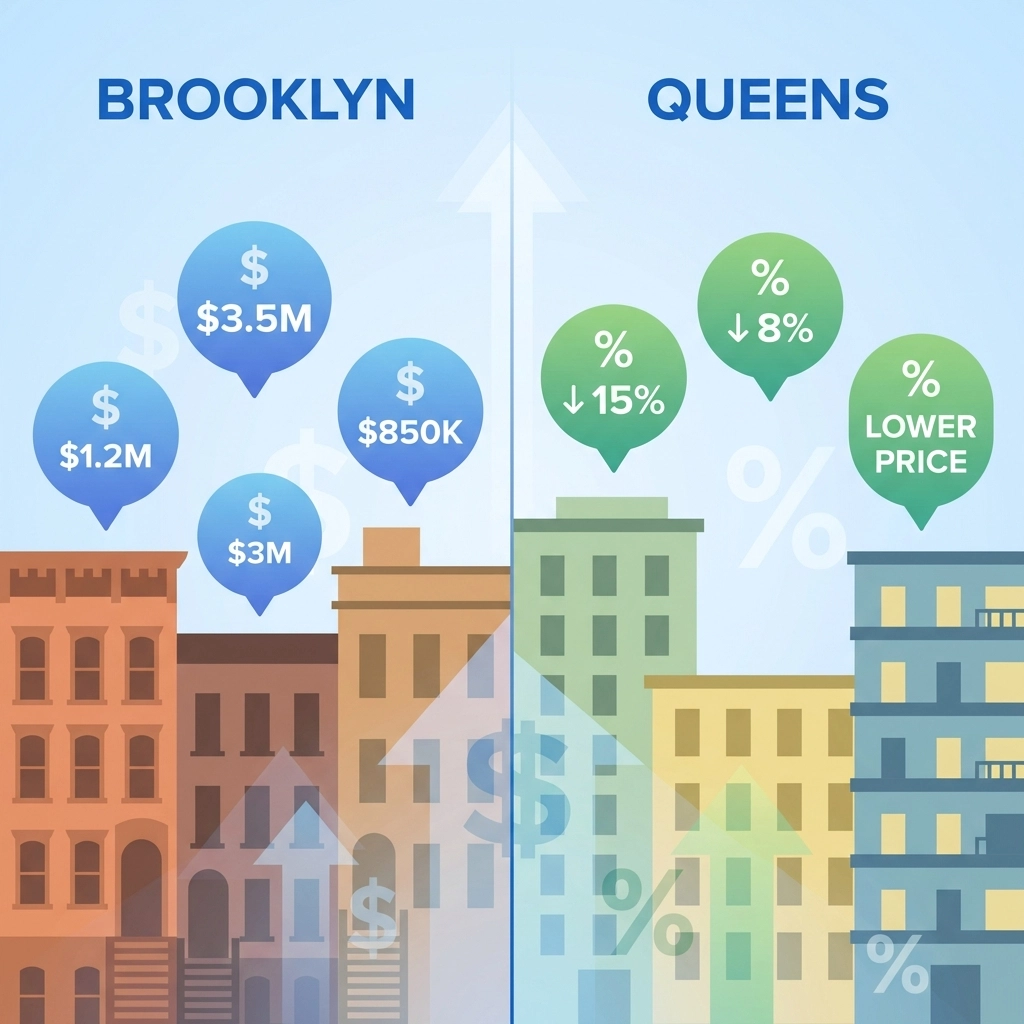
Property management scope remains consistent across Brooklyn and Queens, but implementation varies based on building types and tenant demographics common to each area.
Essential Service Categories:
Financial Management & Reporting
Maintenance & Operations
Tenant Relations & Compliance
The key difference lies in execution: Brooklyn properties often require more sophisticated vendor networks due to higher-end finishes and tenant expectations, while Queens management focuses on cost-effective maintenance solutions that maintain quality without premium pricing.
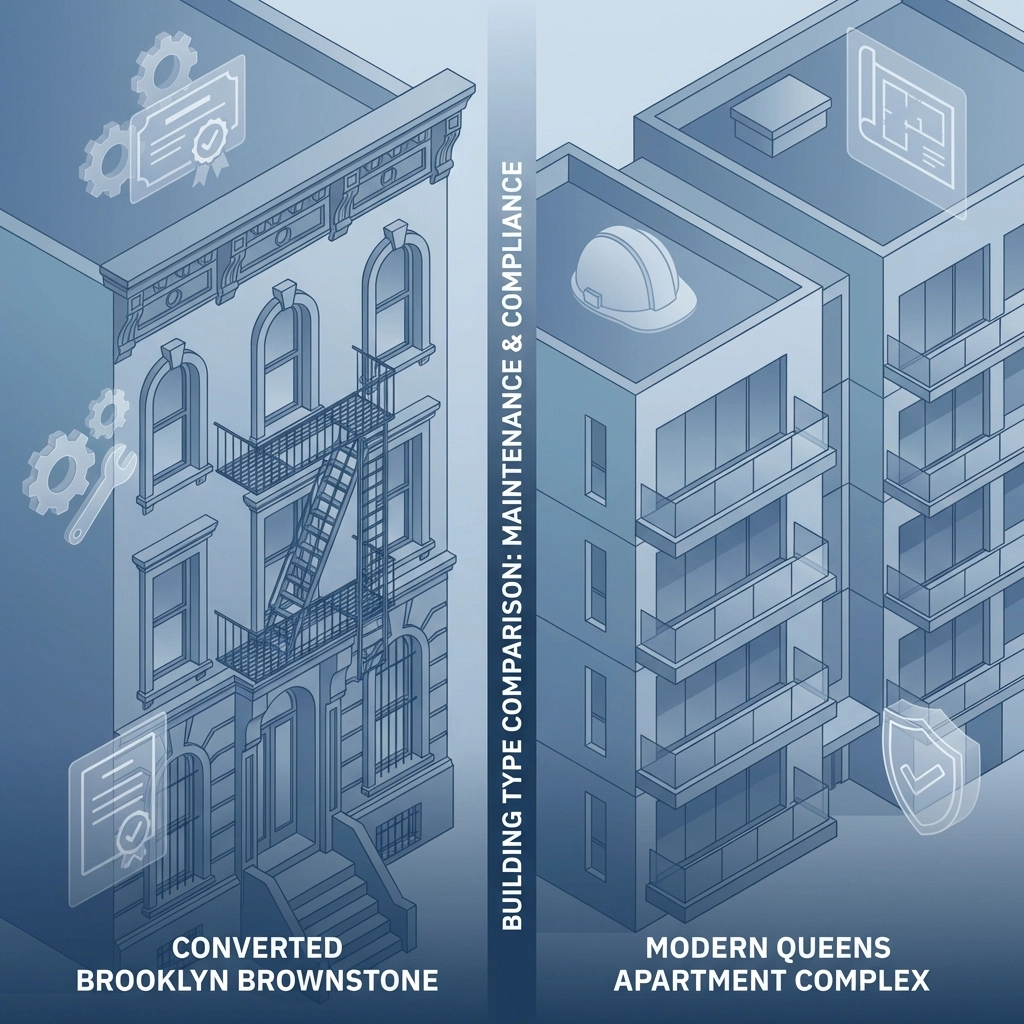
Each borough’s dominant property types create distinct management requirements that affect both service scope and pricing.
Brooklyn Property Characteristics:
Queens Property Profile:
These differences mean Brooklyn management requires more nuanced expertise in areas like rent stabilization compliance and historic building maintenance, while Queens management can leverage economies of scale through standardized processes and competitive contractor bidding.

Modern property management in both boroughs now centers around digital platforms that provide transparency and real-time access to property information.
Standard Technology Offerings:
Advanced Features for Competitive Management:
The expectation for transparency has become non-negotiable in 2026. Property owners in both Brooklyn and Queens should insist on management companies that provide full visibility into operations without additional fees for basic reporting or portal access.
While both boroughs operate under NYC’s regulatory framework, practical compliance management varies based on building age, type, and tenant composition.
Universal NYC Compliance Areas:
Borough-Specific Considerations:
Brooklyn Focus Areas:
Queens Considerations:
Effective management companies should provide compliance expertise as part of their standard service, not as premium add-ons that increase costs.
Financial management represents the cornerstone of professional property management, with 2026 standards emphasizing real-time access and complete transparency.
Essential Reporting Components:
Advanced Financial Services:
The benchmark for acceptable service includes providing this financial transparency at no additional charge. Management companies charging separate fees for basic reporting or owner portal access indicate outdated business models that don’t align with 2026 owner expectations.
Property management needs scale differently based on building size and complexity, affecting both service requirements and cost structures in Brooklyn and Queens.
Small Buildings (2-20 Units):
Mid-Size Buildings (20-100 Units):
Large Buildings (100+ Units):
The optimal choice depends on matching management company capabilities to your specific building profile rather than simply comparing fees across providers.

Selecting property management requires evaluating capabilities beyond basic fee structures, particularly given the evolving expectations for transparency and technology integration.
Essential Evaluation Questions:
Advanced Capability Assessment:
Red Flags to Avoid:
The goal is finding a management partner that combines transparent pricing with comprehensive service delivery, eliminating the hidden costs and service gaps that create problems for property owners down the road.
Property management in Brooklyn and Queens requires balancing cost considerations with service quality, particularly as regulatory compliance becomes more complex and tenant expectations continue evolving. The most successful partnerships develop when owners clearly understand what services they need and management companies can deliver comprehensive solutions with full transparency about costs and capabilities. Understanding Brooklyn vs queens property management helps owners choose services that match their building size, compliance needs, and long-term investment goals.
Owners should review and when comparing borough requirements.
Learn more about our Landlord Management property management services.
Managing rent-stabilized properties in Brooklyn and Queens requires navigating a complex web of regulations that can overwhelm even experienced property owners. With approximately 1 million rent-stabilized units across New York City, these properties represent a significant portion of the rental market: but they come with strict compliance requirements that can result in costly penalties if mishandled.
Rent-stabilized properties are subject to oversight by the Division of Housing and Community Renewal (DHCR) and must follow guidelines set by the NYC Rent Guidelines Board (RGB). Property owners must manage annual registrations, comply with specific rent increase limitations, handle lease renewals according to strict protocols, and maintain buildings to required standards: all while protecting tenant rights that extend far beyond typical landlord-tenant relationships.
Every rent-stabilized property owner must file annual registrations with DHCR by April 1st each year. This registration process involves submitting detailed information about each stabilized unit, including current rent amounts, tenant information, and any applicable rent increases from the previous year.
The registration must include:
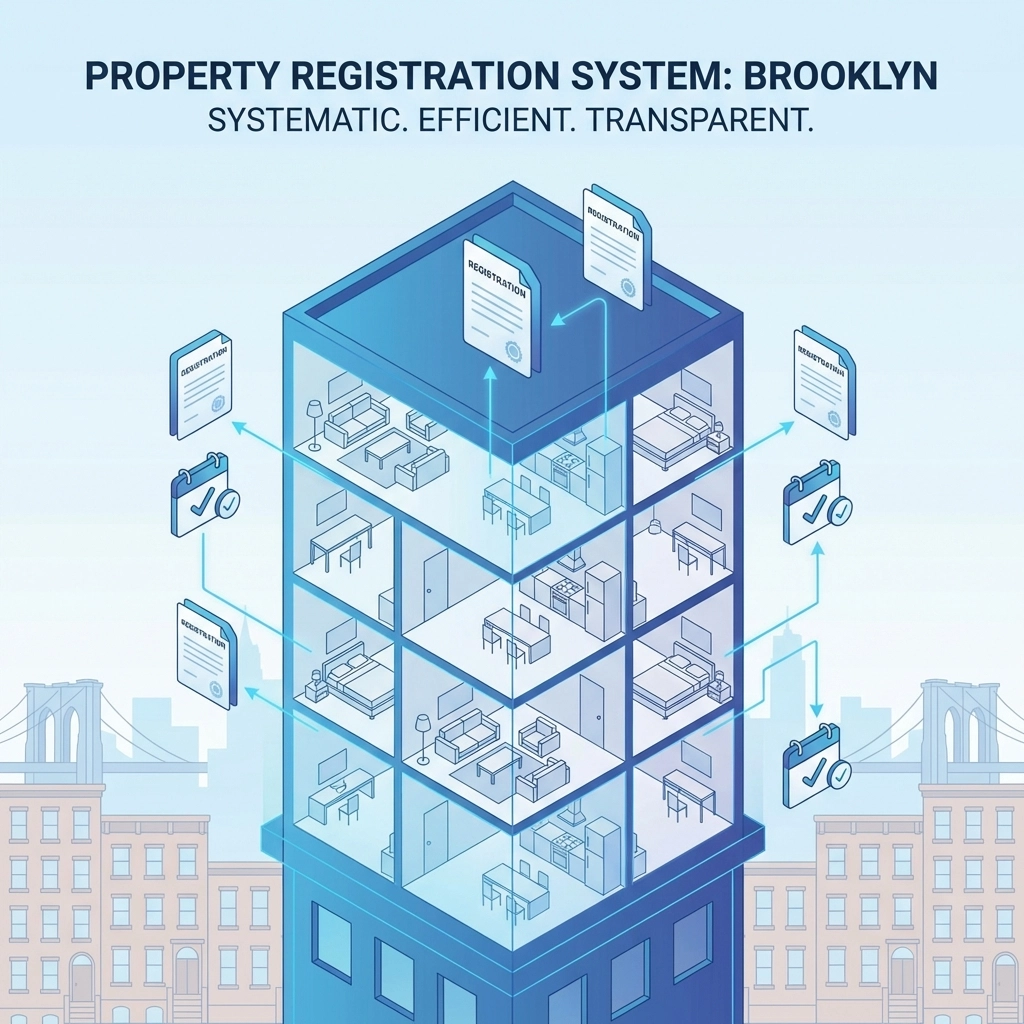
Failure to register by the deadline can result in penalties and may prevent owners from collecting rent increases. Late registrations filed after April 1st require additional fees and can complicate future rent increase applications. For buildings with multiple stabilized units, this process becomes particularly complex as each unit requires individual attention and documentation.
DHCR also requires owners to provide tenants with annual rent registration statements, typically delivered with lease renewals. These statements must clearly show the legal regulated rent and any increases taken during the year.
The NYC Rent Guidelines Board sets maximum allowable rent increases for rent-stabilized apartments annually, typically announcing new rates each June for leases beginning October 1st through September 30th of the following year. For 2024-2025, the RGB approved increases of 2.75% for one-year leases and 5.25% for two-year leases.
Property owners cannot exceed these percentages without specific justification through additional DHCR applications. The increases apply only to lease renewals: not to existing lease terms: and must be clearly documented in renewal lease agreements.
Key considerations for implementing RGB increases:
Some owners attempt to circumvent RGB limits through improper charges or lease violations, but these practices can result in severe penalties including rent rollbacks and treble damages. DHCR actively investigates complaints and can order owners to refund improperly collected rent with interest.
Rent-stabilized tenants have the right to lease renewals at RGB-approved rates, and owners must follow specific timelines and procedures when offering these renewals. The process begins 90 to 150 days before lease expiration, when owners must send renewal lease offers to tenants.
The renewal lease offer must include:

Tenants have 60 days from receipt to accept renewal offers, and if they fail to respond, owners may begin holdover proceedings. However, tenants retain the right to accept renewal offers even after court proceedings begin, provided they cure any outstanding rent obligations.
Common lease renewal mistakes include:
Rent-stabilized tenants are entitled to receive all services that existed when they first moved in, plus any services subsequently provided to the building. This creates ongoing maintenance obligations that extend beyond basic habitability requirements.
Required building services typically include:
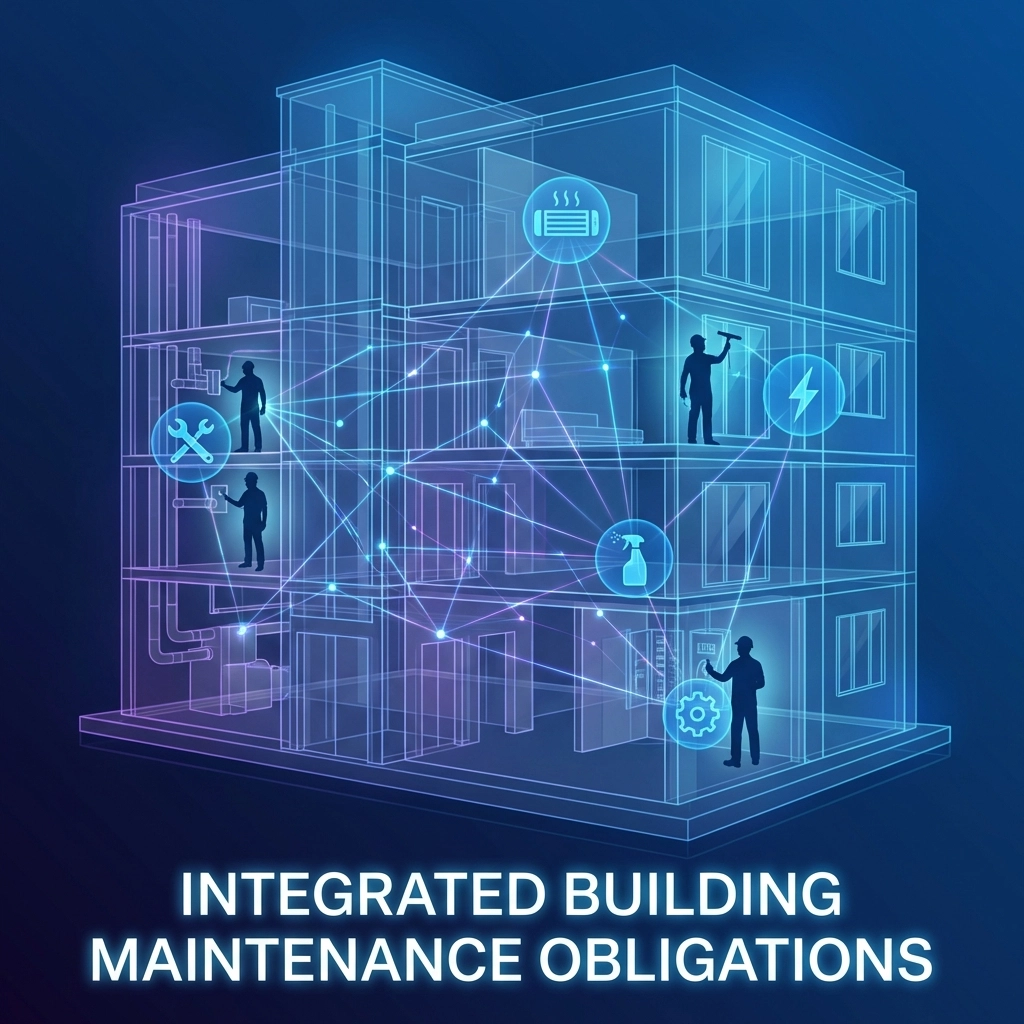
Owners cannot eliminate or reduce services without DHCR approval, and tenants can file service reduction complaints if services decline. When DHCR finds service reductions, they often impose rent reductions that remain in effect until services are restored to prior levels.
The cost of maintaining these services can be substantial, particularly for older buildings in Brooklyn and Queens that may require frequent repairs or system updates. However, owners who demonstrate significant building improvements may apply for rent increases beyond RGB guidelines through Major Capital Improvement (MCI) applications.
Managing rent-stabilized properties requires specialized expertise that goes beyond typical rental property oversight. Professional property management companies with rent stabilization experience can help owners navigate complex regulations while maintaining profitability.
Key areas where professional management adds value:
Documentation and Record-Keeping: Proper maintenance of tenant files, lease documentation, and improvement records is crucial for DHCR compliance and potential audits.
Timely Filing Requirements: Missing DHCR deadlines or RGB compliance dates can result in penalties and lost income opportunities.
Tenant Communication: Professional managers understand tenant rights and can handle complaints or service requests while maintaining positive relationships.
Maintenance Coordination: Ensuring required services are maintained while controlling costs requires experienced vendor management and preventive maintenance planning.
At Landlord Management (LLM), our rent stabilization expertise helps Brooklyn and Queens property owners maintain full compliance while maximizing property performance. Our transparent pricing structure means no hidden fees for compliance work, and our 24/7 availability ensures urgent tenant issues are addressed promptly to prevent service reduction complaints.
Non-compliance with rent stabilization regulations can result in severe financial penalties that far exceed the cost of proper management. DHCR penalties for registration violations can reach several thousand dollars per unit, while improper rent collection can result in treble damages: requiring owners to pay tenants three times the amount of overcharges.
Recent enforcement actions have included:
For a typical 20-unit building in Brooklyn, registration violations alone could result in penalties exceeding $40,000, while improper rent increases collected over several years could require six-figure refunds to tenants.
Successful rent-stabilized property management requires systematic attention to regulatory requirements and proactive compliance measures. Property owners should establish annual compliance calendars that track DHCR registration deadlines, RGB guideline releases, and lease renewal timelines.
Essential compliance practices include:
Our combined buying power at LLM allows us to provide cost-effective compliance support that individual owners cannot achieve on their own. With full transparency in our operations and specialized expertise in Brooklyn and Queens rent-stabilized properties, we help owners maintain compliance while protecting their investment returns.
Rent-stabilized property ownership in Brooklyn and Queens can be profitable when managed correctly, but the complexity of compliance requirements makes professional management often essential for long-term success.
Property owners across Williamsburg, Bushwick, Bed-Stuy, Crown Heights, Park Slope, Flatbush, Sunset Park, Bay Ridge, Downtown Brooklyn, and Brooklyn Heights are now facing active financial penalties under New York City’s Local Law 97. As of 2026, the grace period has ended, and buildings exceeding their carbon emissions limits face substantial annual fines that can reach tens of thousands of dollars.
For Brooklyn’s multi-family buildings and condo/co-op boards, understanding compliance requirements and implementing strategic energy management has shifted from optional to financially critical. Property management companies in Brooklyn NY are increasingly becoming essential partners in navigating these complex regulations and avoiding costly penalties.
Local Law 97, part of New York City’s Climate Mobilization Act, establishes mandatory carbon emissions limits for buildings over 25,000 square feet. The law targets approximately 50,000 buildings citywide, including many of Brooklyn’s larger apartment complexes, co-ops, and condominiums.
The legislation operates on a two-phase timeline. The current 2024-2029 compliance period serves as the initial benchmark, while the 2030-2034 period introduces significantly stricter limits: approximately 40% tighter than current requirements. Buildings must measure, report, and stay within their assigned emissions limits or face escalating financial consequences.
For Brooklyn property owners, this means every multi-family building, co-op, or condo over the size threshold must now actively monitor and manage their carbon footprint as a core business function, not just an environmental consideration.

Starting in 2026, Local Law 97 penalties became active enforcement mechanisms rather than future threats. Buildings exceeding their carbon emissions limits now face $268 per metric ton of CO2 equivalent over their limit, assessed annually.
The financial impact scales quickly. A building exceeding its limit by 150 metric tons faces $40,200 in annual penalties. For a property 500 metric tons over its limit, the annual fine reaches $134,000. These penalties compound year after year until the building achieves compliance.
Additional penalties apply for administrative failures. Buildings that miss filing their annual emissions report face $0.50 per square foot per month. For a typical 100,000-square-foot Brooklyn apartment building, this translates to $50,000 monthly until the filing is complete. False statements on emissions reports carry penalties up to $500,000 per violation.
The stakes escalate dramatically in 2030. While preliminary analysis suggests only 11% of buildings exceed current 2024-2029 limits, 63% are projected to exceed the tighter 2030-2034 thresholds without significant energy efficiency improvements.
Inadequate Baseline Measurement and Tracking
Many Brooklyn properties lack comprehensive energy monitoring systems, making it impossible to identify emission sources or track progress toward compliance. Without accurate measurement, owners cannot develop effective reduction strategies or verify compliance status.
Delayed Vendor Coordination and Project Planning
Energy efficiency retrofits, equipment upgrades, and system improvements require months or years of planning and execution. Properties that wait until compliance deadlines approach often face rushed installations, higher costs, and limited contractor availability.
Incomplete Record-Keeping and Documentation
Local Law 97 requires detailed annual reporting with verified emissions data. Buildings without proper documentation systems struggle to compile accurate reports and risk filing penalties or compliance disputes.
Underestimating 2030 Compliance Requirements
While many buildings currently meet 2024-2029 limits, the dramatically stricter 2030-2034 requirements catch unprepared owners with insufficient time and resources for necessary improvements.

Conduct Comprehensive Energy Audits and Benchmarking
Professional energy audits identify specific opportunities for emissions reduction, from HVAC system upgrades to building envelope improvements. Benchmarking against similar Brooklyn properties helps owners understand their competitive position and realistic improvement targets.
Develop Multi-Year Retrofit Planning
Given the time required for major building improvements, successful compliance requires strategic planning spanning multiple years. This includes prioritizing highest-impact upgrades, coordinating with capital improvement schedules, and securing financing for energy efficiency projects.
Establish Vendor Networks for Energy Efficiency Work
Building relationships with qualified contractors, energy consultants, and equipment suppliers before urgent needs arise ensures better pricing, scheduling, and project quality. Bulk purchasing through vendor networks can reduce costs for smaller buildings.
Implement Systematic Record-Keeping and Reporting Systems
Compliance requires ongoing documentation of energy consumption, equipment performance, and improvement projects. Digital tracking systems help buildings maintain accurate records and streamline annual reporting requirements.
Brooklyn property management companies serve as coordination hubs for complex compliance activities that exceed the capacity of individual property owners or small co-op boards.
Vendor Coordination and Project Management
Professional property managers maintain networks of pre-qualified energy efficiency contractors, consultants, and suppliers. They coordinate multiple vendors, manage project timelines, and ensure work quality while owners focus on their primary responsibilities.
Budgeting and Financial Planning for Energy Projects
Management companies help properties develop realistic budgets for compliance-related improvements, often leveraging combined buying power across multiple properties to reduce costs. They can structure multi-year capital improvement plans that align with compliance deadlines and building financial capacity.
Reporting and Documentation Management
Brooklyn NY property management companies maintain the systematic record-keeping required for Local Law 97 compliance. They track energy consumption data, coordinate annual emissions reporting, and maintain documentation needed for regulatory compliance or potential audits.
Ongoing Monitoring and Strategic Planning
Professional managers provide continuous monitoring of building performance and compliance status, identifying potential issues before they become costly penalties. They help properties prepare for the stricter 2030-2034 requirements with adequate lead time for necessary improvements.

Management companies brooklyn ny offer specialized expertise that individual property owners or volunteer co-op boards typically cannot develop in-house. They understand the technical, regulatory, and financial aspects of compliance while maintaining relationships with qualified service providers.
Professional managers also provide economies of scale. By coordinating energy projects across multiple properties, they can negotiate better pricing for audits, equipment, and installation services. This combined buying power often offsets management fees through reduced compliance costs.
Additionally, management companies maintain current knowledge of evolving regulations, available incentives, and best practices across similar Brooklyn properties. This expertise helps buildings avoid compliance mistakes that lead to penalties or inefficient spending on ineffective solutions.
Landlord Management (LLM) provides transparent, comprehensive support for Brooklyn properties navigating Local Law 97 requirements. Our approach combines project management expertise with vendor coordination and financial planning specifically designed for multi-family buildings and co-ops.
Transparent Coordination at No Extra Charge
Unlike some Brooklyn property management companies that add surcharges for compliance coordination, LLM includes Local Law 97 support as part of our standard service. Owners access our vendor networks, project management, and reporting assistance without additional fees.
24/7 Portal Access for Real-Time Tracking
Our digital platform provides continuous access to energy consumption data, compliance status updates, and project progress. Property owners and board members can monitor their compliance position and improvement projects around the clock.
Simple Pricing with Combined Buying Power
LLM’s straightforward fee structure eliminates surprises while our combined buying power across multiple Brooklyn properties reduces costs for energy audits, equipment, and installation services. Properties benefit from bulk purchasing without complexity.
Comprehensive Project Management
From initial energy audits through retrofit completion and ongoing monitoring, LLM coordinates all aspects of compliance-related improvements. We manage contractor relationships, oversee project timelines, and ensure quality standards while keeping owners informed throughout the process.
Disclaimer: This information is for educational purposes only and does not constitute legal advice. Property owners should consult qualified legal and technical professionals for specific compliance guidance.
With penalties now active and stricter requirements approaching in 2030, Brooklyn property owners need immediate action plans for Local Law 97 compliance. Professional property management provides the expertise, vendor relationships, and project coordination necessary for cost-effective compliance.
Whether you own in Williamsburg, Park Slope, or any other Brooklyn neighborhood, the time for preparation has passed: compliance is now a present financial obligation requiring professional management and strategic planning.
Request a proposal and management quote at landlordmanagementny.com to learn how LLM can help your Brooklyn property achieve Local Law 97 compliance while minimizing costs and penalties.
A Brooklyn property management checklist helps owners stay organized as 2026 brings stricter compliance rules, rising costs, and more detailed reporting requirements across residential buildings.
The days of surprise charges and hidden fees are over. Professional Brooklyn property management companies now operate with complete transparency. Your management agreement should clearly outline:
Monthly Management Fees:
Leasing and Turnover Costs:
Maintenance and Repair Markups:
Financial Services:
The best management companies Brooklyn NY provide detailed monthly statements showing every expense, including vendor invoices and receipts. Avoid companies that bundle costs or refuse to show original invoices.

A systematic approach to maintenance prevents costly emergency repairs and keeps tenants satisfied. Your property management system should include:
Work Order Process:
Vendor Management Standards:
Preventive Maintenance Schedule:
Emergency Preparedness:
Professional residential management Brooklyn companies maintain detailed maintenance histories for each property, helping you plan capital improvements and budget for upcoming needs.
Proper financial management goes beyond collecting rent. Your Brooklyn NY property management companies should provide comprehensive reporting that simplifies your tax preparation and investment analysis.
Monthly Financial Reporting:
Quarterly Business Reviews:
Year-End Tax Coordination:
Online Access and Transparency:
The most effective apartment management companies Brooklyn provide monthly reports within five business days of month-end, giving you timely information for investment decisions.
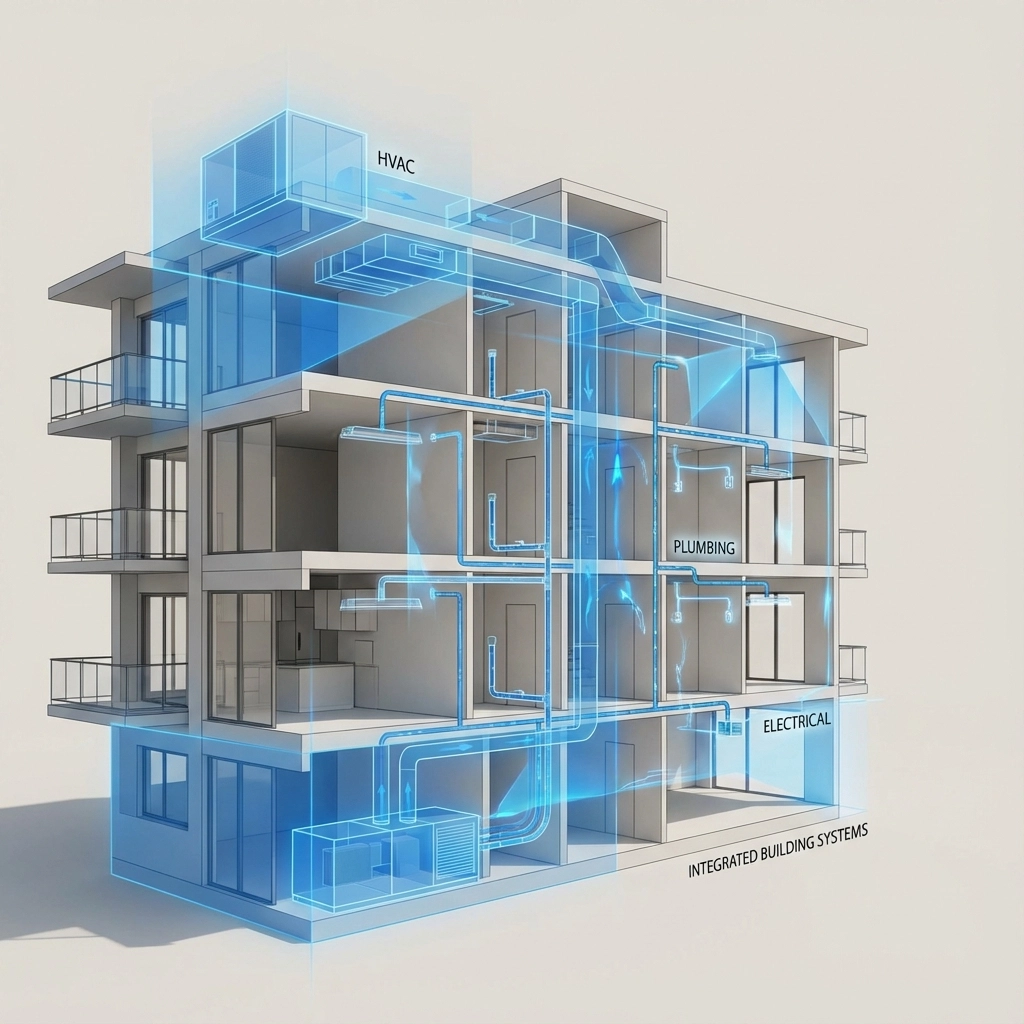
Brooklyn’s substantial rent-stabilized housing stock requires specialized knowledge and meticulous record-keeping. While specific legal advice requires consultation with qualified attorneys, property managers should understand these fundamental compliance areas:
Required Documentation:
Tenant Rights and Communication:
Ongoing Compliance Monitoring:
Record Retention Requirements:
rental property management Brooklyn specialists maintain compliance calendars and automated systems to ensure deadlines are never missed. The complexity of rent stabilization rules makes professional management particularly valuable for these properties.
Beyond basic operations, Brooklyn property owners must navigate evolving insurance requirements, Local Law compliance, and capital planning.
Insurance and Risk Management:
Local Law and Building Code Compliance:
Capital Project Planning:
Technology Integration:
Start by evaluating your current management approach against these standards. Whether you’re self-managing or working with Brooklyn property management companies, use this checklist to identify gaps and improvement opportunities.
Monthly Review Items:
Quarterly Assessment:
Annual Planning:

Professional property management provides the systems, expertise, and accountability necessary to execute this checklist consistently. The best managers combine local Brooklyn market knowledge with comprehensive operational systems, ensuring your investment performs optimally while maintaining full compliance.
For Brooklyn property owners seeking transparent, professional management that covers all these essential areas, Landlord Management (LLM) provides comprehensive services designed specifically for the Brooklyn market. Our simple, transparent pricing eliminates hidden fees, while our local expertise ensures your properties meet all compliance requirements while maximizing returns. Using a Brooklyn property management checklist allows owners to improve compliance, control expenses, and maintain stronger tenant satisfaction throughout 2026.
Reference trusted agencies:
Learn more about our Landlord Management property management services.
Queens property owners are experiencing a fundamental shift in how their buildings operate, thanks to an unprecedented influx of all-cash buyers reshaping the local market. These investors: ranging from institutional funds to high-net-worth individuals: aren’t just changing who owns properties; they’re transforming how buildings are managed, maintained, and positioned for success.
If you’re a property owner, condo board member, or landlord in Queens, understanding this shift isn’t optional anymore. It’s essential for staying competitive and protecting your investment.
The numbers tell a clear story. All-cash buyers now represent a significant portion of property transactions across Queens submarkets including Astoria, Long Island City (LIC), Sunnyside/Woodside, Jackson Heights, Forest Hills/Rego Park, Flushing, Ridgewood, and Jamaica. These buyers bring immediate liquidity, faster decision-making, and clear operating targets.
Unlike traditional mortgage-dependent buyers who need 30–45 days for financing approval, cash buyers close in 7–14 days. This speed compresses timelines for onboarding, vendor contracting, and compliance. It also raises competition for tenants who expect polished operations.
For property management, the change is practical and immediate (many owners even search for “property management companies queens” to find partners who can keep pace). Cash buyers treat buildings like operating businesses and push for measurable returns through leaner operations.
How this plays out by submarket:
A useful scale comparison: a 30-unit Ridgewood walk-up and a 300-unit LIC tower have similar goals (speed, compliance, transparency) but different operating models. The 30-unit relies on precise sequencing and 1–2 prime vendors; the 300-unit relies on platform software, multiple on-call trades, and weekly KPI review.

All-cash buyers often purchase multiple properties simultaneously, giving them significant negotiating power with contractors, vendors, and service providers. This bulk purchasing power drives pricing pressure across Queens, as vendors prioritize high-volume portfolios.
What this looks like on the ground:
For individual property owners or smaller condo boards, this means:
Cash buyers make capital improvement decisions quickly—often within days. This raises the bar across Queens and shortens planning windows for permits, procurement, and resident communication.
Property owners now face pressure to:
How this differs by submarket:
30-unit vs 300-unit impact:
The challenge is operational, not just financial. Traditional, slow decision cycles no longer fit. Clear scopes, pre-negotiated vendor capacity, and fast approvals are essential.
All-cash buyers typically renovate aggressively and reposition to higher rents. Upgraded units and common areas change what residents expect building-wide.
Modern tenants now anticipate:
Submarket preferences at a glance:
Practical takeaway: Resident communications and service levels should reflect neighborhood expectations and building age (prewar vs newer stock).
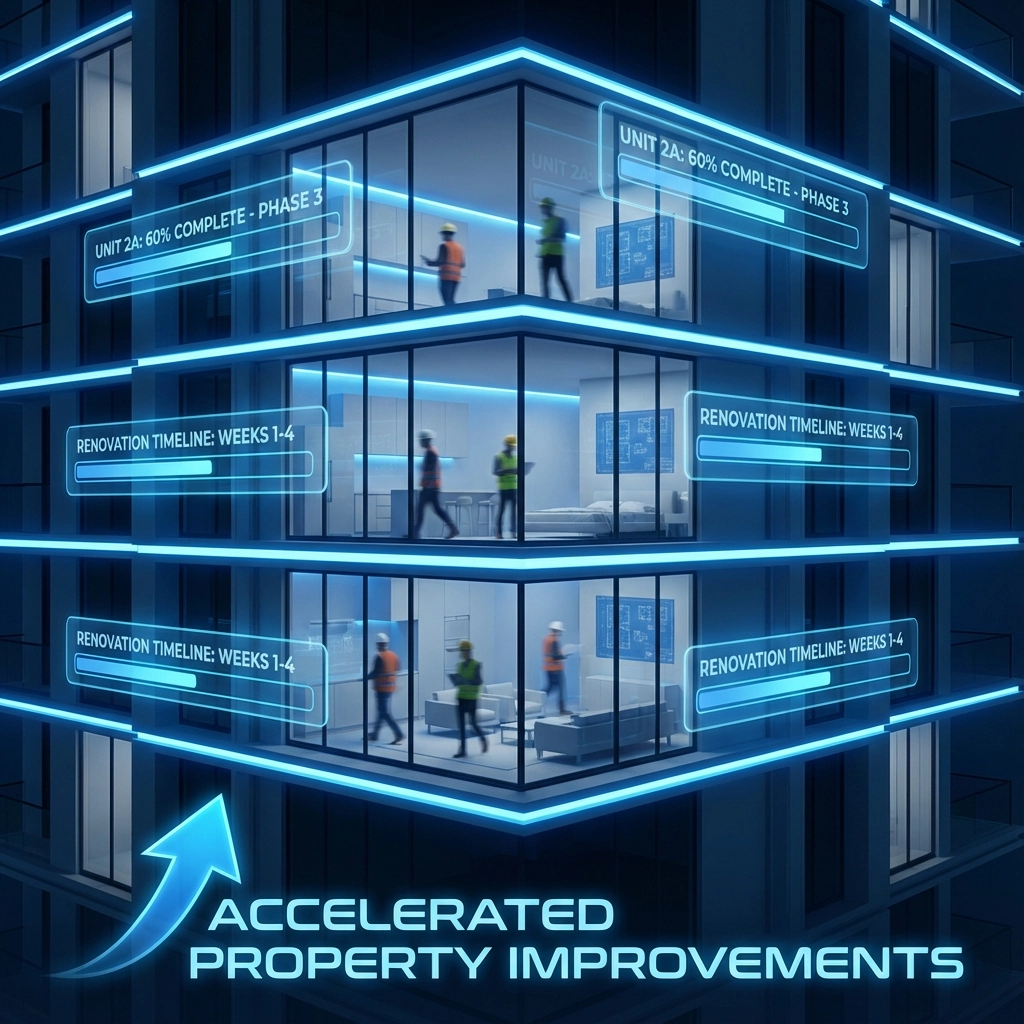
Cash buyer strategies often involve rapid turnover: buying, renovating, and relaunching units quickly. Typical cycles shrink from 6–8 weeks to 3–4 weeks per unit, with exceptions based on building type.
Submarket realities:
For property management companies in Queens, this means:
Key point: Pre-ordering materials and pre-filing permits often determines whether a 4-week target is realistic.
All-cash buyers often work with institutional partners or high-net-worth portfolios. They expect detailed financials, robust insurance, and reliable compliance data—especially in larger assets and mixed-use properties.
Property managers now face requirements for:
Submarket examples:
Queens properties must navigate an increasingly complex regulatory environment. All-cash owners expect seamless compliance planning with dates, costs, and risk controls.
What to track now:
Practical approach: Map requirements by building, then sequence projects (lighting, controls, boiler tuning, envelope) that reduce energy penalties while limiting disruption.
Successful Queens property management requires robust, neighborhood-aware technology:
Result: Faster decisions, fewer missed deadlines, and clearer owner oversight.
With faster turnover expectations and higher resident standards, preventive maintenance becomes crucial. Rather than reactive repairs, property managers must implement systems that identify and address issues before they impact operations.
Examples by submarket:
Outcome: Fewer emergency calls, lower overtime spend, and more predictable unit availability.
All-cash buyers expect detailed visibility into where their money goes. This requires property management companies in Queens to provide:
Queens-specific note: Mixed-use buildings in Flushing and larger elevator assets in LIC/Forest Hills benefit from monthly dashboards; smaller walk-ups in Astoria, Sunnyside/Woodside, and Ridgewood benefit from stack-by-stack cost tracking.

Given these market changes, effective Queens property management must include:
Financial Oversight
Operational Excellence
Compliance Expertise
If you’re managing Queens property in today’s market, here’s your action plan:
Immediate Steps (Next 30 Days)
Short-Term Planning (Next 90 Days)
Long-Term Strategy (Next 6-12 Months)
The all-cash buyer phenomenon in Queens isn’t temporary: it represents a permanent shift in how properties are bought, managed, and operated. Property owners who adapt their management strategies to match this new reality will protect and enhance their investments. Those who don’t risk falling behind in an increasingly competitive market.
Success in this environment requires professional property management partners who understand these market dynamics and have the systems, technology, and expertise to navigate them effectively.
If your condo’s monthly maintenance fees have been climbing steadily over the past few years, you’re not alone. Many NYC condo boards are grappling with operating costs that seem to increase regardless of their efforts to control spending. The truth is, most cost overruns aren’t due to unavoidable market forces: they’re the result of poor financial oversight, outdated contracts, and management practices that prioritize convenience over cost-effectiveness.
New York City presents unique challenges for condo operations. Between rising property taxes, stricter compliance requirements like Local Law 97, and post-pandemic maintenance backlogs, boards face pressure from multiple directions. However, the most significant cost drivers are often within your control.
Labor costs in the metropolitan area have increased approximately 15-20% since 2020, but many boards haven’t adjusted their vendor oversight accordingly. A 40-unit building in Brooklyn might see annual operating expenses jump from $180,000 to $220,000 without proper contract management. Meanwhile, similar buildings with proactive cost management maintain stable expenses despite market pressures.
Energy costs represent another major factor. Buildings constructed before 1980 (common throughout Brooklyn and Queens) often have inefficient heating systems that can consume 30-40% of the annual operating budget. Without strategic upgrades, these costs compound annually.

Auto-renewal service contracts represent the largest source of unnecessary expenses. Most condos have agreements with landscaping companies, cleaning services, and maintenance contractors that automatically renew each year with built-in increases. A typical 50-unit Queens condo might spend $35,000 annually on landscaping without realizing that competitive bidding could reduce this by 20-25%.
Inadequate insurance reviews cost buildings thousands annually. Insurance premiums for NYC condos have risen 25-40% over three years, but many boards simply accept renewals without shopping around. Buildings with proper risk management and competitive bidding often secure 15-20% savings on identical coverage.
Inefficient utility management drains budgets silently. Many older buildings in Brooklyn pay for master-metered electricity or gas without implementing conservation measures. Simple upgrades like LED lighting conversion and programmable thermostats can reduce utility expenses by 20-30% annually.
Deferred maintenance creates cascading cost problems. A small roof leak ignored for six months can evolve into a $15,000 repair involving structural damage, interior restoration, and mold remediation.
Start with detailed expense categorization. Many boards review only high-level budget summaries, missing significant opportunities for savings. Request monthly expense reports broken down by vendor and service type.
Examine payment timing patterns. Are you paying vendors immediately upon invoice receipt? Many service providers offer 2% discounts for payments within 10 days, which can save thousands annually for larger buildings.
Review credit card and bank fees. Buildings that collect maintenance fees through outdated payment systems often pay excessive processing fees. Modern payment platforms integrated with property management systems typically reduce these costs by 40-60%.
Analyze maintenance request patterns. If your building handles more than two emergency repair calls monthly, you likely have deferred maintenance issues that are creating unnecessary expenses. Proper preventive maintenance scheduling eliminates most emergency calls.
Property management companies that provide transparent financial reporting make this analysis much easier. With 24/7 portal access to detailed financial data, boards can spot cost trends before they become major problems.

Cleaning services often represent low-hanging fruit for savings. Many buildings pay for daily cleaning when 3-4 times per week provides identical results. A 60-unit Brooklyn building might reduce cleaning costs from $24,000 to $18,000 annually without any decline in cleanliness standards.
Security contracts frequently include unnecessary services. Buildings paying for 24/7 doorman service might achieve identical security with modern access control systems and part-time coverage, potentially saving $40,000-60,000 annually.
Snow removal agreements in the NYC area often include automatic trigger clauses that activate expensive services for minor snowfall. Renegotiating these thresholds can reduce winter maintenance costs by 25-30%.
Landscaping maintenance contracts typically auto-escalate annually. Most management companies brooklyn ny don’t actively renegotiate these agreements, resulting in cumulative overspending. Competitive bidding every 2-3 years ensures market-rate pricing.
When evaluating vendors, prioritize those offering detailed invoicing and transparent pricing structures. Vendors who provide only lump-sum billing often hide inefficiencies that cost your building money.
Your management company’s approach to cost control directly impacts your bottom line. Companies that charge extra for budget analysis, vendor comparison, or financial transparency often cost buildings more than their fees suggest.
Professional property management companies queens should provide comprehensive cost analysis as part of their standard service. This includes quarterly budget reviews, vendor performance monitoring, and proactive identification of cost-saving opportunities.
Effective management companies maintain relationships with multiple vendors in each service category, ensuring competitive pricing through ongoing comparison. They should also handle rent collection with automatic late fee enforcement, preventing cash flow problems that lead to unnecessary financing costs.
Buildings managed by companies offering transparent 24/7 portal access typically spend 10-15% less on operating expenses because board members can monitor spending patterns in real-time and address problems quickly.
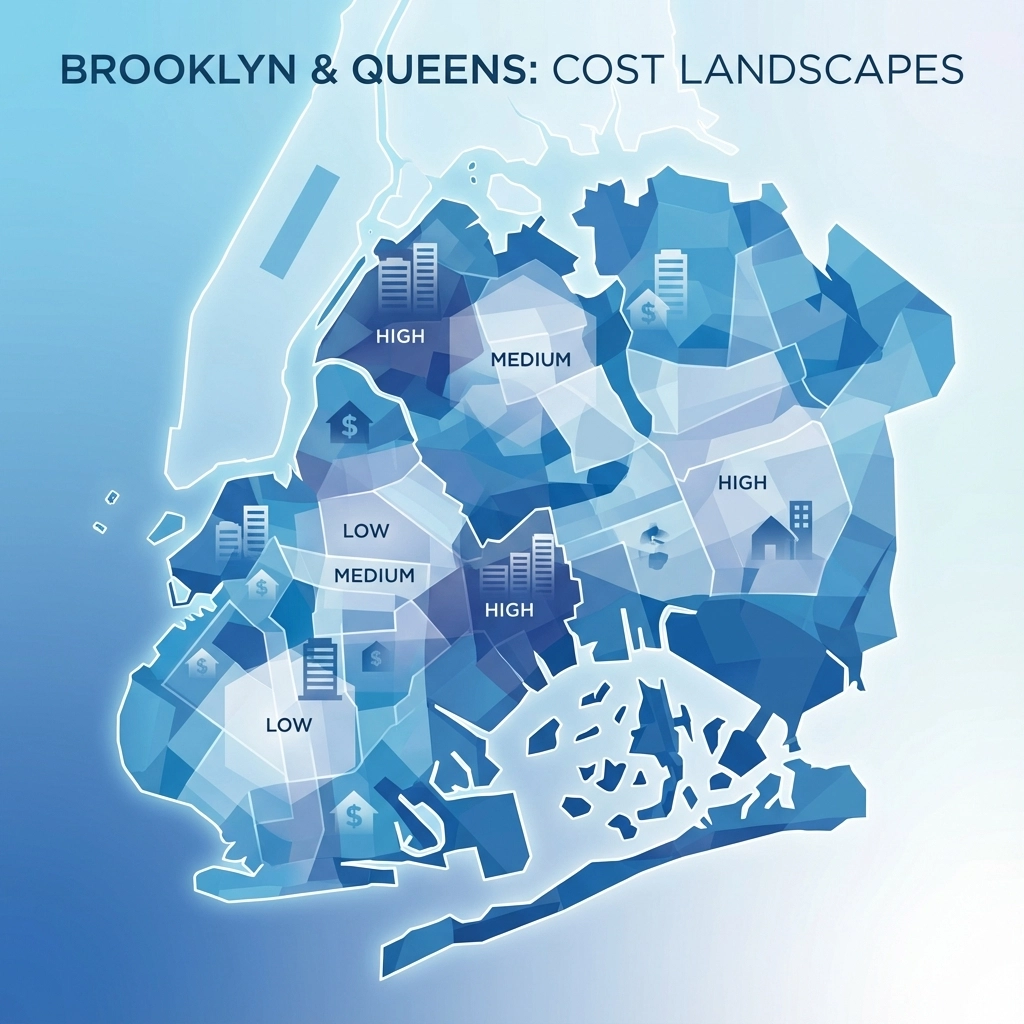
Geographic location within NYC significantly affects operating costs. Brooklyn condos generally face higher labor costs due to union presence and parking challenges for service providers. However, they often have access to more competitive vendor markets.
Queens properties frequently benefit from lower base labor rates but may pay premium prices due to limited vendor options in certain neighborhoods. Buildings in rapidly developing areas like Long Island City face unique challenges with utility infrastructure and regulatory compliance.
Insurance costs vary significantly by neighborhood. Brooklyn Heights condos might pay 15-20% more for flood insurance compared to similar buildings in Astoria, while properties near industrial areas face higher liability premiums.
Property tax implications also differ. Queens properties often face more frequent tax assessments, requiring ongoing professional management to ensure proper appeals and exemption applications.
Implement energy efficiency improvements systematically. Start with LED lighting conversion (typically 6-8 month payback period), then address HVAC maintenance and programmable thermostats. Buildings that invest $10,000-15,000 in efficiency upgrades often reduce annual utility costs by $8,000-12,000.
Establish preventive maintenance schedules for all major building systems. Regular elevator maintenance costs approximately $2,000 annually but prevents $15,000-20,000 emergency repairs. Similarly, annual HVAC servicing eliminates most costly breakdown calls.
Digitize administrative processes to reduce operational expenses. Going paperless for notices, board communications, and financial statements typically saves $2,000-4,000 annually in printing and mailing costs for buildings with 50+ units.
Negotiate payment terms with major vendors. Many service providers offer discounts for annual prepayment or extended contract commitments. Buildings with strong cash flow can often secure 5-10% discounts through strategic payment timing.
Review insurance coverage annually with independent agents who represent multiple carriers. Buildings that haven’t shopped insurance rates in three years typically pay 20-30% more than necessary.
If your current management company charges separately for budget analysis, vendor bidding, or financial reporting, you’re likely overpaying for basic services. Professional property management should include comprehensive cost management as part of standard service delivery.
Warning signs include:
Buildings switching to full-service management companies typically see operating cost reductions of 8-15% within the first year, even accounting for management fee differences.
Look for companies offering transparent pricing with no hidden charges for essential services like dues collection, vendor management, and financial reporting. The best management companies brooklyn ny provide 24/7 customer support and comprehensive online portals that give boards complete visibility into building operations and finances.
Managing condo operating costs effectively requires ongoing attention and professional expertise. Buildings that implement systematic cost management: including regular vendor reviews, preventive maintenance programs, and transparent financial oversight: typically maintain stable expenses despite market inflation.
The key is partnering with a management company that prioritizes cost efficiency and provides the tools and transparency necessary for effective board oversight. With proper management and strategic planning, most NYC condos can reduce operating costs by 10-20% while actually improving service quality and building maintenance standards.
If your building’s costs continue rising without clear justification, it’s time to examine your management approach and vendor relationships. The right changes can save thousands annually while positioning your property for long-term financial stability.