

Brooklyn vs Queens Property Management Fee Comparison
Brooklyn vs queens property management costs vary because each borough has different rent levels, building types, compliance demands, and service expectations in 2026.
Brooklyn Management Cost Structure:
- Base management fees typically range from 8-12% of gross rental income
- Higher-end neighborhoods like Park Slope or DUMBO may see fees up to 15%
- Minimum monthly fees often start at $150-200 per unit for smaller buildings
- Premium services (24/7 emergency response, advanced reporting) carry additional costs
Queens Management Cost Comparison:
- Management fees generally range from 6-10% of gross rental income
- Neighborhood variations are less dramatic, with Astoria and Long Island City on the higher end
- Minimum monthly fees typically start at $100-150 per unit
- More competitive pricing due to lower baseline property costs
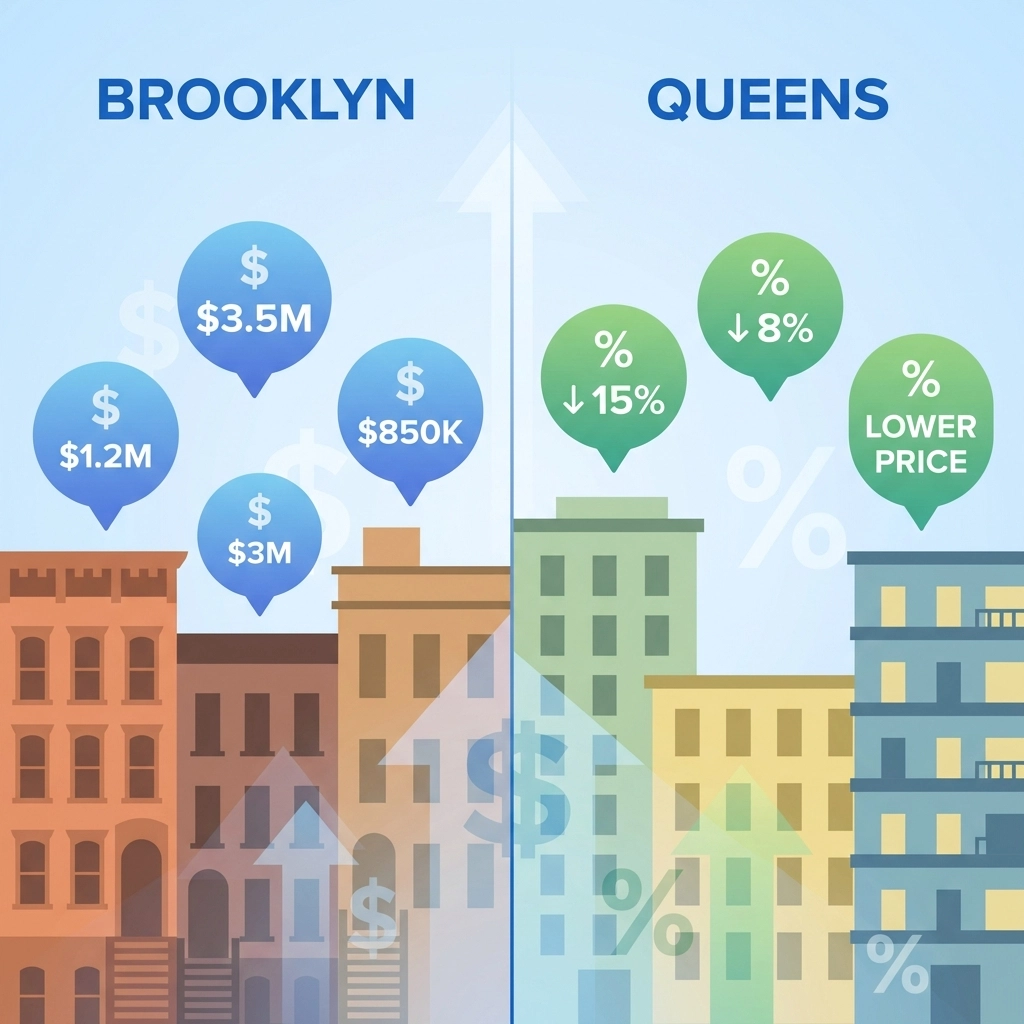
The cost difference stems from Brooklyn’s higher rent levels: with median rents often $300-500 higher per unit than comparable Queens properties: creating a larger fee base even at similar percentage rates. Queens neighborhoods like Astoria show median rents around $1,339 compared to Brooklyn averages, making management more accessible for smaller property owners.
Core Services Owners Should Expect
Property management scope remains consistent across Brooklyn and Queens, but implementation varies based on building types and tenant demographics common to each area.
Essential Service Categories:
Financial Management & Reporting
- Monthly owner statements with income/expense breakdowns
- Rent collection and arrears management
- Vendor payment processing and 1099 management
- Annual tax document preparation (including rent stabilization filings)
- Transparent bookkeeping with real-time online access
Maintenance & Operations
- 24/7 emergency response coordination
- Preventive maintenance scheduling and oversight
- Work order management through digital portals
- Vendor relationship management and competitive bidding
- Capital improvement project coordination
Tenant Relations & Compliance
- Lease administration and renewal processing
- Tenant screening and placement services
- Rent stabilization compliance monitoring
- Local law compliance tracking (Local Law 97, inspection requirements)
- Eviction proceedings and legal coordination when necessary
The key difference lies in execution: Brooklyn properties often require more sophisticated vendor networks due to higher-end finishes and tenant expectations, while Queens management focuses on cost-effective maintenance solutions that maintain quality without premium pricing.
Building Type Differences Across Boroughs
Each borough’s dominant property types create distinct management requirements that affect both service scope and pricing.
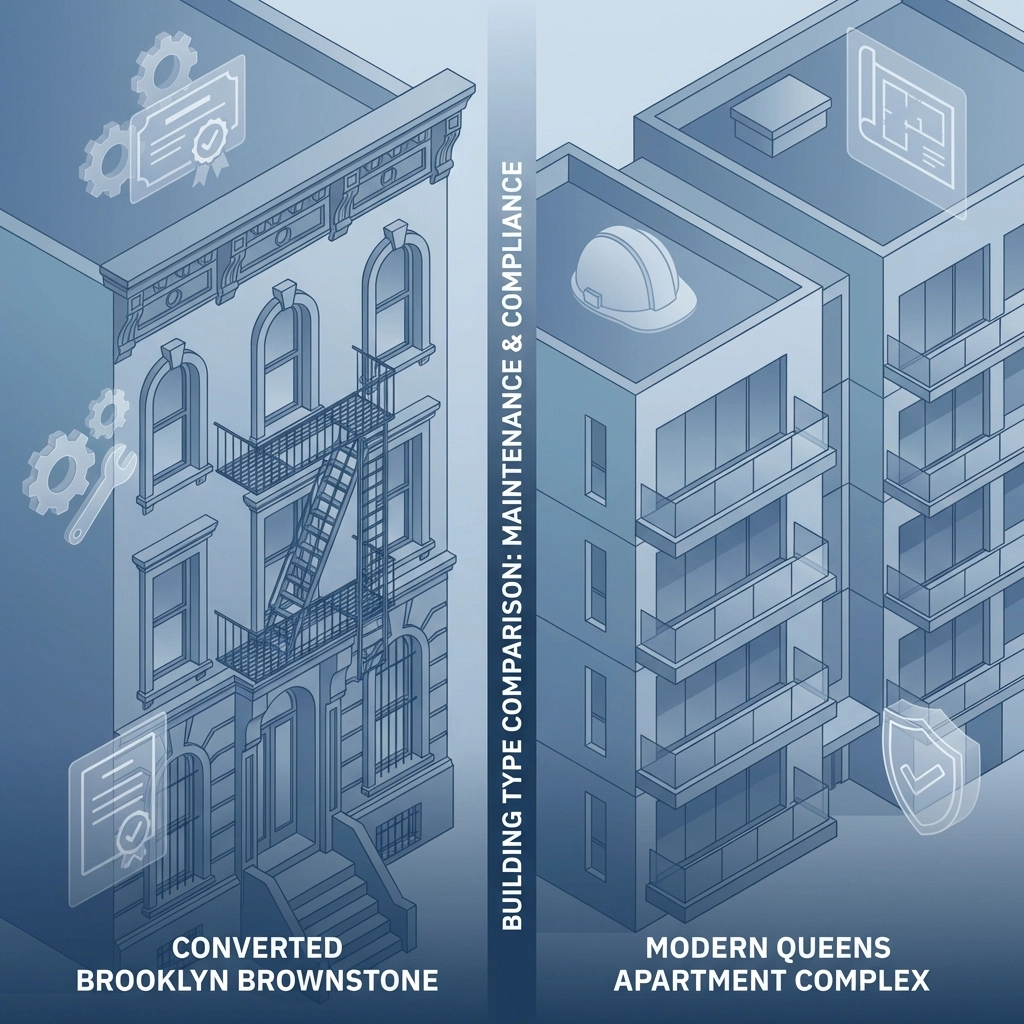
Brooklyn Property Characteristics:
- Higher concentration of converted buildings and boutique developments
- More rent-stabilized units requiring specialized compliance expertise
- Tenant demographics often demand premium communication and service levels
- Historic building maintenance requiring specialized contractor relationships
- Stricter neighborhood association and community board oversight
Queens Property Profile:
- More traditional multifamily construction with standardized layouts
- Growing number of new developments with modern building systems
- Diverse tenant base with varying service expectations
- Less complex architectural elements reducing specialized maintenance needs
- Established contractor networks with competitive pricing structures
These differences mean Brooklyn management requires more nuanced expertise in areas like rent stabilization compliance and historic building maintenance, while Queens management can leverage economies of scale through standardized processes and competitive contractor bidding.

Brooklyn vs Queens Property Management for NYC Owners
Modern property management in both boroughs now centers around digital platforms that provide transparency and real-time access to property information.
Standard Technology Offerings:
- Online owner portals with 24/7 access to financial reports
- Tenant portals for rent payment, maintenance requests, and communication
- Digital work order management with photo documentation and completion tracking
- Automated rent collection with multiple payment options
- Real-time financial reporting with income/expense categorization
Advanced Features for Competitive Management:
- AI-powered maintenance scheduling and vendor coordination
- Predictive analytics for capital improvement planning
- Integration with building automation systems
- Mobile-first platforms for both owners and tenants
- Automated compliance monitoring and deadline tracking
The expectation for transparency has become non-negotiable in 2026. Property owners in both Brooklyn and Queens should insist on management companies that provide full visibility into operations without additional fees for basic reporting or portal access.
How Do Compliance Requirements Differ Between Brooklyn and Queens Properties?
While both boroughs operate under NYC’s regulatory framework, practical compliance management varies based on building age, type, and tenant composition.
Universal NYC Compliance Areas:
- Rent stabilization administration and annual filings
- Local Law 97 carbon emission compliance and benchmarking
- HPD registration and inspection coordination
- Lead paint and window guard compliance
- Elevator and boiler inspection scheduling
Borough-Specific Considerations:
Brooklyn Focus Areas:
- Historic district compliance for landmarked buildings
- More stringent community board oversight for building modifications
- Higher concentration of rent-stabilized units requiring detailed documentation
- Stricter enforcement of quality-of-life violations in gentrifying neighborhoods
Queens Considerations:
- New development compliance with updated zoning regulations
- Airport noise disclosure requirements in certain areas
- Growing affordable housing program compliance (421-a, Opportunity Zones)
- Diverse tenant language requirements for notices and communications
Effective management companies should provide compliance expertise as part of their standard service, not as premium add-ons that increase costs.
What Financial Reporting and Transparency Should Property Owners Demand?
Financial management represents the cornerstone of professional property management, with 2026 standards emphasizing real-time access and complete transparency.
Essential Reporting Components:
- Monthly profit and loss statements with year-over-year comparisons
- Detailed expense categorization with vendor-specific breakdowns
- Rent roll reports showing occupancy, lease terms, and arrears status
- Capital expenditure tracking with project completion timelines
- Annual tax preparation support including depreciation schedules
Advanced Financial Services:
- Budget forecasting and variance analysis
- Capital improvement ROI projections
- Market rent analysis and optimization recommendations
- Cash flow projections for refinancing and investment planning
- Integration with owner’s accounting systems and tax preparation
The benchmark for acceptable service includes providing this financial transparency at no additional charge. Management companies charging separate fees for basic reporting or owner portal access indicate outdated business models that don’t align with 2026 owner expectations.
How Should Building Size and Type Influence Your Management Company Choice?
Property management needs scale differently based on building size and complexity, affecting both service requirements and cost structures in Brooklyn and Queens.
Small Buildings (2-20 Units):
- Focus on cost-effective vendor management and bulk purchasing power
- Streamlined communication systems suitable for hands-on owners
- Flexible service packages that avoid unnecessary overhead
- Strong local contractor relationships for quick response times
Mid-Size Buildings (20-100 Units):
- Professional property management software and reporting systems
- Dedicated property managers with specialized expertise
- Comprehensive maintenance programs with preventive scheduling
- Advanced tenant relations and lease administration capabilities
Large Buildings (100+ Units):
- On-site management presence or frequent property visits
- Sophisticated financial reporting with detailed analytics
- Capital improvement planning and project management expertise
- Integration with building automation and security systems
The optimal choice depends on matching management company capabilities to your specific building profile rather than simply comparing fees across providers.

Choosing the Right Management Company
Selecting property management requires evaluating capabilities beyond basic fee structures, particularly given the evolving expectations for transparency and technology integration.
Essential Evaluation Questions:
- What specific services are included in the base management fee versus premium add-ons?
- How do you handle emergency maintenance requests outside business hours?
- What technology platforms do you provide for owner and tenant communication?
- Can you demonstrate your expertise with rent stabilization compliance and local law requirements?
- What is your typical vendor response time, and how do you ensure competitive pricing?
- How do you handle tenant screening, lease administration, and eviction proceedings?
Advanced Capability Assessment:
- Do you provide real-time financial reporting with owner portal access at no additional charge?
- How do you leverage combined purchasing power to reduce operating costs?
- What systems do you use for preventive maintenance scheduling and capital improvement planning?
- Can you provide references from similar building types in the same borough?
- How do you stay current with changing NYC regulations and compliance requirements?
Red Flags to Avoid:
- Hidden fees for basic services like reporting, portal access, or vendor coordination
- Lack of 24/7 emergency response capabilities
- No demonstration of rent stabilization expertise or local law compliance systems
- Inability to provide current client references or portfolio examples
- Unclear fee structures or reluctance to provide detailed service breakdowns
The goal is finding a management partner that combines transparent pricing with comprehensive service delivery, eliminating the hidden costs and service gaps that create problems for property owners down the road.
Property management in Brooklyn and Queens requires balancing cost considerations with service quality, particularly as regulatory compliance becomes more complex and tenant expectations continue evolving. The most successful partnerships develop when owners clearly understand what services they need and management companies can deliver comprehensive solutions with full transparency about costs and capabilities. Understanding Brooklyn vs queens property management helps owners choose services that match their building size, compliance needs, and long-term investment goals.
Owners should review and when comparing borough requirements.
Learn more about our Landlord Management property management services.