


Picking a tenant is a big call for any owner. In New York City it’s also heavily regulated. Fair housing law, source-of-income protections and the Fair Chance Housing Law all limit what you can ask and when. Written tenant screening criteria give every applicant the same yardstick, and they’re your best defense if a decision ever gets challenged.
Key Takeaways
- Written tenant screening criteria are a short rental application policy that explains how you review applicants.
- Putting it in writing helps you treat every applicant the same way.
- The NYC Fair Chance Housing Law took effect January 1, 2025, and it changed how criminal background checks work.
- New York also limits screening on housing court records, source of income and application fees, so review your policy often.
CONTACT US TODAY!

What Are Written Screening Criteria?
Written criteria are a short policy that explains how applications get reviewed. We list what we check, the standard for each item and the order of the steps, then share the same rules with every applicant and apply them the same way each time.
Why Put Them in Writing?
The biggest reason is consistency. Each applicant is held to the same bar. Fair housing rests on that. Complaints do happen. With a written policy, you can show you used set rules and not a gut feeling. It saves time, too. A leasing agent doesn’t need to call the owner about each file. Applicants also know what to expect.
What Should the Criteria Cover?
A typical policy lists the application and required documents, then explains how income, credit history and rental references get reviewed. It says how criminal history is handled, if at all. It explains how the first qualified applicant is chosen and how people hear about decisions.
How Should You Set Income Standards?
Most owners use an income standard, and we’d apply the same one to everyone. Under the NYC Human Rights Law, it’s illegal to discriminate based on a lawful source of income, such as housing vouchers or other rental assistance. The criteria should say how a voucher that covers part of the rent is counted.
How Does the Fair Chance Housing Law Change Screening?
As of January 1, 2025, NYC’s Fair Chance Housing Law changed how criminal background checks work. According to the NYC Commission on Human Rights, housing providers who choose to run criminal background checks must first review general eligibility and make a written conditional offer. Only then can they run a check.
The law limits what can be reviewed. The Commission’s Fair Chance Housing Notice says providers may consider only registered sex offenses, felony convictions within five years and misdemeanor convictions within three years. Before revoking an offer, providers must follow a set process, including an individualized assessment and a written explanation.
We put that sequence in writing for every building we manage. Staff turn over, and the policy shouldn’t leave with them.
What About Housing Court Records?
New York State law bars landlords from denying an applicant because they were in a past landlord-tenant case. Your criteria should not list housing court history as a reason for denial.
What About Application Fees?
New York State law limits what landlords can charge for background and credit checks. Most other application fees are not allowed. Check current rules before you set your process.
How Should You Keep Records?
Keep copies of each application, the criteria used and the decision. Note the date and the reason for any denial. Store records securely, since they include private information. Good records help if a complaint is ever filed. A locked file cabinet in the management office or a password-protected folder both work, as long as you can pull a specific application from two years ago without digging through boxes in the basement. Shred what you no longer need once the retention period has passed.
How Do You Train Your Team?
Everyone who handles an application needs to know the criteria. That means leasing agents and office staff. It also means the super who shows the apartment on Saturday. In our experience, an hour of training and a one-page checklist cover most of it. Our post on fair housing laws has more context.
A Sample Order of Steps
Here is an order that works. Take the application. Check income and references, and then credit. See if the applicant meets your rules. If they do, give a written conditional offer. After that, run a criminal check only if your policy calls for one. Follow the Fair Chance steps before you take back any offer. Then the lease gets signed. Use this order for every applicant.
Keep It Short and Clear
Two pages is often enough. Leave out phrases like “good fit.” They can mean anything. Here’s a simple test. Give the same file to two staff members and see if they agree.
Common Mistakes to Avoid
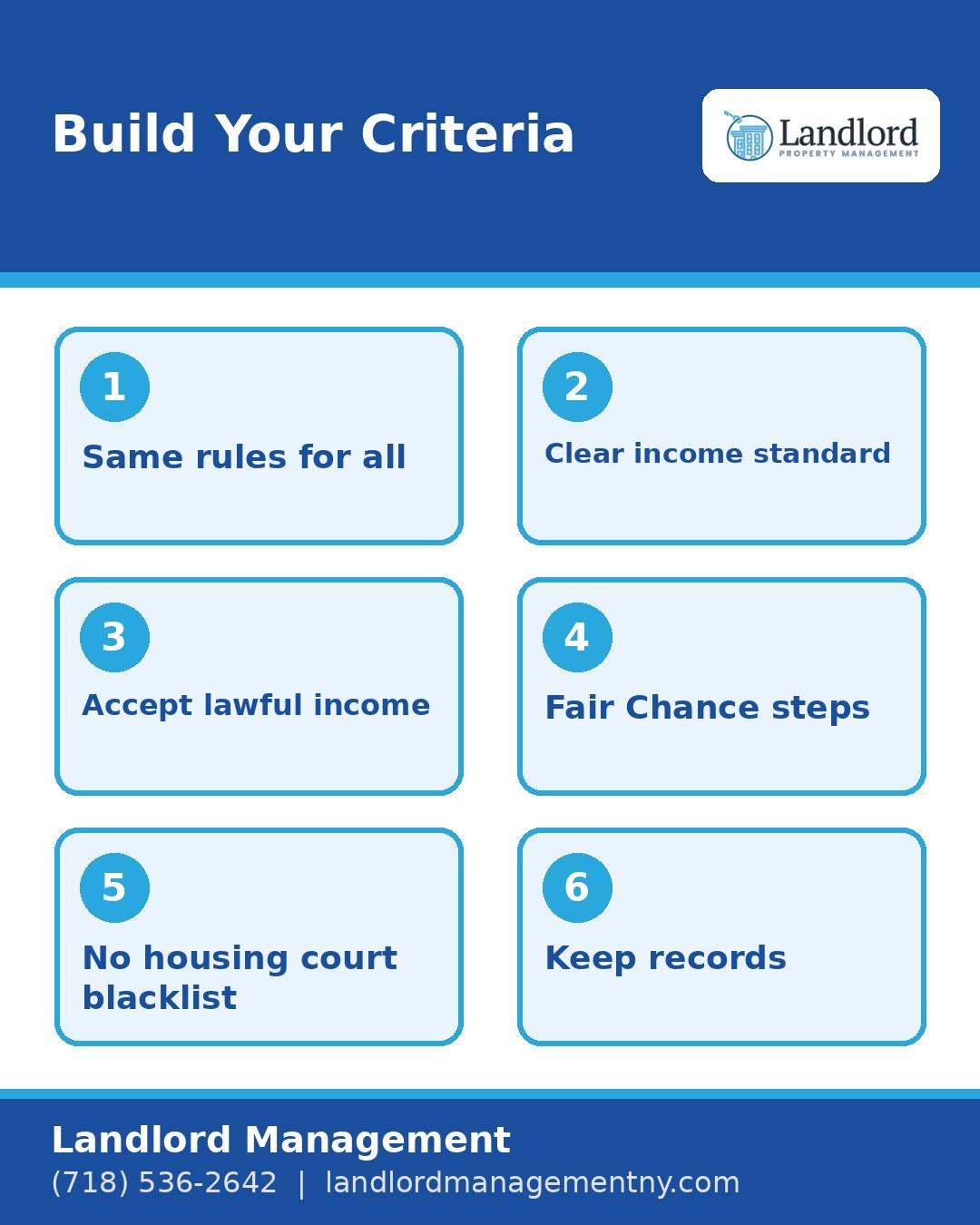
The mistakes that cause trouble are making exceptions for some applicants and not others, turning away vouchers or other lawful income, running criminal checks before a conditional offer, using housing court history against someone and failing to keep records of decisions.
Tips for Getting Started
New to this? First, write down what you check now. Compare it to current law and remove anything that isn’t allowed anymore. Share it with your team. Set a review for each January.
CONTACT US TODAY!
Screen Fairly and Confidently
Written tenant screening criteria protect your building and treat applicants fairly. Landlord Management handles tenant screening, leasing and compliance for buildings across Brooklyn, Queens, Manhattan and the Bronx. Want help building a fair, consistent screening process? Call Landlord Management at (718) 536-2642 or request a proposal.
This article is general information, not legal advice. Fair housing laws change, so confirm current requirements with a qualified attorney or the NYC Commission on Human Rights.
Frequently Asked Questions
Q: Why do NYC landlords need written screening criteria?
A: They make sure every applicant faces the same rules. They also show your decisions follow set standards.
Q: Can NYC landlords refuse housing vouchers?
A: It isn’t. The NYC Human Rights Law bans source-of-income discrimination.
Q: When can a landlord run a criminal background check in NYC?
A: Only once you’ve checked general eligibility and made a written conditional offer.
Q: Can I deny an applicant for a past housing court case?
A: You can’t. State law in New York forbids it.
Q: Should criteria be reviewed each year?
A: You should. Laws change, so look over your criteria often.