

Queens real estate trends 2025 are being shaped by a major rise in all-cash buyers, faster closings, and higher expectations for building operations across neighborhoods like Astoria, Long Island City, Forest Hills, Flushing, Ridgewood, and Jamaica. For landlords, condo boards, and property owners, these market shifts are changing how properties are managed, maintained, renovated, and positioned for long-term value in Queens.
Queens Real Estate Trends 2025: What Is Changing in the Market?
The numbers tell a clear story. All-cash buyers now represent a significant portion of property transactions across Queens submarkets including Astoria, Long Island City (LIC), Sunnyside/Woodside, Jackson Heights, Forest Hills/Rego Park, Flushing, Ridgewood, and Jamaica. These buyers bring immediate liquidity, faster decision-making, and clear operating targets.
Unlike traditional mortgage-dependent buyers who need 30–45 days for financing approval, cash buyers close in 7–14 days. This speed compresses timelines for onboarding, vendor contracting, and compliance. It also raises competition for tenants who expect polished operations.
For property management, the change is practical and immediate (many owners even search for “property management companies queens” to find partners who can keep pace). Cash buyers treat buildings like operating businesses and push for measurable returns through leaner operations.
How this plays out by submarket:
- Astoria: Cash buyers target 6–12 unit walk-ups near Broadway/30th Ave. They expect electric capacity upgrades, remote boiler monitoring, and hallway/lobby refreshes inside 60–90 days of closing (permits, materials, and vendor slots must be lined up before closing).
- Long Island City: Institutional funds buy 100–300 unit assets. They require monthly KPI dashboards, 24/7 work-order SLAs (often under 24 hours), and integrated access control tied to resident apps.
- Sunnyside/Woodside: Portfolio buyers focus on 20–40 unit prewar rent-stabilized buildings. They push stack riser replacements and roof renewals with weekend/line-by-line scheduling to limit rent loss days.
- Jackson Heights: Co-op heavy stock. Cash buyers acquire sponsor shares or blocks of units and press for standardized sublet processing, arrears clean-up, and digitized application workflows to cut board timelines.
- Forest Hills/Rego Park: Elevator buildings face Local Law 97 exposure. New owners front-load LED retrofits, boiler/burner optimization, and BMS installs to avoid 2024–2029 penalties.
- Flushing: Mixed-use assets (residential over retail) see cash buyers renegotiate ground-floor leases and require bilingual resident communications and merchant waste compliance by specific dates.
- Ridgewood: Prewar 3–6 story walk-ups get phased gut-renovations. Owners expect DOB NOW filings ready day one and noise/dust mitigation plans to protect in-place tenants.
- Jamaica: Transit-oriented value-add. Buyers implement building-wide camera/access upgrades, fire alarm modernizations, and standardized vendor insurance requirements within the first quarter.
Owners responding to these shifts should work with a Queens property management company that also understands NYC building compliance for landlords, Local Law requirements, and long-term capital planning.
Owners should also stay informed through official agencies such as the NYC Department of Buildings, HPD, and the city’s Local Law 97 guidance when planning upgrades and compliance work.
A useful scale comparison: a 30-unit Ridgewood walk-up and a 300-unit LIC tower have similar goals (speed, compliance, transparency) but different operating models. The 30-unit relies on precise sequencing and 1–2 prime vendors; the 300-unit relies on platform software, multiple on-call trades, and weekly KPI review.

How Does This Affect Your Building’s Daily Operations?
Vendor Pricing Pressure
All-cash buyers often purchase multiple properties simultaneously, giving them significant negotiating power with contractors, vendors, and service providers. This bulk purchasing power drives pricing pressure across Queens, as vendors prioritize high-volume portfolios.
What this looks like on the ground:
- LIC and Astoria: Preferred elevator, HVAC, and security vendors reserve prime schedules for multi-asset clients, pushing others into 3–6 week lead times.
- Flushing mixed-use: Plumbers and electricians quote faster timelines when bundled with ground-floor retail scopes (gas line work, panel upgrades).
- Jamaica: Access control and camera vendors offer portfolio-wide licensing discounts that small owners rarely see.
- Ridgewood and Sunnyside/Woodside: Masonry and roofing crews book out seasons early due to coordinated façade/roof campaigns.
For individual property owners or smaller condo boards, this means:
- More competitive bidding to win quality contractors
- Longer waits for premium vendors unless jobs are bundled
- Strategic relationship management (multi-property RFPs help)
- Rigorous vendor comparison and vetting to avoid price/quality gaps
Accelerated Capital Expenditure Decisions
Cash buyers make capital improvement decisions quickly—often within days. This raises the bar across Queens and shortens planning windows for permits, procurement, and resident communication.
Property owners now face pressure to:
- Modernize HVAC systems faster than planned
- Upgrade lobby and common areas more frequently
- Install smart building technology sooner
- Implement energy efficiency improvements ahead of schedule
How this differs by submarket:
- Forest Hills/Rego Park: Elevator modernization and boiler/burner optimization prioritized to meet LL97 targets and reduce fines in the 2024–2029 period.
- LIC: Building-wide access control, amenity refreshes, and BMS installs with energy dashboards delivered in the first 90 days.
- Astoria and Jackson Heights: Electrical capacity increases and intercom-to-app migrations to handle more devices and deliveries.
- Sunnyside/Woodside: Phased riser, roof, and parapet projects sequenced by vertical line to minimize downtime.
- Flushing: Fire alarm and sprinkler upgrades coordinated with retail reconfigurations to keep AHJ sign-offs on schedule.
- Ridgewood: Envelope repairs and unit gut-renovations batched by stack to control dust/noise and speed inspections.
- Jamaica: Lighting, camera, and egress upgrades prioritized for safety and insurance compliance.
30-unit vs 300-unit impact:
- 30-unit (Ridgewood): One elevator or boiler outage is a building-wide event; project phasing and tenant notices are critical.
- 300-unit (LIC): Multiple concurrent projects are normal; weekly owner updates, daily contractor logs, and clear SLAs become the operating standard.
The challenge is operational, not just financial. Traditional, slow decision cycles no longer fit. Clear scopes, pre-negotiated vendor capacity, and fast approvals are essential.
Why Are Resident Expectations Changing So Rapidly?
The New Standard of Living
All-cash buyers typically renovate aggressively and reposition to higher rents. Upgraded units and common areas change what residents expect building-wide.
Modern tenants now anticipate:
- Smart home integration and app-based building access
- Responsive maintenance through digital platforms
- Energy-efficient appliances and systems
- Professional, transparent communication from management
Submarket preferences at a glance:
- LIC and Astoria: App-based access, package rooms, bike storage, and fitness areas.
- Jackson Heights and Forest Hills/Rego Park: Quiet, well-maintained lobbies, elevator reliability, and clear house rules (important for co-ops and larger rentals).
- Flushing: Multilingual notices and staff, reliable elevator service, and coordinated retail/residential maintenance hours.
- Sunnyside/Woodside and Ridgewood: Durable finishes in common areas and quick in-unit repairs for older buildings.
- Jamaica: Strong lighting, camera coverage, and responsive after-hours support.
Practical takeaway: Resident communications and service levels should reflect neighborhood expectations and building age (prewar vs newer stock).
Turnover and Renovation Cycles
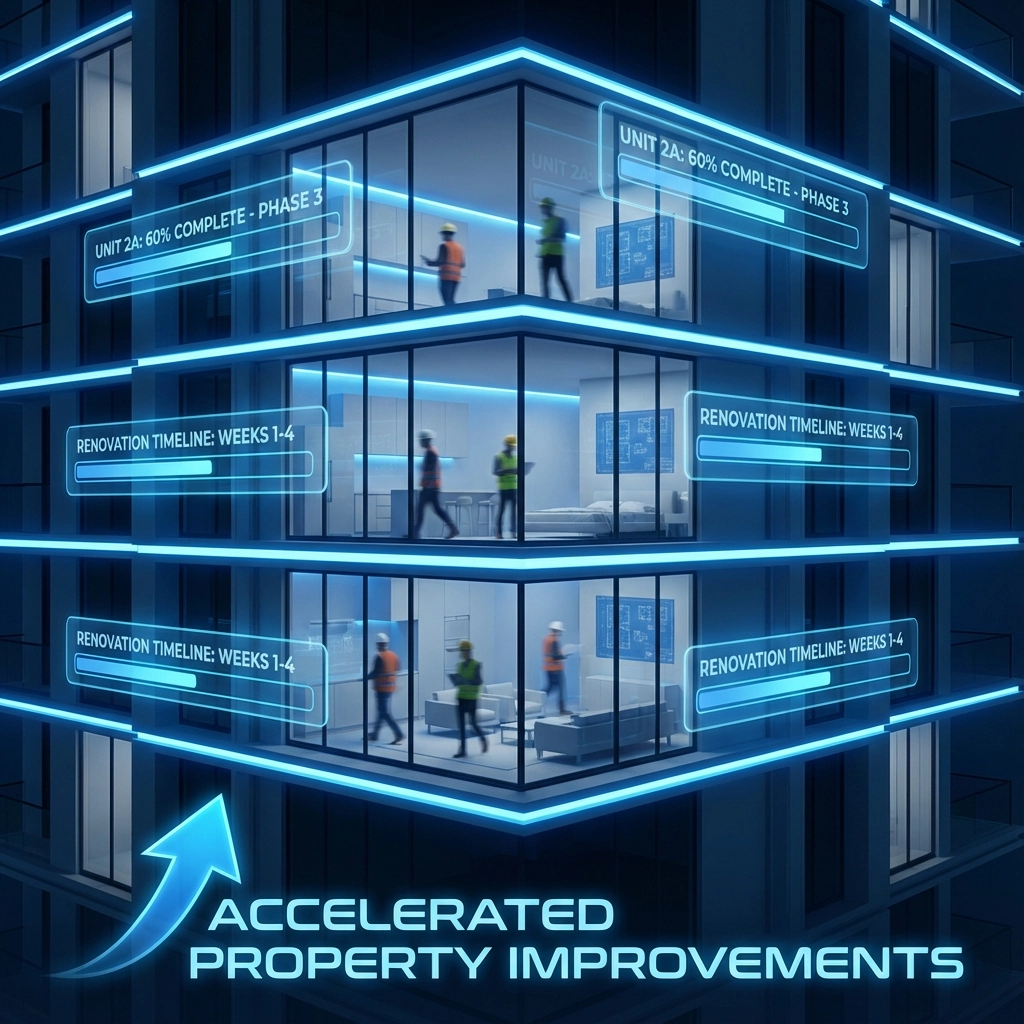
Cash buyer strategies often involve rapid turnover: buying, renovating, and relaunching units quickly. Typical cycles shrink from 6–8 weeks to 3–4 weeks per unit, with exceptions based on building type.
Submarket realities:
- LIC: 2–3 week refreshes for modern units (paint, flooring, fixtures) are common; amenity work runs in parallel.
- Astoria and Ridgewood: 3–5 weeks for prewar gut-lite scopes (electrical, baths, kitchens) when materials are pre-ordered.
- Sunnyside/Woodside: Plaster and riser work can extend to 5–6 weeks; careful sequencing reduces vacancy days.
- Jackson Heights co-ops: Board timelines can slow re-tenanting unless sponsor units or established policies are in place.
- Flushing mixed-use: Fire alarm linkage and egress coordination with retail can add 1–2 weeks.
- Jamaica: Security and lighting upgrades often occur before unit turns to improve first-show conditions.
For property management companies in Queens, this means:
- More frequent coordination with contractors
- Tighter timelines for apartment turnovers
- Increased focus on preventive maintenance to avoid delays
- Need for streamlined vendor management systems
Key point: Pre-ordering materials and pre-filing permits often determines whether a 4-week target is realistic.
What About Insurance and Underwriting Requirements?
Stricter Financial Scrutiny
All-cash buyers often work with institutional partners or high-net-worth portfolios. They expect detailed financials, robust insurance, and reliable compliance data—especially in larger assets and mixed-use properties.
Property managers now face requirements for:
- Monthly financial reporting instead of quarterly (with KPIs such as rent roll health, vacancy days, make-ready timelines)
- Enhanced liability and umbrella limits, plus contractor COI audits
- Detailed maintenance logs and documentation (work orders closed in set SLAs)
- Transparent budget analysis with variance reporting and rolling 12–24 month CapEx plans
Submarket examples:
- LIC (300 units): Monthly dashboards with energy, elevator uptime, and amenity usage metrics.
- Flushing (mixed-use): Separate P&Ls for residential vs retail, CAM reconciliations, and utility submeter tracking.
- Ridgewood/Astoria (walk-ups): Turnover costs tracked per stack and per unit to benchmark contractor performance.
Compliance Complexity
Queens properties must navigate an increasingly complex regulatory environment. All-cash owners expect seamless compliance planning with dates, costs, and risk controls.
What to track now:
- Local Law 97: Emissions limits are in effect for most buildings 25,000+ sq ft (first compliance period 2024–2029; stricter limits start 2030). Fines are assessed per metric ton over the cap. LIC and Forest Hills/Rego Park elevator buildings are most exposed; monitoring and early retrofits matter.
- Good Cause Eviction (2024): New protections affect rent increases and notice requirements (with exemptions for new construction and certain small owners). Jackson Heights, Sunnyside/Woodside, and Ridgewood owners must align renewal practices and notices.
- Rent Stabilization: Documentation for legal rents, MCIs/IAIs, and DHCR filings is essential in Astoria, Sunnyside/Woodside, Jackson Heights, and Ridgewood.
- Façade/Exterior (FISP/Local Law 11): Buildings over six stories (common in Forest Hills/Rego Park and Jackson Heights) need scheduled inspections, repairs, and tenant safety plans.
Practical approach: Map requirements by building, then sequence projects (lighting, controls, boiler tuning, envelope) that reduce energy penalties while limiting disruption.
How Do You Compete in This New Environment?
Technology Integration
Successful Queens property management requires robust, neighborhood-aware technology:
- Real-time financial reporting and budget tracking (portfolio and building-level)
- Digital communication portals for tenants and owners (multilingual where needed in Flushing and Jackson Heights)
- Automated maintenance scheduling and vendor coordination with SLA tracking
- Comprehensive documentation systems for compliance (LL97 data, contractor COIs, renewal notices)
- Access control and camera integrations prioritized in LIC, Astoria, and Jamaica
Result: Faster decisions, fewer missed deadlines, and clearer owner oversight.
Preventive Maintenance Programs
With faster turnover expectations and higher resident standards, preventive maintenance becomes crucial. Rather than reactive repairs, property managers must implement systems that identify and address issues before they impact operations.
Examples by submarket:
- Sunnyside/Woodside and Ridgewood: Riser, roof, and parapet inspections on fixed intervals to prevent leaks that derail turns.
- Forest Hills/Rego Park: Elevator maintenance tied to usage data; parts on hand to avoid long lead times.
- LIC: BMS alerts with thresholds for HVAC, pumps, and boiler efficiency to catch issues early.
- Flushing and Jamaica: Fire alarm/sprinkler testing calendars aligned with retail hours and AHJ inspection windows.
Outcome: Fewer emergency calls, lower overtime spend, and more predictable unit availability.
Transparent Financial Management
All-cash buyers expect detailed visibility into where their money goes. This requires property management companies in Queens to provide:
- Line-item budget analysis with variance explanations
- Vendor comparison reports showing competitive pricing
- Regular capital expenditure planning and tracking
- Clear reporting on rent collection and tenant retention
Queens-specific note: Mixed-use buildings in Flushing and larger elevator assets in LIC/Forest Hills benefit from monthly dashboards; smaller walk-ups in Astoria, Sunnyside/Woodside, and Ridgewood benefit from stack-by-stack cost tracking.

What Services Should Your Property Management Company Provide?
Given these market changes, effective Queens property management must include:
Financial Oversight
- Comprehensive budget analysis and forecasting
- Transparent bookkeeping with detailed monthly reporting
- Vendor bid comparison and cost optimization
- Capital expenditure planning and project management
Operational Excellence
- Digital tenant and owner communication portals
- 24/7 customer service and emergency response
- Preventive maintenance programs
- Professional leasing and sales coordination
Compliance Expertise
- Rent stabilization guidance and documentation
- Local Law 97 compliance planning
- Good Cause Eviction law navigation
- Insurance requirement management
What Should You Do Next?
If you’re managing Queens property in today’s market, here’s your action plan:
Immediate Steps (Next 30 Days)
- Audit your current vendor relationships and pricing
- Review your property management company’s technology capabilities
- Assess your building’s preventive maintenance program
- Evaluate your financial reporting frequency and detail level
Short-Term Planning (Next 90 Days)
- Implement or upgrade digital communication systems
- Establish relationships with backup vendors for critical services
- Create comprehensive compliance documentation systems
- Develop capital expenditure planning for the next 2-3 years
Long-Term Strategy (Next 6-12 Months)
- Consider energy efficiency upgrades to stay competitive
- Evaluate property management partnerships based on new market demands
- Implement smart building technology where feasible
- Develop resident retention programs to reduce turnover costs
The all-cash buyer phenomenon in Queens isn’t temporary: it represents a permanent shift in how properties are bought, managed, and operated. Property owners who adapt their management strategies to match this new reality will protect and enhance their investments. Those who don’t risk falling behind in an increasingly competitive market.
Success in this environment requires professional property management partners who understand these market dynamics and have the systems, technology, and expertise to navigate them effectively.
Understanding Queens real estate trends 2025 allows property owners to stay competitive, increase ROI, and adapt to a rapidly changing market.