

If you own a rent-stabilized building in Crown Heights, you've likely heard property owners debate the merits of Major Capital Improvements (MCIs) versus Individual Apartment Improvements (IAIs). Both allow you to increase rents beyond the standard stabilization guidelines, but they function differently, require different levels of approval, and offer very different financial returns. In 2026, with tighter regulations and stricter enforcement from the Division of Homes and Community Renewal (DHCR), understanding which path makes financial sense for your specific building has never been more important.
What Actually Qualifies as an MCI?
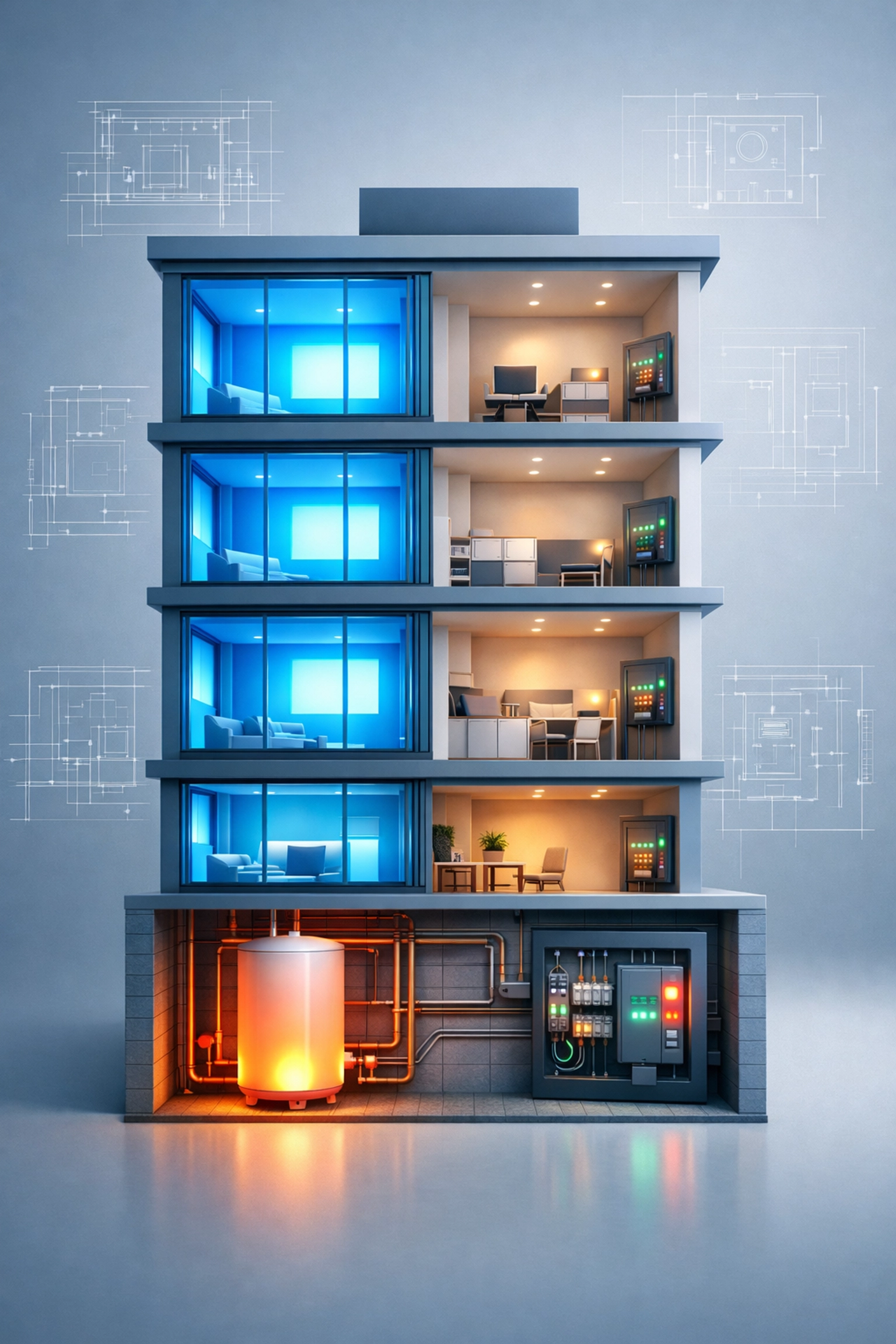
Major Capital Improvements are building-wide upgrades that benefit all tenants and extend the useful life of your property's essential systems. Think large-scale projects: replacing a boiler, installing new windows throughout the entire building, upgrading the electrical system, re-piping plumbing, or replacing the roof.
The key word here is "building-wide." You can't cherry-pick which apartments receive the improvement. If you're replacing windows, it's all windows or no MCI approval. The DHCR scrutinizes these applications carefully, and tenants have the right to dispute your application if they believe the work wasn't necessary, wasn't completed properly, or if you're seeking reimbursement for work that should have been covered by regular maintenance.
MCIs also come with a critical restriction in 2026: your building cannot have more than 35% non-regulated units. If your Crown Heights property has undergone significant deregulation over the years, you may not qualify for MCI rent increases at all.
What Counts as an IAI?
Individual Apartment Improvements are exactly what they sound like: upgrades made to a specific unit rather than the entire building. Replacing kitchen cabinets, installing new flooring, upgrading bathroom fixtures, or adding modern appliances all qualify as IAIs.
The catch? For occupied apartments, you need written tenant consent before performing the work. This limits most IAI activity to vacancy periods, when you're preparing a unit for a new tenant. The consent requirement isn't just a formality: without proper documentation, the DHCR can invalidate your rent increase entirely during a future audit or tenant challenge.
IAIs don't require DHCR approval before implementation, which makes them considerably faster to execute. However, you must maintain detailed records including invoices, proof of payment, before-and-after photos, and contractor licenses. If you can't produce this documentation years later when challenged, you'll lose the rent increase.
How Do the Financial Returns Compare?
The financial math between MCIs and IAIs differs significantly, and understanding these mechanics is crucial for Crown Heights property owners working with Property Management Services in Crown Heights to maximize returns.
MCI Financial Structure:
- Temporary increases that remain in effect for 30 years, then automatically roll off
- Annual collection capped at 2% of the tenant's current rent
- Costs amortized over time based on DHCR's approved amount
- Building-wide benefit means every rent-stabilized unit contributes to cost recovery
Let's say you spend $50,000 replacing the boiler in a 20-unit Crown Heights building where 15 units are rent-stabilized, each paying approximately $1,800 monthly. The 2% annual cap means each tenant's rent can only increase by $36 monthly ($1,800 x 2% = $36). Across 15 units, you'd collect $540 monthly, or $6,480 annually. At this rate, recovering your $50,000 investment takes roughly 7.7 years: assuming no tenant turnover that might reset the calculation.
IAI Financial Structure:
- Permanent increases that remain even after cost recovery
- No annual collection cap
- Two-tier system based on improvement cost
- Recovery depends on single unit's rent payment
The 2024 regulations established specific amortization schedules. For Tier One improvements (up to $30,000), larger buildings use a 1/180th amortization schedule, while buildings with 35 or fewer units use 1/168th. Tier Two improvements ($30,001 to $50,000) allow 1/156th amortization in larger buildings and 1/144th in smaller properties.
A $25,000 apartment renovation in a larger Crown Heights building generates approximately $139 monthly ($25,000 ÷ 180 = $138.89). Unlike MCIs, this increase is permanent. Over 15 years, that single unit generates $25,000 in additional rent. Over 30 years, it generates $50,000: double the initial investment.

When Does an MCI Make More Financial Sense?
MCIs work best in specific scenarios that align with both building composition and capital needs:
Building Size and Composition: If you own a majority rent-stabilized building (more than 65% regulated units) in Crown Heights, MCIs distribute cost recovery across multiple units simultaneously. A 40-unit building with 35 rent-stabilized apartments collecting $40 monthly MCI increases generates $1,400 monthly: $16,800 annually. This accelerates payback compared to waiting for individual apartment turnovers.
Essential System Replacements: When your building needs a new roof, boiler replacement, or building-wide electrical upgrade, you don't have the luxury of waiting for vacancies. These aren't improvements you can defer, and MCIs provide the only mechanism to recover these substantial costs through rent increases in stabilized buildings.
Predictable Tenant Base: Buildings with low turnover benefit more from MCIs because the increases remain in place across all units for 30 years. You're not dependent on vacancy timing to implement improvements and capture returns.
Long-Term Investment Horizon: If you plan to hold your Crown Heights property for 15+ years and want to modernize building systems while maintaining rent-stabilized compliance, MCIs provide a path to recovery that doesn't require unit turnover.
When Do IAIs Provide Better Returns?
IAIs make more financial sense under different circumstances:
Higher Turnover Properties: If your Crown Heights building typically sees 20-30% annual turnover, IAIs allow you to capture permanent rent increases with each vacancy. The lack of DHCR approval requirements means you can move quickly when units become available.
Smaller Buildings: Properties with fewer rent-stabilized units benefit from the faster IAI amortization schedules. The 1/168th rate for buildings with 35 or fewer units means a $20,000 renovation generates $119 monthly: a permanent increase that continues long after costs are recovered.
Market-Rate Preparation: If you're approaching the high-rent vacancy threshold or expect units to deregulate through legal rent increases, IAIs provide permanent boosts that may push units across deregulation limits (where applicable under current law).
Incremental Investment Capacity: Not every landlord has $50,000-$100,000 available for building-wide improvements. IAIs allow you to invest $15,000-$30,000 per unit as turnover occurs, spreading capital expenses across months or years rather than requiring large upfront investments.

What Are the Compliance Risks You Can't Ignore?
Both MCIs and IAIs carry significant compliance requirements that property management companies in Bed-Stuy and Crown Heights must navigate carefully in 2026.
MCI Compliance Considerations:
- Applications must be filed within 120 days of project completion or the increase may be permanently forfeited
- Buildings with outstanding hazardous violations are automatically ineligible
- Tenant challenges can delay implementation by 6-12 months during DHCR review
- Incomplete documentation leads to reduced approval amounts or complete denial
IAI Compliance Considerations:
- Occupied unit improvements require written tenant consent with specific regulatory language
- All supporting documentation must be retained for the building's lifetime
- Work must meet applicable building codes and permit requirements
- DHCR audits can occur years after implementation, requiring immediate proof of expenses
The risks intensify for landlords attempting to use both mechanisms simultaneously. If you're pursuing an MCI for building-wide window replacement while also claiming IAI increases for in-unit improvements, you must ensure there's no overlap in claimed costs. Double-dipping: attempting to recover the same expense through both MCI and IAI: results in penalties, reversed increases, and potential DHCR sanctions.
Properties working with professional Property Management Services in Crown Heights typically maintain better documentation standards and avoid common filing errors that trigger DHCR denials.
How Do You Actually Make This Decision for Your Building?
The choice between MCIs and IAIs isn't binary: many successful Crown Heights landlords use both strategies depending on circumstances. Here's a practical framework:
Start with a building assessment: Identify both immediate capital needs (systems requiring replacement regardless of rent recovery) and potential apartment improvements that could be implemented during turnover. Buildings typically need roof replacements every 20-25 years, boiler replacements every 25-30 years, and window replacements every 30-40 years. These timelines help you anticipate when MCIs become necessary rather than optional.
Calculate your stabilized unit percentage: If you're below 65% rent-stabilized occupancy, MCIs may not provide sufficient cost recovery to justify the DHCR application hassle. Buildings approaching the 35% non-regulated threshold should prepare for eventual MCI ineligibility.
Project your turnover rate: Review the past three years of vacancy data. If you're seeing less than 10% annual turnover, IAIs won't provide frequent enough opportunities for cost recovery. Buildings with 25%+ annual turnover might recover IAI investments faster than MCI expenses.
Consider timing and cash flow: MCIs require substantial upfront capital and 6-12 months before any rent increases take effect. IAIs can be phased across multiple vacancies, reducing immediate cash requirements while generating faster individual unit returns.
Review your violation history: Properties with open violations cannot pursue MCIs. If your building has ongoing HPD or DOB violations, focus on resolving these issues before planning any rent increase strategy. The rent-stabilized compliance requirements extend beyond just improvements: your building must maintain good standing across all regulatory areas.

What About Buildings That Need Both?
Many Crown Heights properties face situations where both MCIs and IAIs make sense simultaneously. A building might need a new boiler (clearly an MCI) while also preparing vacant apartments with modern kitchens and bathrooms (IAI work).
The key is proper sequencing and documentation. Complete your MCI work first, file with the DHCR, and maintain entirely separate records for any IAI expenses. Never attempt to include apartment-level work in your MCI application, even if that work was performed as part of a larger building renovation project.
Professional property management companies understand these nuances and maintain the parallel documentation streams required to support both increase types without triggering DHCR scrutiny.
Where Should Crown Heights Landlords Focus in 2026?
The regulatory environment for rent-stabilized properties continues tightening, with enforcement increasing and penalties for non-compliance becoming more severe. Whether you pursue MCIs, IAIs, or a combination of both, proper documentation and regulatory compliance aren't optional: they're the foundation of any successful rent increase strategy.
For buildings requiring immediate system replacements, MCIs remain the only viable path despite the approval delays and tenant challenge risks. For properties with regular turnover and strong capital reserves, IAIs provide faster implementation and permanent returns.
The landlords seeing the best results in 2026 aren't trying to game the system: they're working with experienced property management companies in Bed-Stuy who understand DHCR requirements, maintain meticulous records, and structure improvement projects to maximize legally compliant returns while keeping buildings in good repair.
Whether your Crown Heights building needs a $75,000 boiler replacement or $20,000 worth of apartment upgrades, the decision between MCIs and IAIs ultimately comes down to building composition, capital availability, turnover patterns, and long-term investment goals. There's no universal right answer: only the right answer for your specific property at this specific moment.