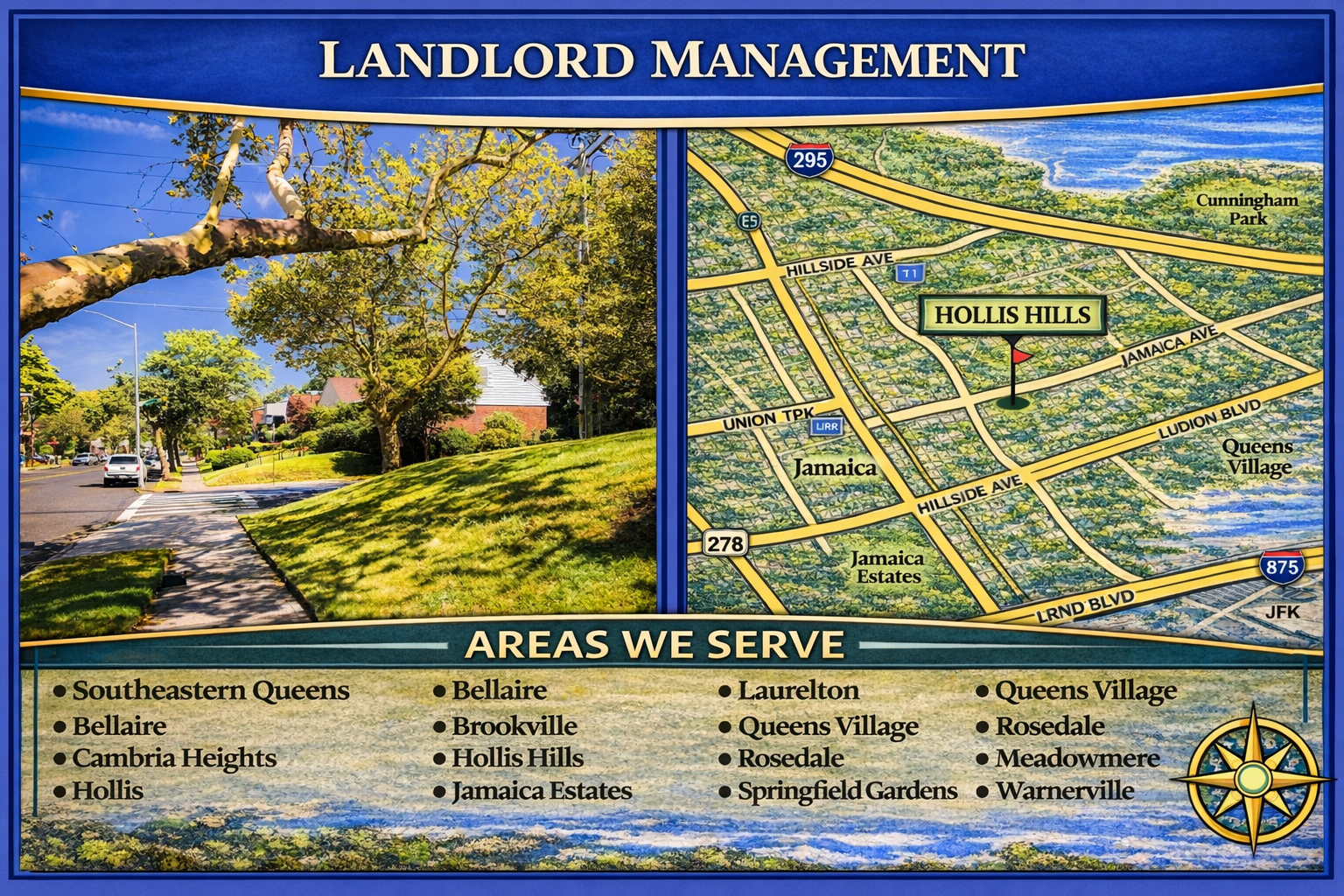
Hollis Hills is one of eastern Queens’ more established low-density residential neighborhoods, where rental properties often differ significantly from the multifamily buildings found in denser parts of the borough. Many properties here are detached homes, larger owner-held residences, or long-retained family assets that require management built around preservation, consistency, and long-term occupancy rather than frequent leasing cycles.

Landlord Management supports owners in Hollis who want rental operations handled professionally without losing visibility into how their property is performing. Rather than applying a generic citywide system, management in Hollis requires attention to how smaller residential buildings actually function — where even one delayed repair or unclear lease issue can quickly affect tenant satisfaction.
Many owners here are balancing rental income with long-term asset preservation, which means management decisions often focus on consistency, documentation, and practical maintenance planning.

Unlike higher-turnover rental areas, Hollis Hills often attracts tenants seeking privacy, residential quiet, and long-term stability.
That changes how management should work.
In neighborhoods where tenants expect long-term residential quality, owners often need stronger attention to:
seasonal exterior maintenance
heating system reliability
roof and drainage monitoring
preventive plumbing checks
clear communication during repairs
The management goal is not simply keeping the property occupied — it is preserving neighborhood-standard living conditions over time.
A large share of rental properties in Hollis Hills are not institutional investments. Many are:
inherited family properties
owner-retained homes converted to rentals
detached houses held long term
lower-turnover residential leases
Because ownership is often personal rather than portfolio-based, many owners initially self-manage before realizing how much coordination even one residential property requires.
Vendor scheduling, documentation, tenant follow-up, and maintenance timing all become more important when one property represents a major long-term asset.
Our systems are designed to reduce owner involvement while maintaining stable operations.
We coordinate:
applicant screening
lease preparation
move-in documentation
vacancy preparation
tenant onboarding
We manage:
monthly payment tracking
collection follow-up
owner summaries
payment documentation
Many Hollis buildings benefit from preventive maintenance because aging systems often create avoidable repair costs if ignored.
We coordinate:
plumbing repairs
heating system service
seasonal inspections
vendor scheduling
repair documentation
Consistent communication supports long-term occupancy and fewer disruptions.
Hollis is strongly shaped by transportation access and nearby commercial corridors.
Properties near Hollis LIRR Station often attract tenants who value direct commuter access while still preferring quieter residential blocks.
Buildings closer to Jamaica Avenue often benefit from nearby retail access, which influences how tenants evaluate convenience and day-to-day living.
The area also connects naturally with nearby residential demand from Queens Village and St. Albans, where similar housing patterns shape leasing expectations.
These local factors mean Hollis performs differently than nearby neighborhoods even when property types look similar.
Owners in Hollis most often need help when:
maintenance requests begin stacking up
tenant communication becomes inconsistent
vendors become difficult to coordinate
lease records become fragmented
rent follow-up starts taking too much time
Because many properties are smaller residential buildings, owners often feel daily operational pressure sooner than owners of larger managed buildings.
If you own rental property in Hollis and want a management system built around long-term stability rather than short-term fixes, our team reviews your building details, tenant structure, and operating needs before recommending the most practical next step.
To get started, contact us or request a proposal to discuss your property and explore the best management fit.