

Let's be real: nobody wants HPD knocking on their door. But every year, Brooklyn landlords rack up thousands of dollars in violations because they made avoidable mistakes during Heat Season. And here's the kicker, most of these mistakes happen not because owners don't care, but because they didn't know the rules (or forgot them until it was too late).
If you own rental property in Brooklyn, this post is your cheat sheet. We're breaking down the seven most common Heat Season blunders and showing you exactly how to sidestep them before the city comes calling.
What Exactly Is NYC Heat Season (And Why Should You Care)?
Heat Season in New York City runs from October 1 through May 31, that's eight full months where you're legally required to keep your tenants warm. It's not a suggestion. It's the law.
During this period, HPD enforces strict temperature minimums in residential buildings. Fail to meet them, and you're looking at Class C hazardous violations. These carry penalties ranging from $250 to $500 per day for first-time offenses, jumping to $500 to $1,000 per day for repeat violations.
Translation? A week of non-compliance could easily cost you more than your boiler repair would have.
Now let's get into the mistakes.
Mistake #1: Forgetting the Legal Dates Entirely
You'd be surprised how many Brooklyn landlords get caught off guard by October 1st. Summer lingers, the weather's still mild, and suddenly you're scrambling because a tenant filed a complaint and your boiler hasn't been touched since April.
Heat Season is mandatory. It doesn't matter if it's 70 degrees outside on October 3rd, if your building can't deliver heat when needed, you're already exposed.
The fix: Mark October 1st on your calendar like it's tax day. Schedule your boiler inspection and maintenance for mid-September so you're ready to roll when the season officially kicks off.

Mistake #2: Ignoring the 68°F Day / 62°F Night Temperature Rules
Here's where NYC Heat Season laws get specific. Between 6 AM and 10 PM, if the outside temperature drops below 55°F, you must maintain at least 68°F inside tenant-occupied spaces. Between 10 PM and 6 AM, the indoor minimum is 62°F, regardless of what's happening outside.
Many landlords assume they're in the clear during that 55°F to 62°F "gray zone" during the day. But here's the trap: if you're not already heating the building, you'll never hit the 62°F nighttime requirement by 10 PM.
HPD inspectors measure temperatures using calibrated thermometers positioned three feet from exterior walls, not in hallways, but in actual living rooms and bedrooms.
The fix: Don't play temperature roulette. Keep baseline heating running so you're never caught short when nighttime rolls around.
Mistake #3: Failing to Provide Consistent Hot Water at 120°F
Here's a fun fact that trips up a lot of property owners: hot water requirements aren't seasonal. You're required to provide water at a minimum of 120°F every single day of the year, yes, including July.
A tenant complaint about lukewarm water in the middle of summer carries the same weight as a heat complaint in January. And in buildings with combination boilers (handling both heat and hot water), space heating during winter can actually cause hot water temps to drop below the minimum.
The fix: Have a licensed master plumber inspect your system annually, specifically checking that your boiler can maintain adequate hot water while also meeting heating demands. Don't wait for a complaint to find out there's a problem.
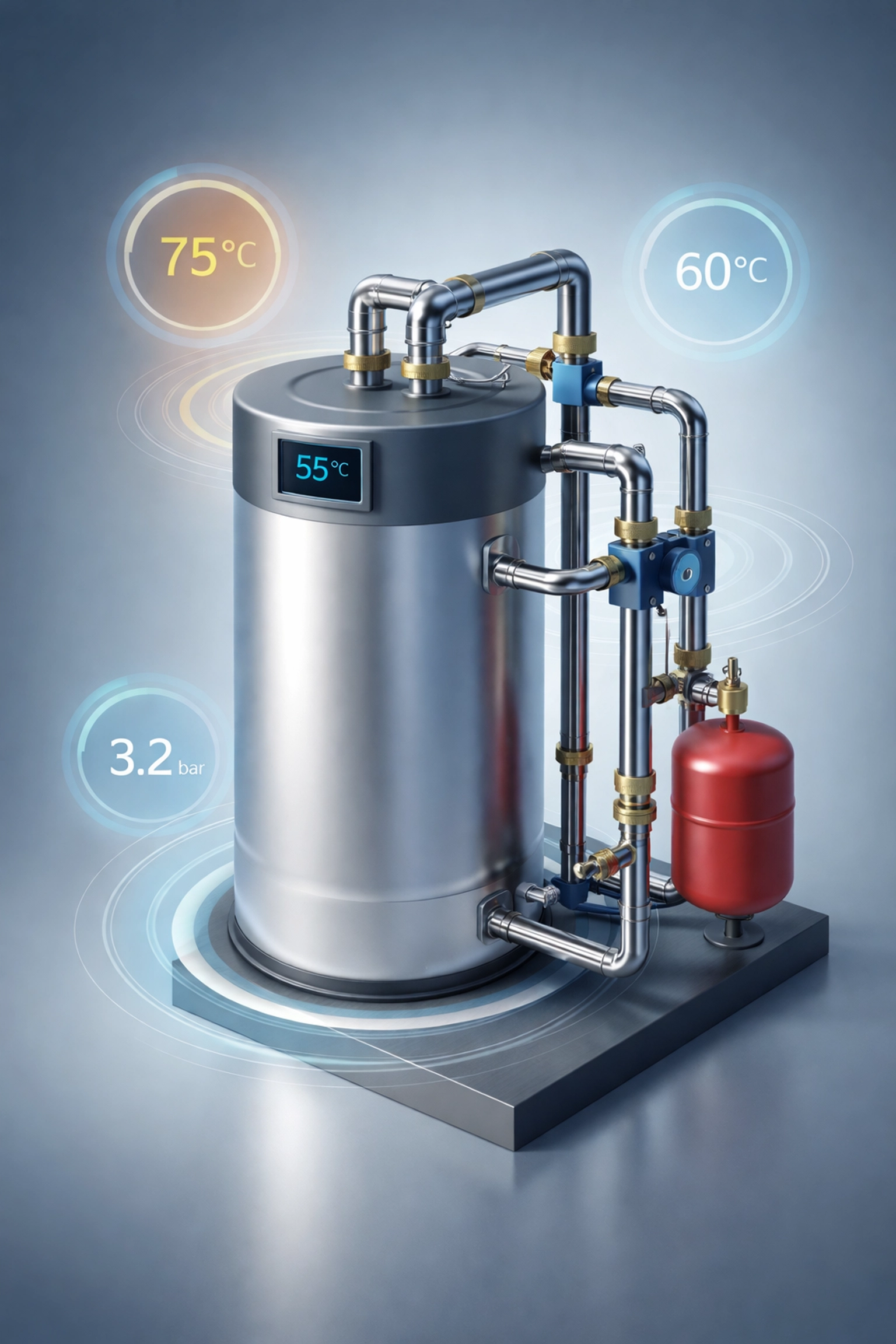
Mistake #4: Delaying Boiler Maintenance Until Something Breaks
We get it: preventive maintenance feels like spending money on something that isn't broken. But here's the math: a mid-winter boiler failure in a Brooklyn building means emergency repair costs (often at premium rates), potential HPD violations Brooklyn landlords dread, and a whole lot of angry tenants.
Boilers don't fail quietly. They fail spectacularly, usually on the coldest night of the year when every HVAC contractor in the city is already booked.
The fix: Schedule annual boiler inspections before Heat Season begins. Check for common culprits like air locks in radiators, faulty thermostats, and electrical failures. A $300 tune-up beats a $3,000 emergency call every time.
At Landlord Management (LLM), we set up preventive maintenance schedules for boilers and heating systems so our clients never face a surprise breakdown. It's one of those "boring" services that saves owners thousands.
Mistake #5: Not Responding to 311 or Tenant Complaints Within Hours
When a tenant calls 311 about no heat or hot water, the clock starts ticking immediately. HPD doesn't care if you were on vacation, if it was 2 AM, or if you "didn't see the email."
Class C violations for heat and hot water failures require actual temperature restoration within 24 hours: not just a repair plan, but documented proof that the problem is fixed. Time-stamped temperature measurements are your friend here.
The fix: You need a system for receiving and responding to complaints around the clock. Whether that's a dedicated phone line, an emergency protocol with your super, or a property management company handling it for you, response time is everything.
This is exactly why we offer 24/7 emergency maintenance response for heat and hot water calls. When a complaint comes in at midnight, our licensed and insured contractors are already on the way.

Mistake #6: Poor Communication With Tenants About Heating Issues
Sometimes the boiler is fine, but the tenant doesn't know how to bleed a radiator. Sometimes there's a repair scheduled for tomorrow, but nobody told the tenant. Sometimes the super fixed the issue, but didn't follow up.
Poor communication turns minor problems into major complaints. Tenants who feel ignored are more likely to call 311. Tenants who feel informed are more likely to wait for a scheduled repair.
The fix: Create a clear channel for tenants to report issues and receive updates. A secure online portal where tenants can submit work orders instantly: and track their status: eliminates the "I never heard back" complaints that escalate to HPD.
At LLM, our tenant portal does exactly this. Tenants submit requests, we dispatch contractors, and everyone stays in the loop. No more phone tag, no more "he said, she said."
Mistake #7: Neglecting Insulation in Common Areas
Here's a sneaky one. You can have a perfectly functioning boiler and still fail temperature checks because your building is hemorrhaging heat through uninsulated hallways, stairwells, and common areas.
Drafty windows, gaps around doors, and poor insulation in basements and roofs all contribute to heat loss. Your boiler works overtime, your energy bills spike, and your tenants' apartments still feel cold.
The fix: Walk your building before Heat Season and identify problem areas. Weather stripping, caulking, and basic insulation upgrades can make a significant difference. For older Brooklyn buildings, this kind of maintenance often gets overlooked: but it's low-hanging fruit for improving tenant comfort and reducing operating costs.
If you're managing a larger portfolio, check out our Brooklyn property management checklist for more tips on keeping buildings compliant and efficient.
How Do You Stay Ahead of HPD Violations in Brooklyn?
The pattern here is pretty clear: most Heat Season violations stem from delayed action, poor planning, or communication gaps. The landlords who avoid HPD headaches are the ones who:
- Schedule maintenance before problems arise
- Respond to complaints within hours, not days
- Keep tenants informed every step of the way
- Know the rules cold (pun intended)
If managing all of this sounds exhausting: especially if you own multiple properties: that's where a solid property management company in Brooklyn can take the load off.
At Landlord Management (LLM), we handle Heat Season compliance so you don't have to white-knuckle it through every cold snap. From preventive boiler maintenance to 24/7 emergency response to tenant communication portals, we've built our systems around keeping Brooklyn landlords violation-free.
How Owners Can Prevent Heat Violations
Heat Season isn't going anywhere, and neither are HPD's temperature requirements. The good news? Every mistake on this list is 100% preventable with a little planning and the right support.
Don't wait for a violation notice to find out your building has a problem. Get ahead of it now, and you'll thank yourself when January hits and your tenants are warm, your boiler is humming, and HPD has no reason to come knocking.
Questions about Heat Season compliance or property management in Brooklyn? Reach out to our team( we're happy to help.)